Two different answers to the same question
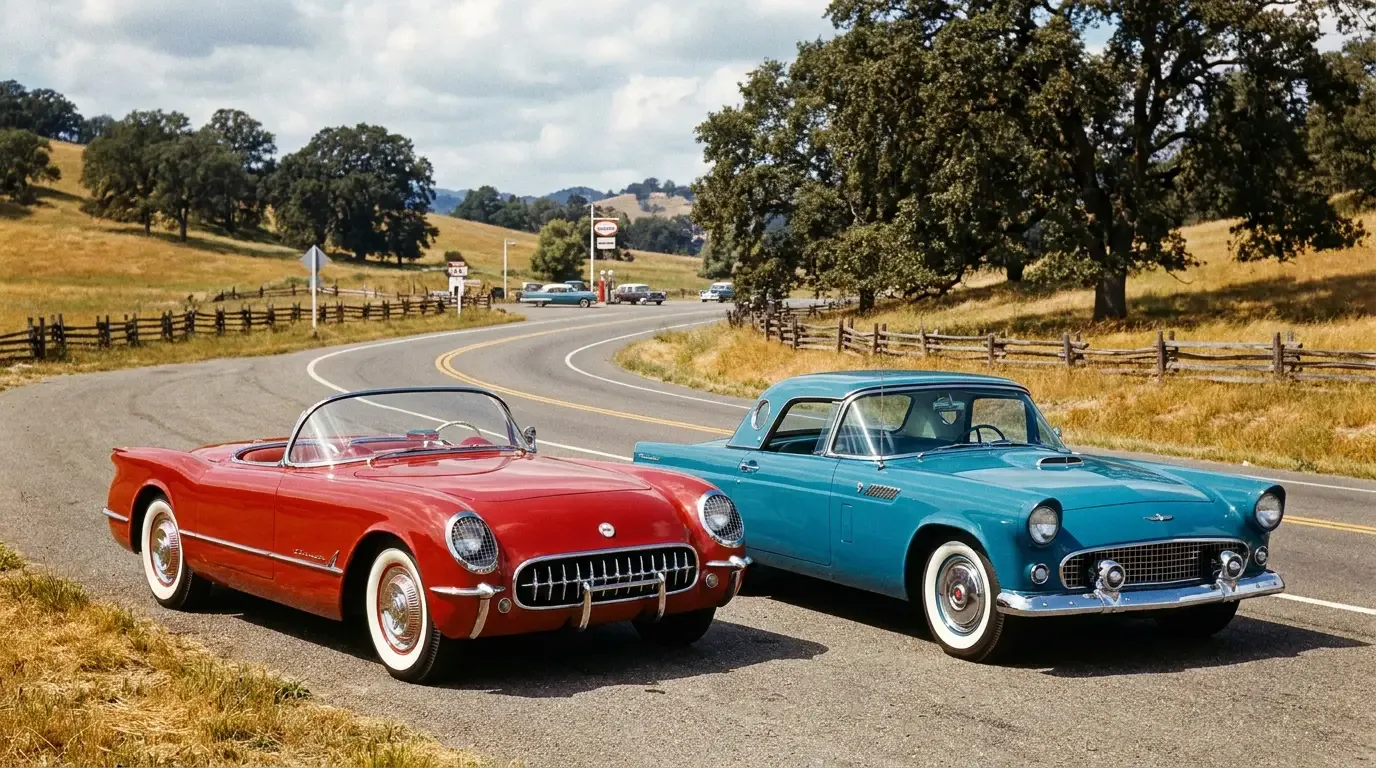
In the spring of 1954, Ford got wind that Chevrolet was selling a two-seat sports car and decided it needed one too. The Thunderbird arrived for 1955 wearing a different answer to what "American sports car" should mean. Chevrolet thought it meant a stripped-down machine built for driving. Ford thought it meant a personal luxury car with room for your golf bag and a heater that actually worked. Both cars sold in 1955. Both wore fiberglass or steel bodies over American V8s. The comparison ends there faster than most people expect.
For anyone tracking down a 1950s American two-seater today, the choice between them is real. The prices have diverged significantly. So have the communities, the parts ecosystems, and what owning each one actually feels like day to day. The C1 Corvette Story covers the origins of the car in full, but the 1955 model year sits at a particularly interesting crossroads, because it was the year Chevrolet almost lost the argument before it started.
What each car actually was in 1955
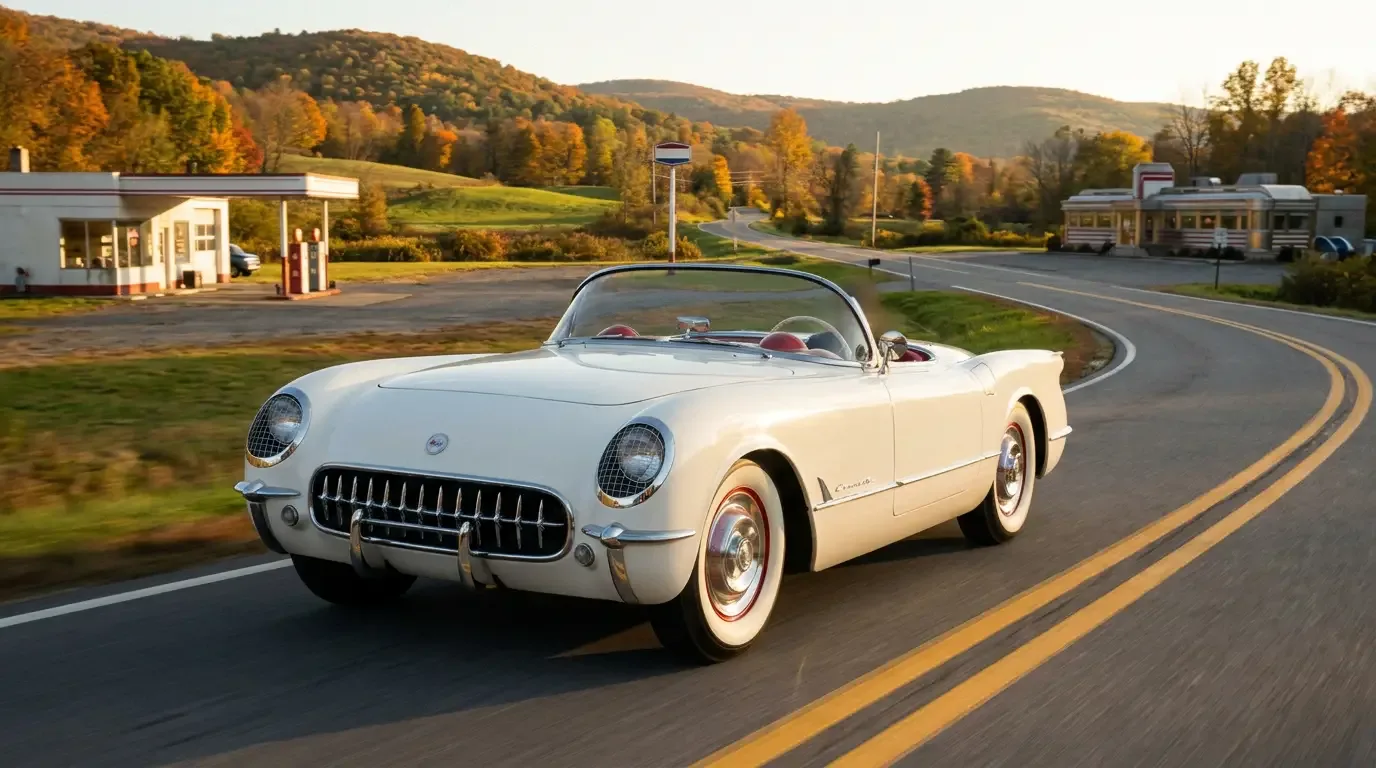
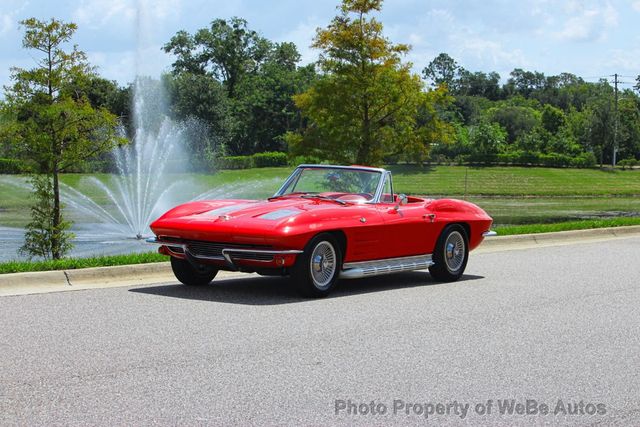
The 1955 Corvette arrived in a precarious position. Sales of the 1953 and 1954 cars had been disappointing. The original six-cylinder Blue Flame engine, mated to a two-speed Powerglide automatic, was not what sports car buyers wanted. Chevrolet responded by dropping in the new 265 cubic inch V8 for 1955, producing 195 hp at 5,000 rpm and 260 lb-ft of torque in its Corvette tune. That engine transformed what the car felt like on the road. A three-speed manual, marketed as "Synchro-Mesh," arrived mid-year for V8 cars, though it proved unpopular at the time; only about 75 of the 1955 Corvettes were built with it, and the vast majority still shipped with the automatic.
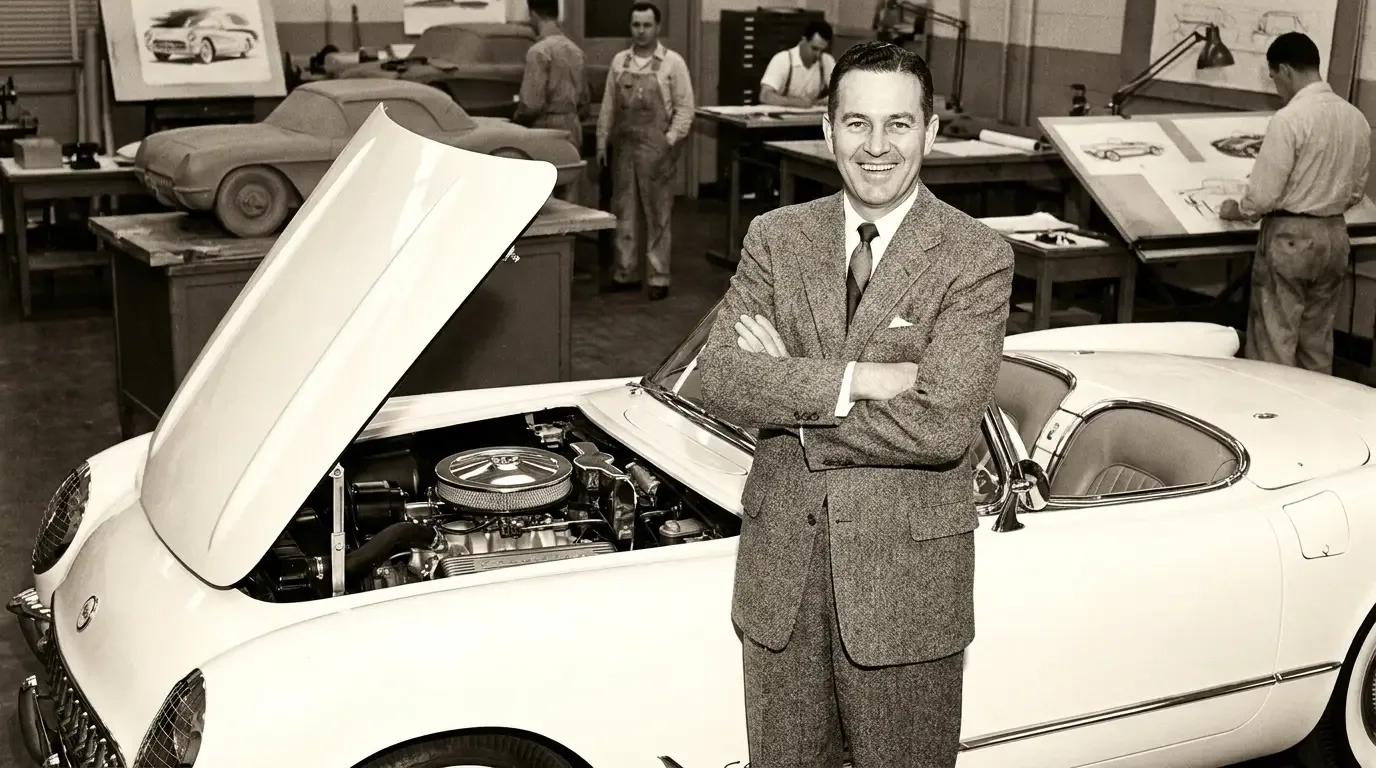
Production of the 1955 Corvette was extremely low, around 700 cars, second only to the original 1953 model year in scarcity. That was a steep drop from what Chevrolet had hoped for, and the company came close to canceling the model entirely. Zora Arkus-Duntov's growing influence over the car's engineering direction is generally credited as a major reason it survived.
Ford's Thunderbird debuted that same year to a very different reception. It sold 16,155 units in its first year, more than twenty times the Corvette's output, after Ford had planned for only around 10,000. The Thunderbird came standard with the 292 cubic inch Y-block V8, rated at 193 hp with the standard three-speed manual and 198 hp with the optional Ford-O-Matic automatic (the higher rating came from a slightly higher compression ratio on the automatic-spec engine). It had roll-up windows. It had an optional removable hardtop. It had exterior door handles. These were not trivial points for buyers who thought "sports car" still meant something you could take on a date without explaining why there was no outside door handle on the passenger side.
| Specification | 1955 Corvette | 1955 Thunderbird |
|---|---|---|
| Engine | 265 cu in V8 | 292 cu in Y-block V8 (standard) |
| Horsepower | 195 hp | 193 hp (manual) / 198 hp (automatic) |
| Transmission | 2-speed Powerglide (standard); 3-speed "Synchro-Mesh" manual (mid-year, rare) | 3-speed manual (standard) or Ford-O-Matic automatic (optional) |
| Body material | Fiberglass | Steel |
| Model-year production | ~700 units | 16,155 units |
| Base price (1955) | around $2,900 | $2,944 |
Why the Corvette almost lost this fight
The sales numbers tell the story plainly. Ford moved more than twenty times as many Thunderbirds in 1955 as Chevrolet moved Corvettes. The press was largely favorable to the Ford. Buyers who wanted a two-seat American car with decent weather protection, genuine V8 performance, and a transmission they could actually row themselves found the Thunderbird easier to recommend.
The Corvette's defenders pointed to handling. The fiberglass body kept weight down. The suspension was tuned more aggressively than anything Ford offered in the Thunderbird. On a twisty road the Corvette's behavior felt more European, more connected. That argument landed well with a certain kind of buyer and almost nobody else in 1955. The American market had not yet decided it wanted a sports car in that European sense, and the Corvette's sales figures reflected that uncertainty.
The Thunderbird's comfort features were not accidental. Ford's engineering team studied what buyers actually complained about in other two-seaters, including the Corvette's lack of roll-up windows and exterior handles, and addressed each one directly. The Thunderbird's interior was quieter. Its ride was softer. Those were selling points in 1955, not compromises.
"The 1955 Corvette barely survived because it was, by most reasonable measures, the harder car to live with. The Thunderbird sold on the strength of what it got right for real buyers. That it's the Corvette people remember as the quintessential American sports car says everything about what happened in the years that followed."
— Patrick Walsh
What happened after 1955
Ford blinked first. For 1958, the Thunderbird grew into a four-seat configuration and never looked back as a two-seater. Ford's reasoning was market-driven: surveys showed buyers wanted rear seats. The two-seat Thunderbird ran only from 1955 through 1957, which is why those three model years carry collector premiums today.
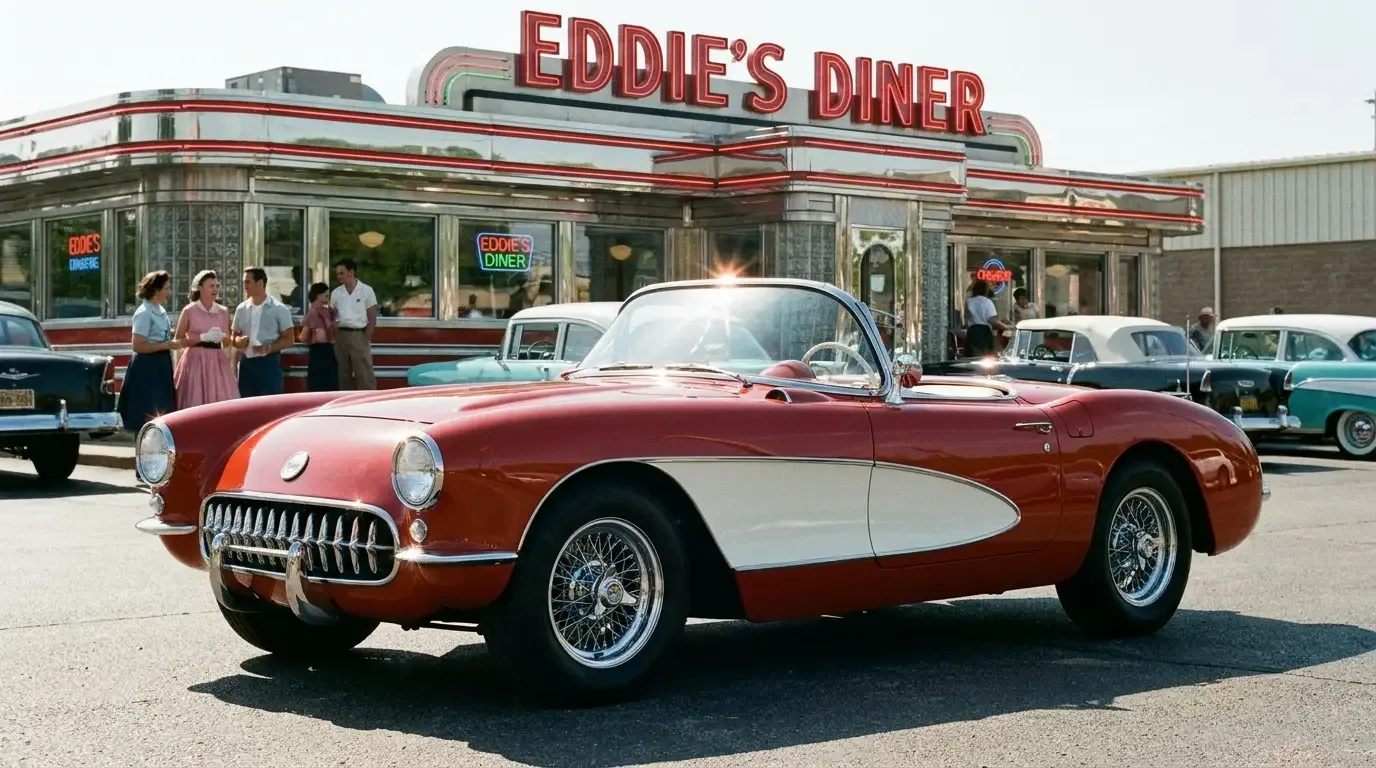
Chevrolet went the other direction. The 1956 and 1957 Corvettes gained genuine exterior door handles, roll-up windows, and a list of performance options that started to define what the car could become. By 1957, the optional fuel-injected 283 cubic inch V8, in its top EL-code state of tune, produced 283 hp, making the Corvette the second American production car (after the 1956 Chrysler 300B) to reach one horsepower per cubic inch. Only 1,040 buyers ordered fuel injection that year, and just 756 of those chose the full 283-hp version. The 1955 Corvette's difficult sales year turned out to be the low point before the car found its identity.
If you want to understand the full arc of how the Corvette got from near-cancellation to American icon, the articles next in the series trace that evolution across the entire C1 generation.
Buying one today
The 1955 Corvette commands serious money. Recent public auction results average roughly $100,000, with well-documented, correct examples often landing in the $80,000 to $150,000 range and exceptional cars going well beyond that (one result on record reached over $1.8 million, though that is a clear outlier, not a market baseline). The scarcity is real and the collector community around early Corvettes is active and well-organized. If you are looking at a 1955 Corvette, budget carefully for what authentication work might cost and expect that anything underpriced has a reason.
First-year Thunderbirds (1955) sit in a wide range depending on condition and originality, roughly $30,000 to $80,000 for solid, presentable drivers, with the finest documented examples going higher still. The 1957 Thunderbird, especially the rare supercharged F-code cars, generally commands the most of the three two-seat years due to the performance options available that year. For buyers who want the emotional experience of a 1950s American two-seater without the Corvette's price, the Thunderbird makes a credible case.
The community matters more than many buyers expect. Corvette owners in 1955 territory have NCRS resources, dedicated registries, and a deep base of marque specialists. Thunderbird owners have the Classic Thunderbird Club International and a committed restoration community, though parts sourcing can require more effort on some items. Neither car is orphaned, but the Corvette ecosystem is the larger of the two.
If the 1950s Corvette is what you are after, the range of available cars is wider than many buyers realize. 1950s Corvettes for sale shows current inventory across the C1 generation, which lets you compare condition and pricing across the full range of early cars before committing.
The 1955 contest between these two cars ended as a draw in the showrooms and as a Corvette victory in the long record. Ford built the more livable car that year. Chevrolet built the one that got better.
Sources and notes
- National Corvette Museum: 1955 Corvette specs, confirmed 265 V8 rated at 195 hp and Powerglide/manual transmission details
- CorvSport: 1955 Corvette production numbers, confirmed 700 units built, all convertibles
- Wikipedia: First-generation Ford Thunderbird, confirmed 1955 base price of $2,944, 292 Y-block V8 output (193/198 hp), and 16,155-unit production
- Wikipedia: C1 Corvette, confirmed 1955 base price and Synchro-Mesh manual transmission introduction
- Hagerty: 1955-57 Thunderbird buyer's guide, confirmed engine and trim differences across the two-seat generation
- MotorCities: One Horsepower Per Cubic Inch feature, confirmed 1957 fuel-injected 283 hp figure and 1956 Chrysler 300B precedent
- HotCars: 1957 Ford Thunderbird supercharged 312 F-code details, confirmed factory 300 hp rating and low production count