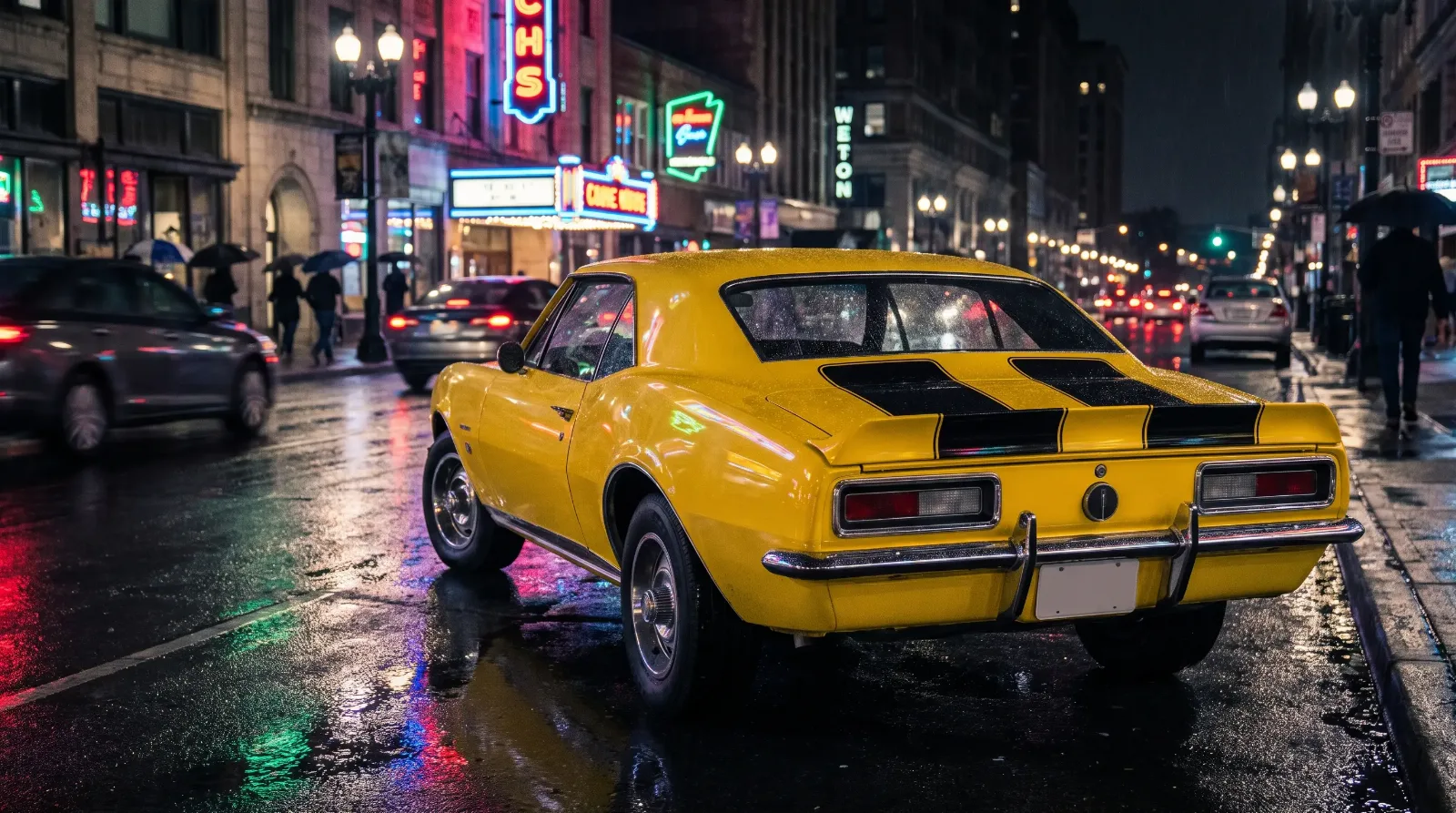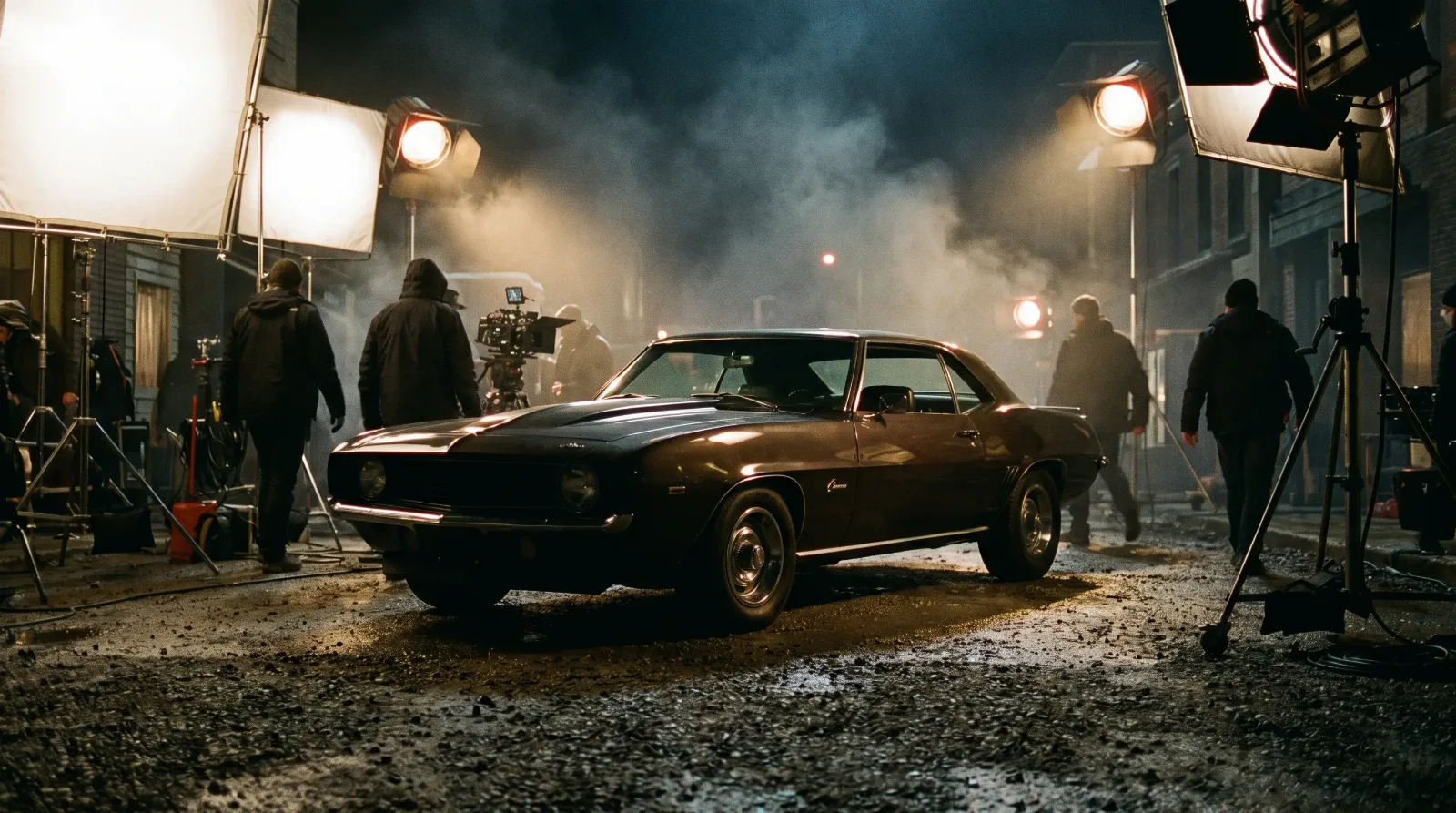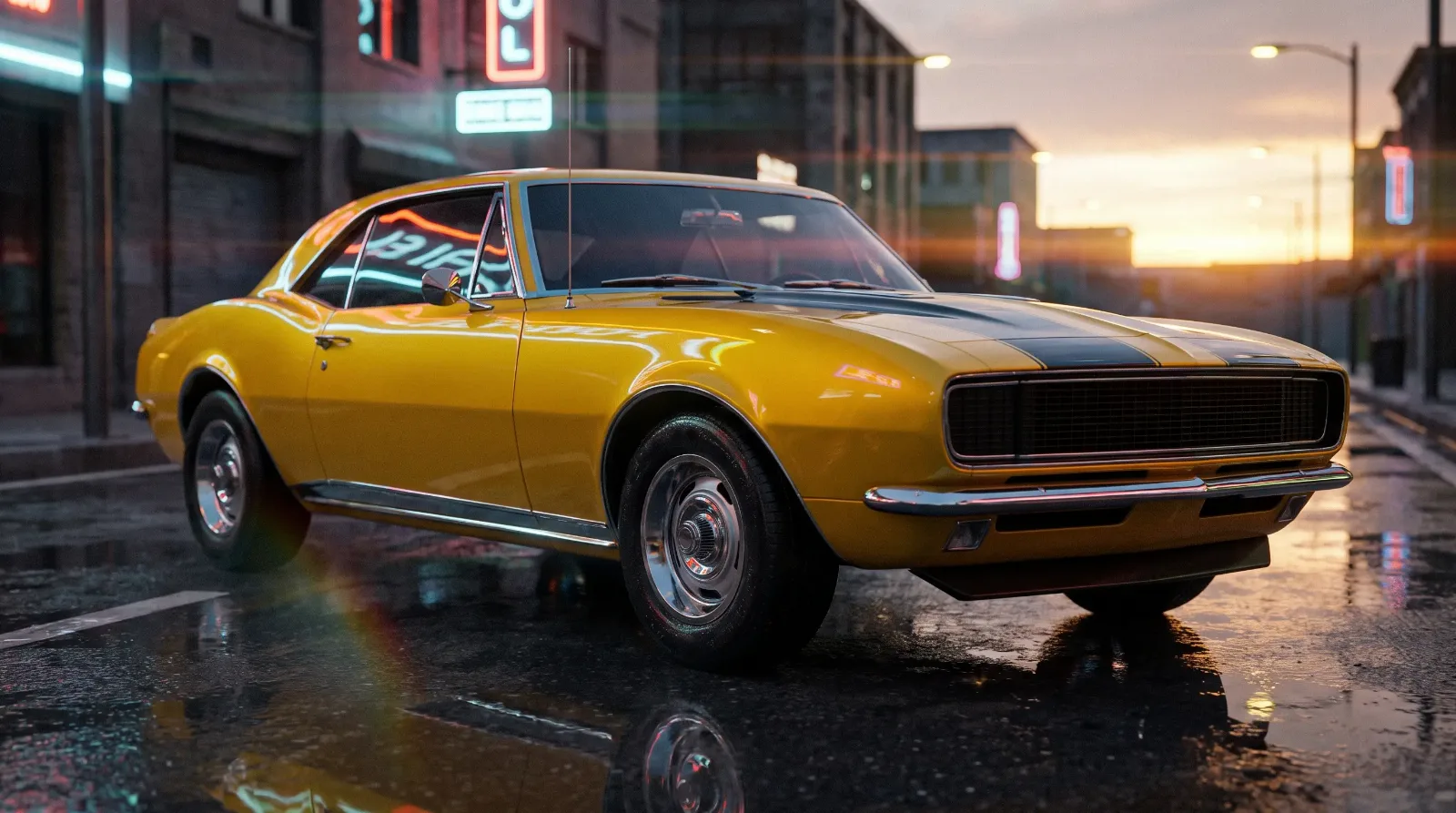
Individual cars that defined a legacy
Most cars are remembered as models. The Camaro earned something rarer: individual examples remembered by name, by owner, by what they did on a specific day on a specific track. When enthusiasts talk about read the full history, they are really talking about a handful of cars that pulled the whole nameplate into focus. Racing victories, celebrity garages, pace-car assignments, and auction floors have each produced moments where a single Camaro became the story. This article covers those cars.
The distinction matters because it separates the Camaro from most of its competition. A lot of pony cars had strong model-year runs. Fewer produced cars so linked to specific people and events that the individual vehicle became the point of reference, not the production run it came from.
Race Camaros that changed what the car meant
The Camaro's racing identity was established almost immediately after launch. Chevrolet entered the SCCA Trans-Am series in 1967 with purpose-built Z/28 cars, and by 1968 the factory-backed effort, run through Roger Penske's organization with Mark Donohue driving, was competitive enough to win the manufacturers' championship that year. Donohue's 1968 Trans-Am Camaro is one of the genuinely significant American racing cars of its era: a production-based coupe developed to a level of sophistication that the SCCA rulebook barely anticipated, and the car that gave the Z/28 its credibility on the street by proving what the platform could do under race conditions.
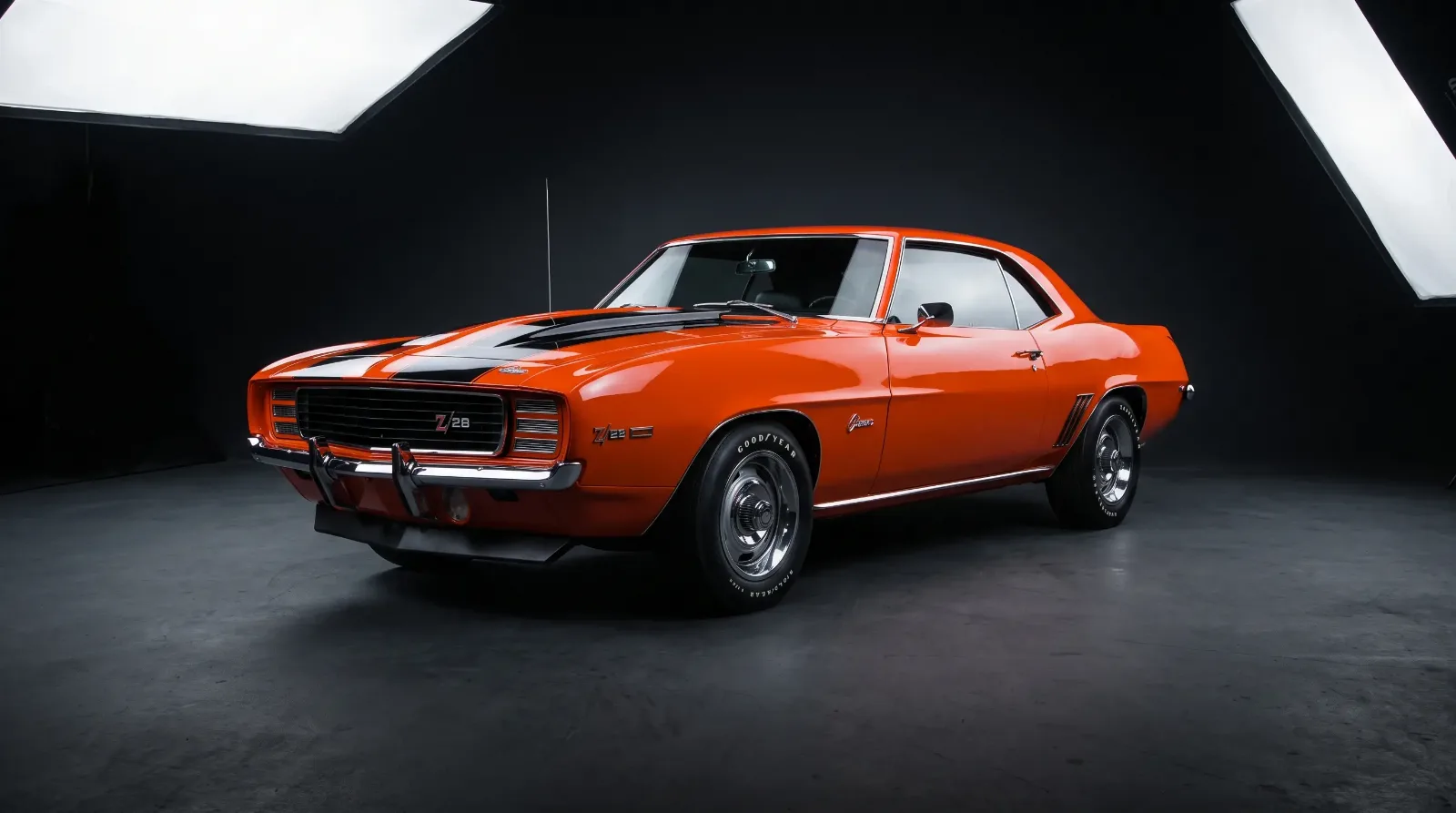
The Penske-Donohue cars were not secret projects. Chevrolet understood that Trans-Am success translated directly to showroom sales for the Z/28, and the marketing of that era said so plainly. What Donohue and his crew brought to the effort was an engineering discipline that was unusual for the time: data-driven setup, systematic testing, attention to suspension geometry at a moment when most American race teams were still working largely by feel. The results showed on the track, and the association between the Z/28 nameplate and genuine performance was established in a way that has held for decades.
A different kind of racing Camaro defined drag strip culture. The Super Stock and A/Stock classes of the late 1960s saw Camaros campaigned by dealers and factory-connected teams running times that redefined what a street-based car could run on a prepared surface. Many of these cars were built with COPO (Central Office Production Order) options that bypassed the standard order system and delivered engines not listed in the public catalog, including the 427 cubic inch L72 unit. Individual COPO Camaro racers became locally famous across the Midwest and South, and their track records from the 1969 and 1970 seasons still surface in period photos and documentation that collectors treat as provenance.
Pace cars and the Indianapolis connection
Chevrolet has served as the Official Pace Car of the Indianapolis 500 across multiple decades, and the Camaro has been chosen for that role more than once. The pace car assignment carries genuine significance in collector terms: it generates documented, limited-production vehicles with specific trim and graphics packages that are identifiable from the factory, and it associates the model with one of the most-watched motorsport events in American culture.
The 1969 Camaro Pace Car is among the most recognized of these. Finished in Dover White with orange and black pace car graphics, the Indianapolis 500 pace car package for that year was made available to retail buyers as a special edition, with production limited to enough units to satisfy dealer demand. The combination of the year (1969 first-gen production is widely regarded as the peak of that generation), the visual impact of the orange graphics against white paint, and the Indianapolis connection made these cars desirable immediately and more so over time as the first generation aged into collectibility.
Keep going in this series with the Camaro in the movies.
Pace car replicas present a documentation challenge that buyers need to understand. Because the pace car package was a dealer-installed option on production cars, not a separate factory build, the line between an original pace car replica and a car assembled to look like one is not always clear without documentation. A car claiming pace car provenance should have supporting paperwork: the original window sticker, a Protect-O-Plate card, or other factory documentation that confirms the package was ordered, not added later. Collectors pay a premium for cars with this documentation, and the premium is justified.
Celebrity-owned Camaros and famous previous owners
The Camaro's presence in American pop culture, documented at length in articles about the Camaro's cultural footprint, meant that it passed through the garages of musicians, athletes, and actors across the decades. Some of these associations are well-documented; others are claims that circulate without clear provenance. What follows covers examples where the celebrity connection is established by sale records or credible reporting.
Several first and second-generation Camaros owned by musicians from the late 1960s and early 1970s have surfaced at auction with documented ownership histories. The specific cars change as estates are settled and collections dispersed, but the pattern is consistent: rock musicians of the era who grew up in the Midwest or the South often owned Camaros as personal cars, and those cars occasionally reappear decades later with titles and registration records intact. The value added by a credible celebrity ownership history depends almost entirely on the documentation: a car with a clear title chain back to a named owner is worth considerably more than one where the connection is a family story without paperwork.
The television industry generated its own set of famous Camaros. Cars built or modified for specific productions sometimes survived after filming ended, were acquired by cast members or crew, and eventually entered private collections. The 1977 to 1979 period, when the second-generation Camaro's silhouette was at its most visually distinctive, produced the highest concentration of screen-used examples that have been tracked through subsequent ownership. Authenticity here depends on production records, which studios sometimes retain and sometimes do not.
| Car | Year | Significance | Collector status |
|---|---|---|---|
| Penske-Donohue Trans-Am Camaro | 1968 | SCCA Trans-Am championship | Museum / major collection level |
| COPO 427 Camaro (drag racers) | 1969 | Factory-special drag strip competitors | High six figures with documentation |
| Indianapolis 500 Pace Car replica | 1969 | Limited-edition factory pace car package | Strong premium over standard SS |
| Yenko Super Camaro 427 | 1969 | Dealer-built COPO-based street racer | Auction records above $200,000 for documented cars |
| Second-gen T-top screen cars | 1978 to 1981 | Television and film production vehicles | Variable; documentation-dependent |
Record auction sales and the collector market
The auction floor has produced some of the clearest evidence of how the collector market values specific Camaros. Documented racing cars, correctly optioned 1969 models with build sheets and Protect-O-Plate cards, and pace car replicas with full paperwork have all sold at figures that reflect how much the market weights provenance.
Yenko Camaros represent one of the most consistently strong segments. Don Yenko's Canonsburg, Pennsylvania dealership used the COPO ordering process to obtain Camaros with 427 cubic inch engines not available through standard retail channels, then sold them as performance-modified street cars. The cars Yenko produced in 1969 in particular have sold at major auction houses for prices that reflect both their rarity and their documentation: a confirmed Yenko Super Camaro with matching numbers and original paperwork occupies a different tier from a standard 1969 SS regardless of condition. Mecum and Barrett-Jackson have both moved documented Yenko cars in the six-figure range in recent years, with the best examples reaching well above that.
First-generation Camaros with L88 or L89 option codes, which brought aluminum cylinder heads to the 396 engine, represent another high-value category where individual cars are tracked by enthusiasts who know the option code combinations and production estimates well enough to assess any given car's legitimacy quickly. The documentation required to support a claim of these options is specific and not easily fabricated, which is part of why correctly documented cars command the premiums they do.
The broader lesson from auction results over the past decade is that the Camaro market rewards documentation more than condition. A driver-quality 1969 Z/28 with its original window sticker, build sheet, and title chain will consistently outperform a show-quality example that has been through multiple owners and has gaps in its paperwork. This is not unique to Camaros, but the Camaro market demonstrates it with particular clarity because the range of what a documented car can be worth versus an undocumented one is wide enough to matter in any buying decision.
"The cars that genuinely move people at a show are almost never the shiniest ones. They are the ones with a story you can trace back to something specific: a race, a person, a day at Indianapolis. Documentation is not just about value. It is about whether the story holds up."
— Patrick Walsh
Sources and notes
Production figures, engine specifications, codes, and dates in this article are cross-referenced from established Camaro references, period documentation, and owner registries. Where sources differ, the most commonly cited value is used. Cost figures are indicative and vary by supplier, region, and condition.
- Mark Donohue - Wikipedia (Penske Camaro Trans-Am championships 1968-1969)
- When the Penske/Sunoco Trans Am Camaros were in action - Hagerty
- Chevrolet Camaro (first generation) - Wikipedia (Z/28 302, COPO, pace car)
- Yenko Camaro / Don Yenko - Wikipedia
- 1969 Indy 500 Pace Car Camaro - Hagerty Valuation/Media