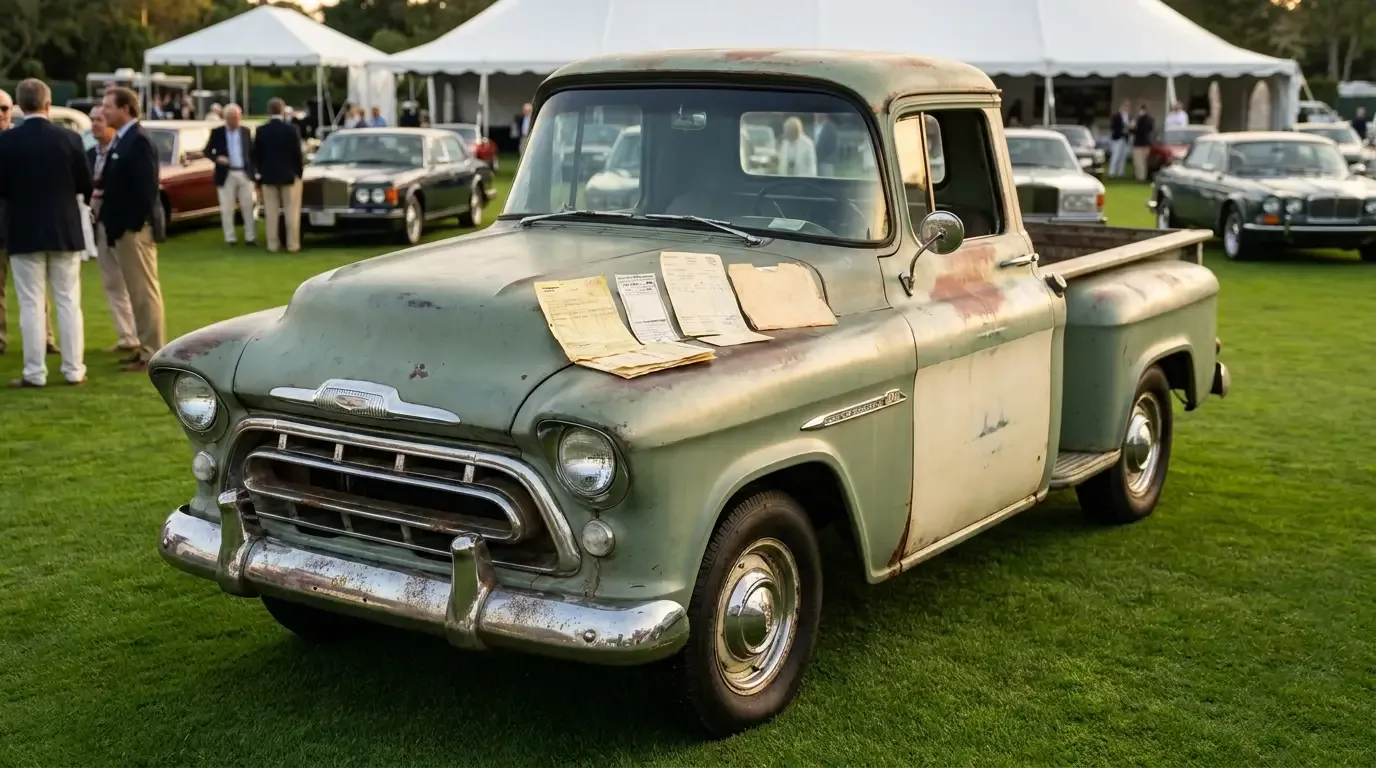

Not every Corvette that survives fifty years becomes collectible. Some are just old cars. The difference between a garage queen worth real money and a driver that trades at half the price comes down to a specific set of factors that the market has priced in consistently across auction cycles. Understanding those factors before you buy saves you from paying collector premiums for a car that will never command them.
The Corvette market rewards documentation, originality, and scarcity in ways that few other American sports cars match. If you are looking at classic Corvette for sale listings right now, these are the criteria that separate the cars worth stretching your budget for from the ones worth walking away from.
Original drivetrain: the single biggest value driver
Numbers matching is the phrase buyers throw around, and it means something specific. The block casting number, the cylinder head casting, and the transmission all carry date codes that, on a correctly documented car, fall within a predictable window before the assembly date on the trim tag. When those numbers align and the documentation supports them, you are looking at a car the market treats differently.
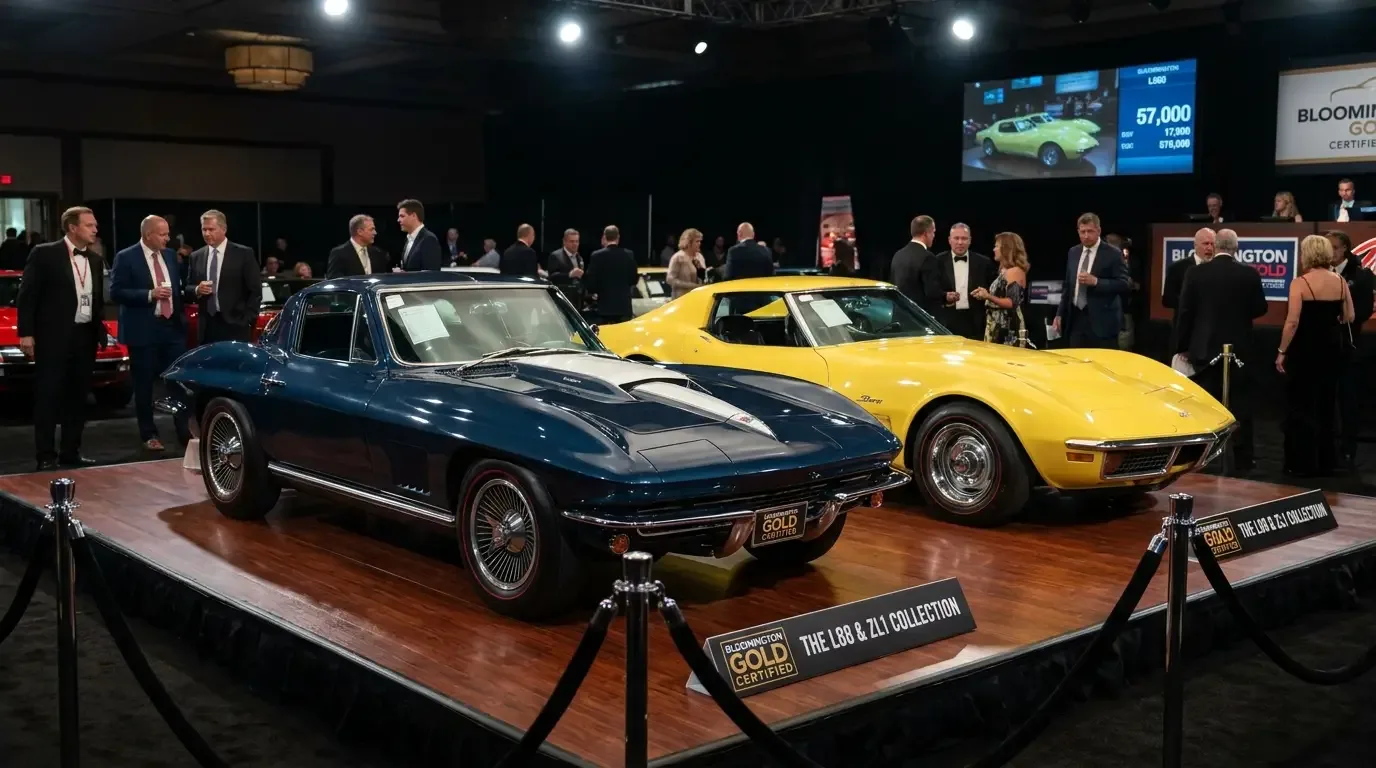
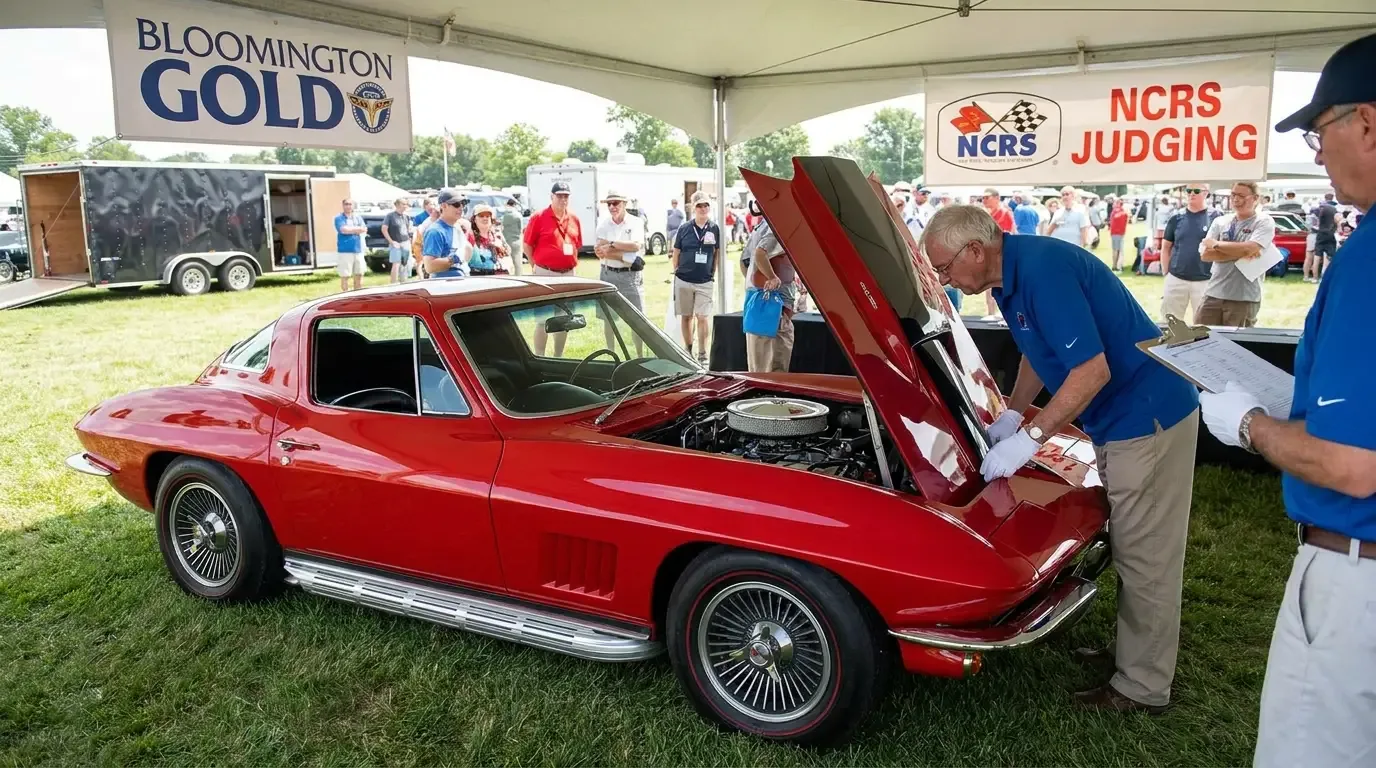
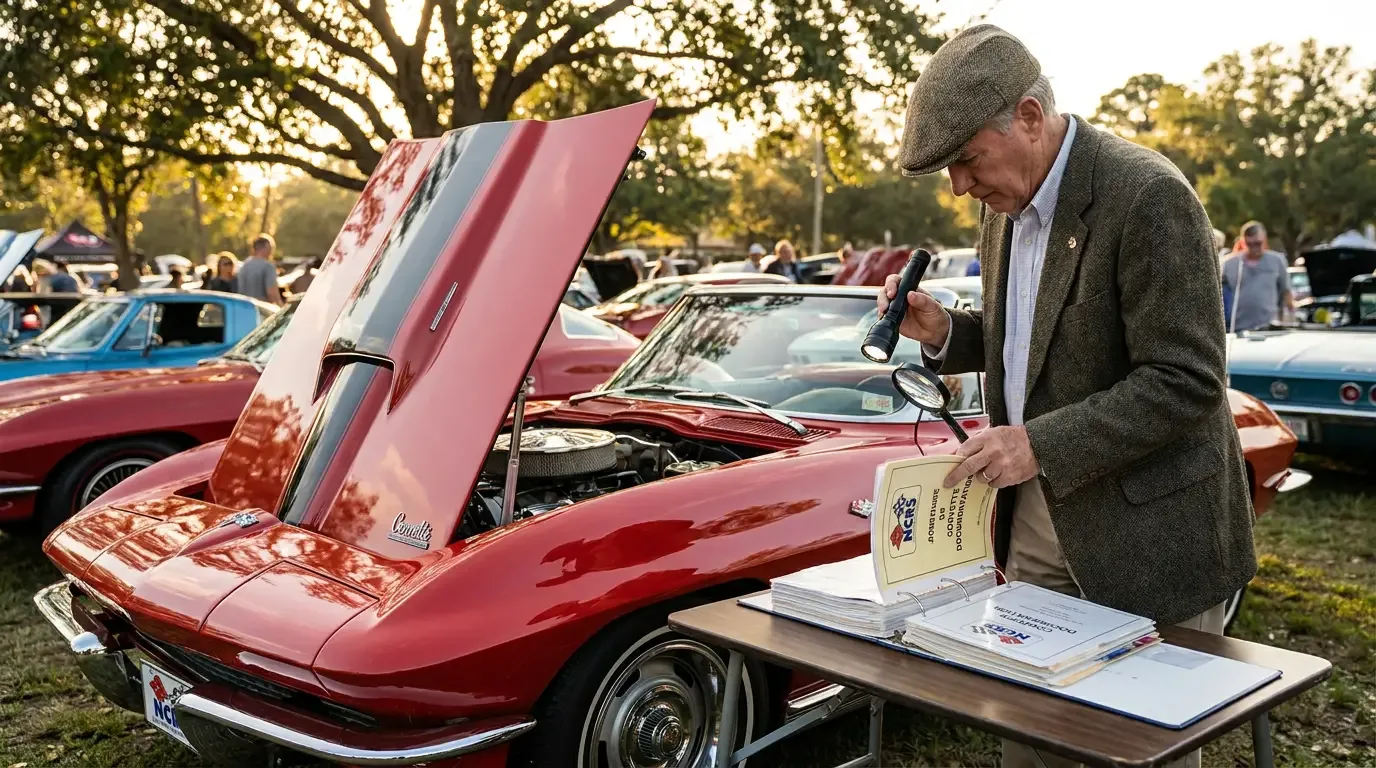
A 1967 Corvette with its original L88 427 engine is a fundamentally different asset than the same car with a correctly dated replacement. Both might look identical at a car show. At auction, the gap can run to six figures. The NCRS documentation process exists precisely to establish this: judges have seen enough restamped numbers and transplanted blocks to know where to look, and what they find either confirms the story or ends it.
For everyday buyers, the calculus is simpler. A small-block car with its original engine, original transmission, and matching date codes is worth more than one with a rebuilt or replaced drivetrain, even if the replacement is a higher-performance option. Originality beats upgrades in the collector market almost every time.
"The question I ask first isn't what engine it has. It's whether the engine it has is the engine it left the factory with. That one fact determines half the valuation conversation."
— David Mercer
Generation and specific year: why not all Corvettes are equal
The Corvette ran through eight generations between 1953 and today, and collector interest clusters unevenly across them. The C1 (1953 to 1962) and C2 (1963 to 1967) generations carry the strongest collector premiums overall, though specific years within each span command considerably more than others.
| Generation | Years | Collector tier | Notable peaks |
|---|---|---|---|
| C1 | 1953-1962 | High | 1953 (rarity), 1957 (fuel injection), 1962 (last solid axle) |
| C2 | 1963-1967 | Very high | 1963 split-window coupe, 1965 big block, 1967 L88/L71 |
| C3 | 1968-1982 | Mixed | 1969 L88, early chrome-bumper cars; late smog-era models soft |
| C4 | 1984-1996 | Emerging | 1990 ZR-1, 1996 Grand Sport; daily drivers still plentiful |
| C5 | 1997-2004 | Emerging | Z06 models gaining traction; base cars still depreciated |
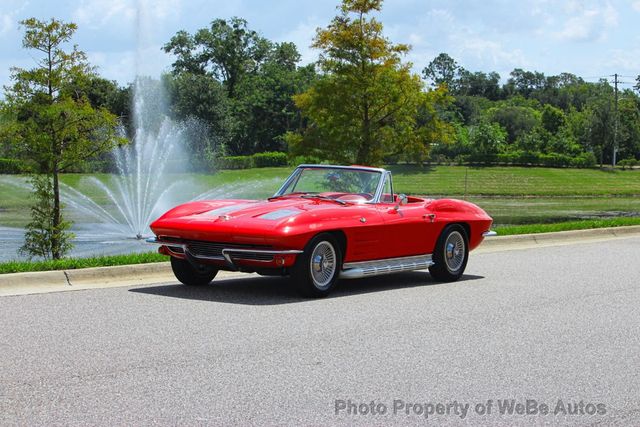
Within the C2, the 1963 split-window coupe stands apart because Zora Arkus-Duntov had the rear window divider removed for 1964 on visibility grounds, making the first-year coupe unique in the generation. Production of that body style was 10,594 units, but clean originals with correct trim are a fraction of that number today. The deeper story behind these rarity calculations is worth understanding before you price a car, and the deeper story on Corvette rarity reveals how production numbers translate into real-world scarcity.
Factory options: the codes that multiply value
Chevrolet sold the Corvette with a long options list, and certain RPO codes have become shorthand for collectibility. The L88 option, available from 1967 to 1969, is the most extreme example. It was a racing engine option that Chevrolet deliberately underrated on paper to discourage street buyers, and very few were ordered. Any documented L88 car commands stratospheric prices regardless of condition tier.
Below the L88, the hierarchy runs through the L71 tri-carb 427, the L89 aluminum-head option, and the M22 Rock Crusher close-ratio transmission. None of these add value in isolation. They add value when they are documented by the car's tank sticker or protect-o-plate, and when the actual components on the car match what the documentation says should be there.
Buyers who focus only on engine codes miss another category entirely: color combinations. Certain exterior and interior color pairings were ordered in small quantities. A 1967 in a rare color with documented broadcast sheet has attracted premiums at Mecum and Barrett-Jackson that surprised even experienced observers. The market for rare colors is real, though it is secondary to drivetrain documentation.
Condition and documentation: what the market actually pays for
Corvette values follow a tiered structure that auction houses use consistently. A driver-quality car with correct but worn components trades at a steep discount to a solid driver, which in turn trades at a discount to a concours-quality car. The gap between tiers is not linear. At Scottsdale and Kissimmee, moving from a solid driver to a properly documented, show-quality example of the same car can mean twice the hammer price.
Documentation multiplies value at every tier. A broadcast sheet, protect-o-plate, original title, and NCRS judging records are not just paperwork. They compress the research a buyer would otherwise have to do and reduce the risk premium baked into any significant purchase. Documented cars move faster and closer to asking price than equivalent cars without paperwork.
Condition factors that buyers often underweight include the frame and floor condition on C1 and C2 cars, which are fiberglass bodies on steel frames. The fiberglass holds up; the frame does not always. A car that looks correct from twenty feet but has a compromised frame rail is a restoration project, not a collector car, and needs to be priced accordingly.
What the market has been doing, and what that means for buyers
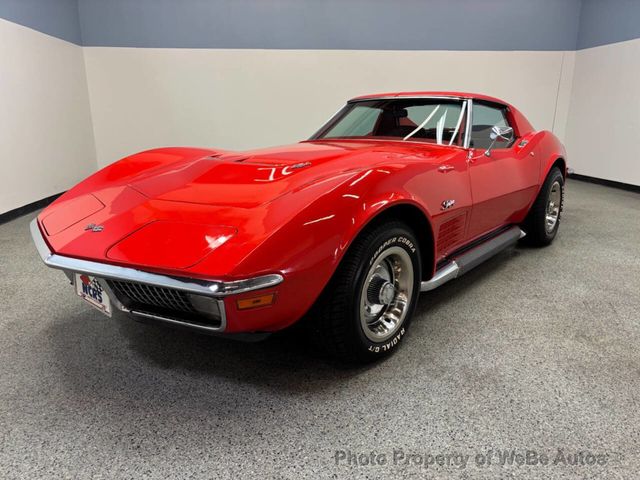
The top of the Corvette market, meaning documented L88s and L71 C2s, has been resilient through recent auction cycles. Mecum Kissimmee moved several strong C2 examples in 2023 and 2024 at prices that held or slightly exceeded prior results, which is meaningful in a period when many muscle car segments softened. The C3 market, outside the 1969 L88 and a handful of chrome-bumper cars, has been more variable. Entry-level C3s in driver condition are broadly accessible in the $15,000 to $30,000 range, with the mid-range sitting closer to $20,000 for a decent driver, while early chrome-bumper examples in good condition push considerably higher.
The C4 and C5 markets are in a transition period that is worth watching. ZR-1 cars from the C4 generation (1990 to 1995) have been gaining attention from buyers priced out of C2s, with clean low-mileage examples moving from under $20,000 toward the $30,000 to $40,000 range at auction, and concours-quality examples occasionally exceeding that ceiling. The Grand Sport package in the final C4 model year has attracted disproportionate attention given the relatively small production run of exactly 1,000 cars.
One event reshaped the Corvette story in a way that still affects how buyers think about the museum and the factory connection. The next chapter of that story shows how the museum's recovery and the broader factory relationship influence collector sentiment around Bowling Green-era cars.
The short version for buyers: if your budget extends to a documented, numbers-matching C2 in solid driver condition, that is still the most defensible place to put collector-car money in the Corvette segment. If your budget is lower, an early C3 with correct drivetrain and solid documentation is an undervalued entry point by historical standards. The C4 ZR-1 is the speculative play that data is starting to support.
Sources and notes
- Corvette Action Center: 1963 Corvette production numbers — confirmed 10,594 split-window coupes built
- Corvette Action Center: L88 engine specifications — confirmed 430 hp official rating for 1967, 1968, and 1969
- Corvette Action Center: 1996 Grand Sport production — confirmed exactly 1,000 units (810 coupes, 190 convertibles)
- Corvette Action Center: C4 ZR-1 production numbers 1990 to 1995 — confirmed six-model-year run totaling 6,939 units
- Classic.com: C4 ZR-1 market data — auction sale prices and current market averages
- National Corvette Museum: 1963 Corvette specifications and historical context