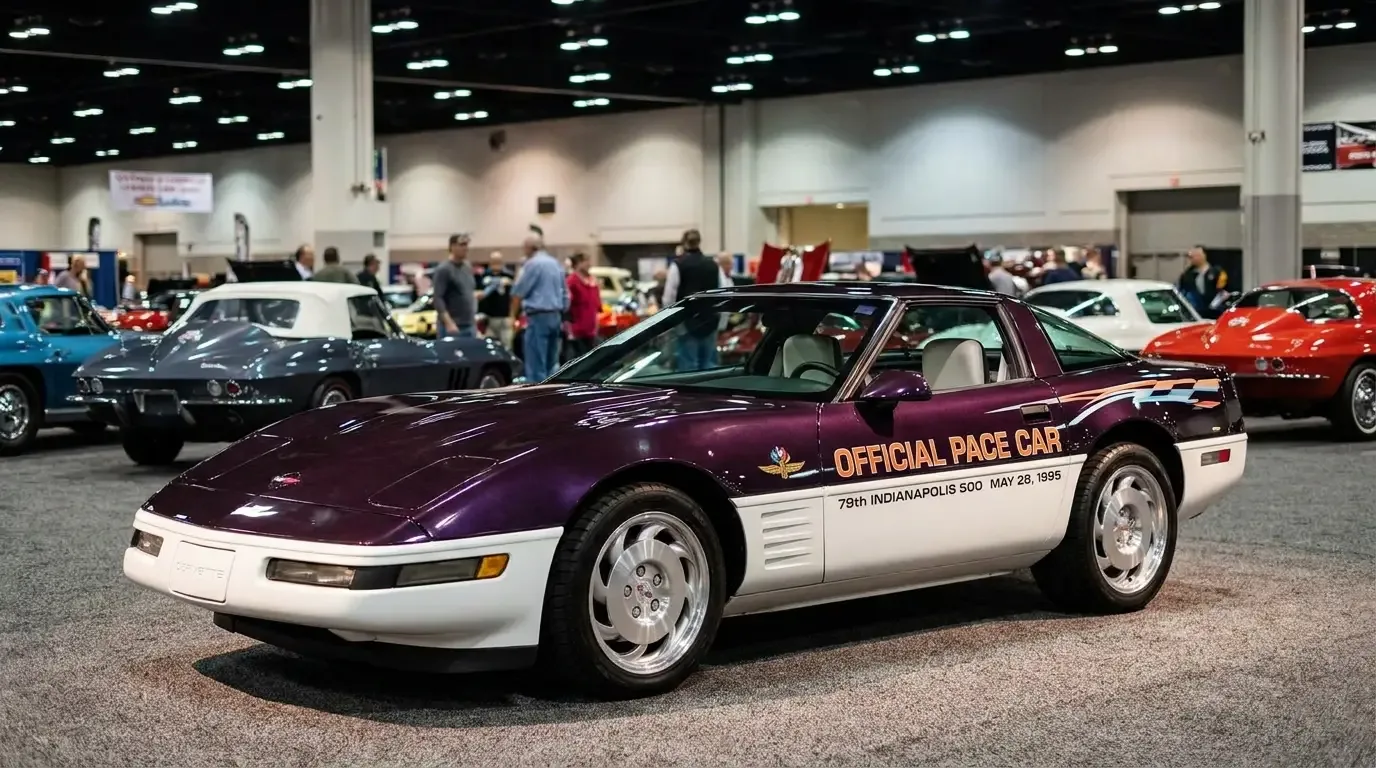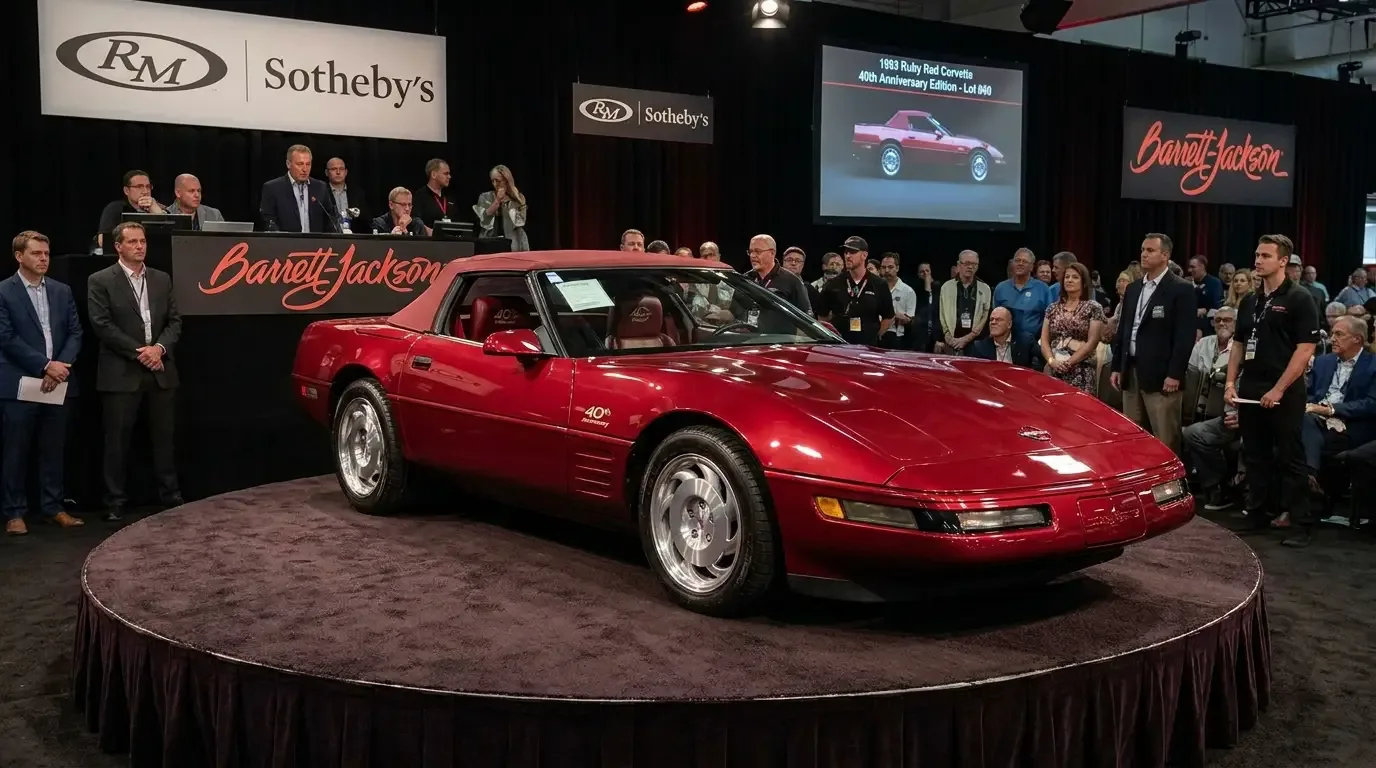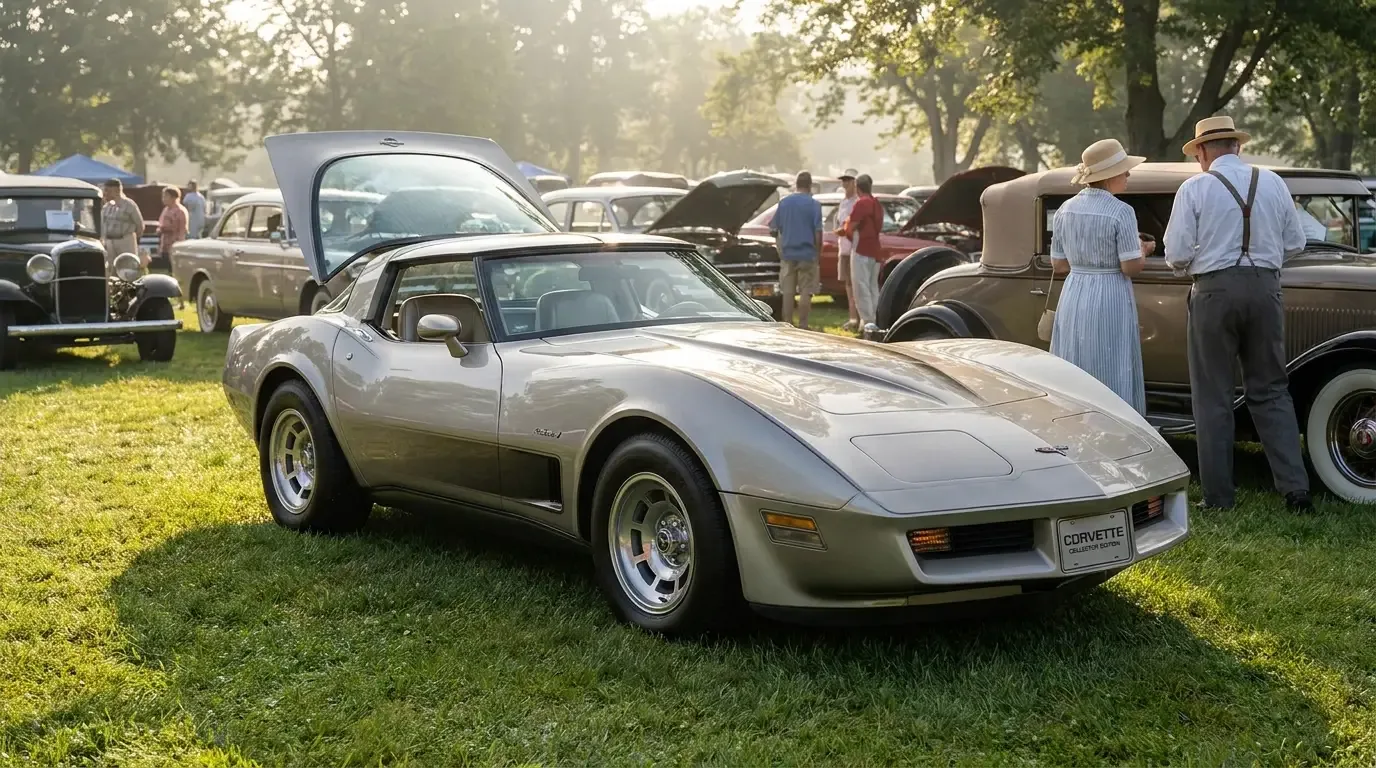
In 1978 Chevrolet gave the Corvette two distinct identities for a single model year: a Silver Anniversary edition honoring 25 years of America's sports car, and a Limited Edition Pace Car replica marking Indy 500 duties. Most people conflate them. They were separate option packages, carried different prices, different paint, and a completely different place in the production record. Getting them straight matters, because the market treats them differently and buyers sometimes pay pace car money for anniversary cars without realizing the difference.
The 1978 model year also introduced a new fastback rear window treatment, the most significant styling change the C3 had seen in years. That reshaped roofline runs through both special editions and through every standard 1978 Corvette, which makes 1978 a genuinely significant year in the car's history even before you get to the commemorative packages. To see the full picture of where the '78 fits within Corvette's long run of special editions, the full picture is worth reading.
The Silver Anniversary package: what it actually was
The Silver Anniversary edition, RPO B2Z, was available on any 1978 Corvette. It was a paint and trim package, not a performance upgrade. The exterior came in two-tone silver, with a lighter silver on the upper body and a darker charcoal-silver on the lower half. The division line ran at the body crease. Aluminum wheels were included, along with striping and anniversary badging.
Pricing for the Silver Anniversary package ran $399 over the base car. That number sounds modest by current standards, but the base 1978 Corvette sticker was $9,351, so the package added a meaningful percentage to the transaction. Dealers in 1978 frequently marked the cars up well beyond that, particularly early in the model year when both special editions were new.
Production numbers for the Silver Anniversary package have been a subject of some debate in NCRS circles. The commonly cited figure is 15,283 Silver Anniversary cars, and factory records support that count, though the RPO could be ordered in combination with other options in ways that add complexity to how you count them. If you're buying a car represented as a Silver Anniversary edition, the tank sticker is your first stop. It will show the B2Z code if the package was factory-ordered.
The Limited Edition Pace Car: a different animal entirely
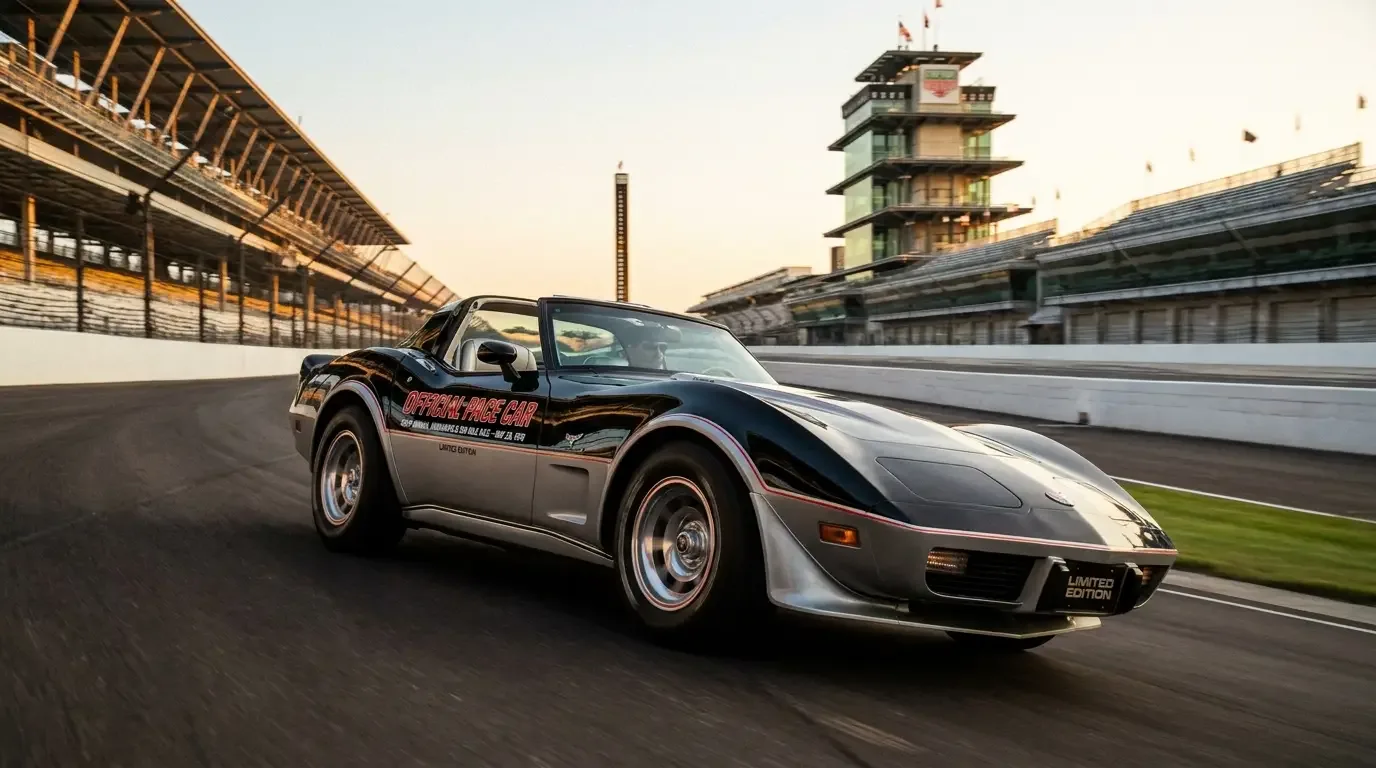
The Limited Edition Pace Car replica, RPO Z78, was a different proposition. It was built in conjunction with Corvette's role as the official pace car at the 62nd Indianapolis 500, paced by former race winner Jim Rathmann. Chevrolet announced a production run of 6,502 units, one for each Chevrolet dealer in the United States at the time, with the intent that dealers could display the car or sell it. In practice, many dealers immediately marked the cars up several thousand dollars over sticker, and some reportedly sold for two to three times the original retail price during the early months of 1978.
The Pace Car exterior was black over silver, split at the same body crease as the Anniversary cars but in a far more dramatic combination. The lower body was silver metallic, the upper section a very dark black. Official pace car decals were shipped in the trunk, not applied at the factory, so buyers could choose whether to install them. Many did not. Finding a genuine Pace Car without the graphics today is common; the decal package was never meant to be mandatory.
Interior on the Pace Car came in one of two configurations: full silver leather, or a silver leather and gray cloth combination. Both used gray carpeting and trim panels specific to this package. That interior, in either version, is one of the better ways to identify a genuine Pace Car alongside the tank sticker, because neither color combination was available on any other 1978 Corvette.
| Package | RPO code | Production | Paint | Price over base |
|---|---|---|---|---|
| Silver Anniversary | B2Z | 15,283 | Two-tone silver/charcoal | $399 |
| Limited Edition Pace Car | Z78 | 6,502 | Black over silver metallic | ~$4,300 |
| Base 1978 Corvette | , | 46,776 total | Multiple standard colors | , |
Engine options and what they mean for buyers
Neither special edition came with a unique engine. The 1978 Corvette was available with the L48 350 V8, which carried a factory rating of 185 hp, and the L82 350, rated at 220 hp. The L82 was available with the M21 four-speed close-ratio manual gearbox, a combination that was exclusive to the L82 in 1978. No big-block was available; those had left the Corvette option list in 1974.
The Pace Car replicas that were actually used at Indianapolis that year did not run the standard production engines, which is a common source of confusion. The ceremonial pace car and the fleet of cars used at the track were modified well beyond production spec. None of those modifications transferred to the street-legal replicas. A 1978 Pace Car replica on the street made the same power as any other L48 or L82 Corvette from that year.
For buyers comparing these cars now, the L82 option adds real value on any 1978 Corvette, not because the power difference is transformative but because the L82 cars were ordered by buyers who tended to want the manual transmission and the closer-ratio gearbox. Those tend to be better-maintained cars with more complete documentation. An L82 Pace Car with a four-speed and its build sheet intact is worth more than an L48 automatic with the same exterior package.
"The tank sticker on a '78 Pace Car replica tells you what left the factory. The decal package tells you what the owner decided to do with it. Those are two different questions, and mixing them up is how buyers overpay for cars that don't have the documentation to support the asking price."
— Tom Ramirez
Market reality and what these cars sell for now
The Silver Anniversary Corvette trades in a fairly well-established range. Driver-quality examples with honest cosmetics and a running drivetrain are available roughly in the $15,000 to $25,000 range depending on options and regional market. Solid drivers with good paint and documented history push toward the upper end. Concours-condition cars with matching numbers and NCRS documentation can exceed $35,000, but that market is thinner than it used to be.
The Pace Car replica market is a different conversation. Values ran significantly higher through the late 1980s and 1990s when the collector market treated the limited production number as a strong scarcity signal. The market has moderated since then. Unrestored, honest Pace Cars with original paint and intact documentation are currently available in the $25,000 to $45,000 range, with exceptional cars pushing higher. The decal question matters: a car with the original uninstalled decal package in the trunk commands more interest from serious collectors than one where the graphics were applied, removed, or replaced.
If you are actively shopping, 1978 Corvettes for sale gives you a current look at what is actually on the market and what sellers are asking. The gap between asking prices and hammer prices on these cars has been meaningful in recent years, so treat asking prices as starting points rather than market data.
The 1978 Corvette in context: what it tells you about the C3's final years
The 1978 model year sits in an interesting position for the C3 generation. The platform was fifteen years old by then, and Chevrolet was working within the constraints of a body that had been updated incrementally rather than redesigned. The fastback window was the biggest exterior change since the body's introduction. The special editions were, in part, a way to generate enthusiasm around a car that did not have the performance numbers it once did. Emissions regulations and fuel economy concerns had steadily reduced output from the peak of the late 1960s.
The anniversary context of 1978 is real, though. Twenty-five years of continuous production, from the 1953 Polo White roadsters built in Flint to the 1978 fastbacks rolling out of St. Louis, represents a genuine run for a sports car in the American market. The 1978 cars acknowledged that history directly in a way no previous Corvette had done with a dedicated package. The subsequent Collector Edition in 1982 would follow a similar logic at the end of C3 production, and read the related story to see how Chevrolet handled that final year.
The Silver Anniversary and Pace Car editions from 1978 reward buyers who do the documentation work. Neither car is particularly rare in absolute terms. What is rare is finding one with intact factory records, unmodified drivetrain, and original paint that has been properly maintained rather than freshened for sale. Those cars exist, but they take time to find. The shortcuts tend to show up in the tank sticker, in the paint transition line, and in whatever is missing from the glovebox.
Sources and notes
- Corvette Action Center: 1978 production data — confirmed total production 46,776, B2Z count 15,283, Z78 count 6,502, and base price $9,351.89
- CorvSport: 1978 Indy Pace Car — confirmed RPO Z78, interior options (full silver leather or silver leather/gray cloth), and production number 6,502
- Indianapolis Motor Speedway Museum: 1978 Corvette Pace Car — confirmed Jim Rathmann as pace car driver and L82 220 hp engine
- CorvSport: 1978 Corvette Specifications — confirmed L48 at 185 hp and L82 at 220 hp, and M21 as exclusive option with L82
- Wikipedia: Indianapolis 500 Pace Cars — confirmed Jim Rathmann drove the 1978 Corvette pace car (not James Garner, who drove in 1975, 1977, and 1985)
- Hagerty Media: 1978 Corvette Pace Car — market context and documentation guidance for buyers