
Why Chevrolet marked milestones in fiberglass
The Corvette's anniversary editions were not marketing exercises dreamed up by a committee. They came from the factory's awareness that the car had accumulated a history worth acknowledging. Every decade or so, Chevrolet paused long enough to issue a special-run Corvette that signaled "we know what this car means." The result is a subset of production that collectors track closely today, and for good reason. These cars carry options and color combinations that standard-catalog builds never offered. If you want to understand the full scope of our corvette special editions guide, the anniversary editions are a foundational chapter.
The production numbers are modest by mass-market standards. Not every anniversary edition sold in large quantities, and not every one was immediately appreciated. The 1978 Silver Anniversary cars sat on dealer lots in some regions; the 1988 35th Anniversary ran only as a white-on-white coupe with options that felt conservative compared to the ZR-1 era that followed two years later. Context matters. What looks like a subdued choice in its moment sometimes becomes the cleanest example a generation later.
The 1978 Silver Anniversary: the edition that established the template
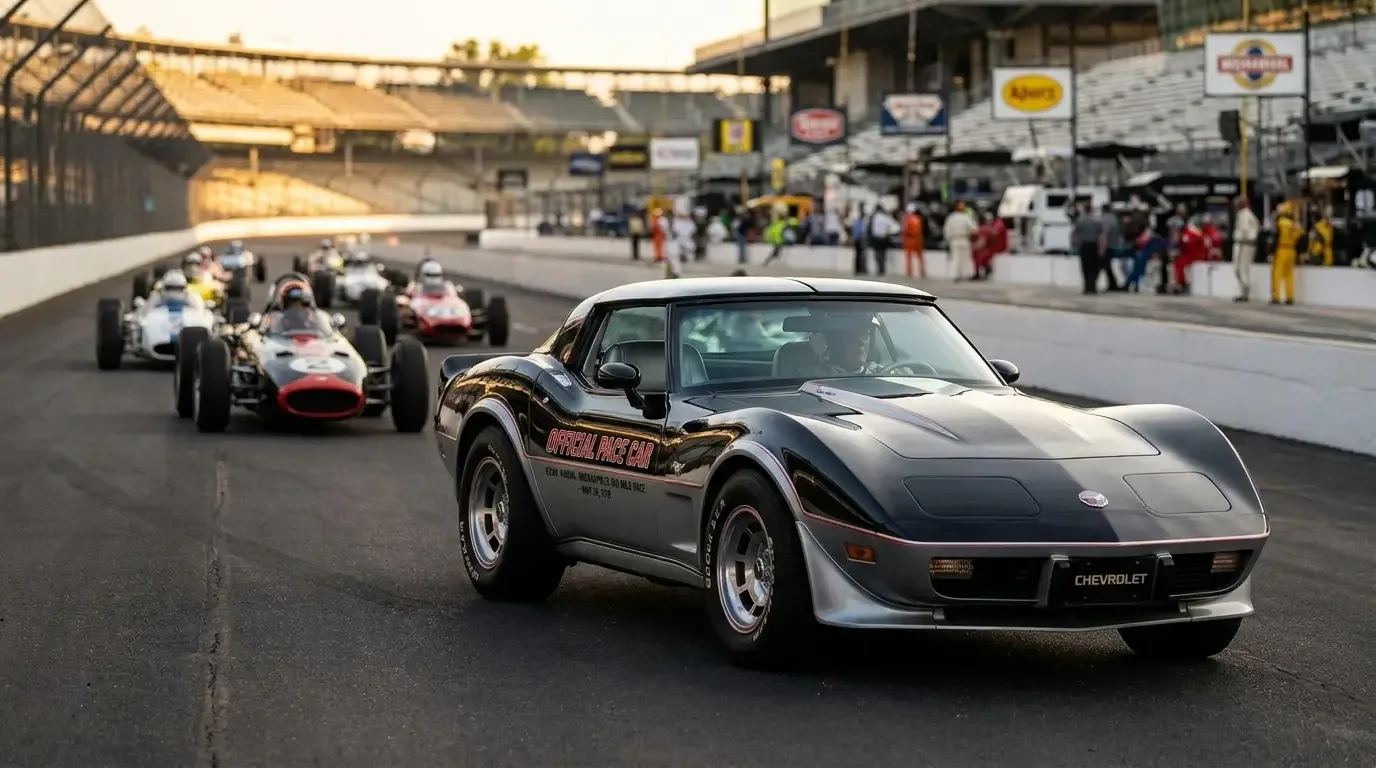
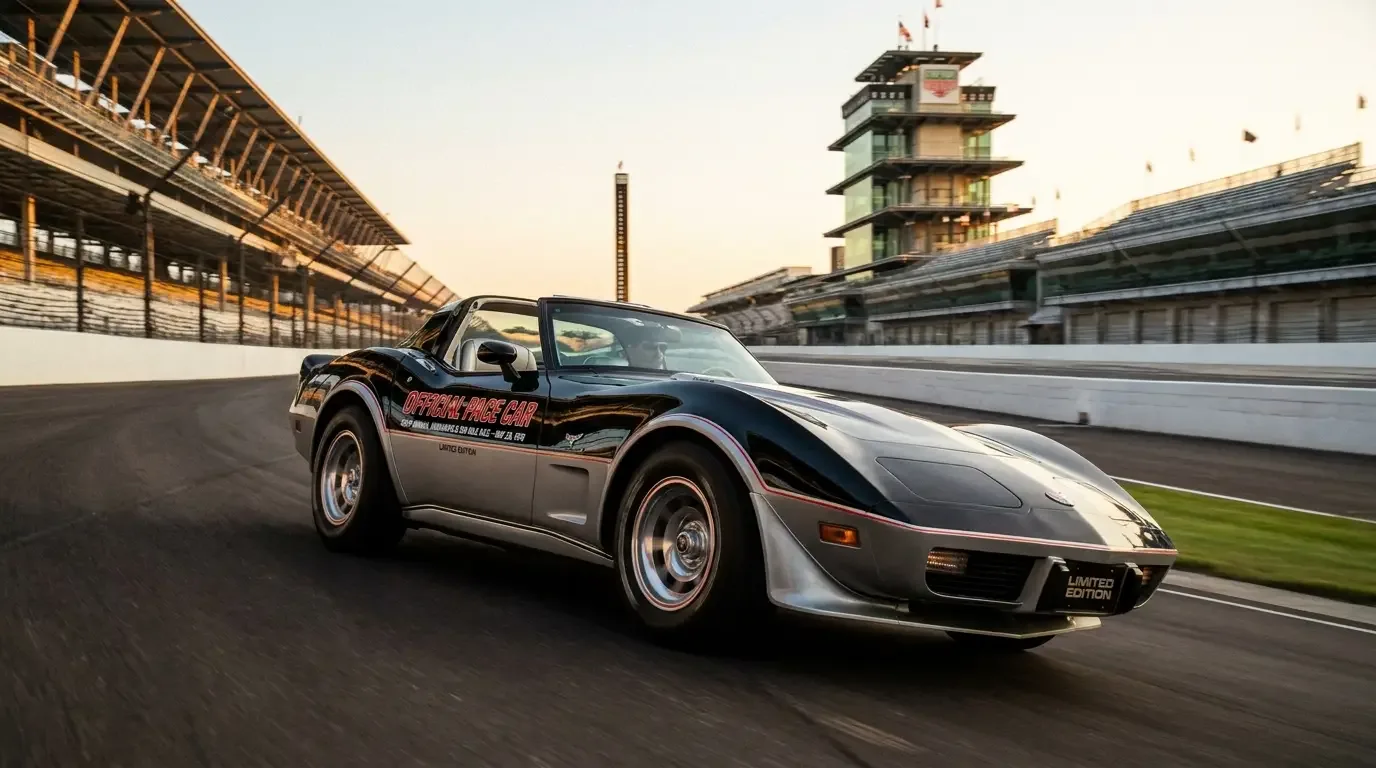
The 25th Anniversary Corvette in 1978 is where this tradition formally started. Chevrolet issued a Silver Anniversary package (RPO B2Z) in a two-tone Silver/Gray paint treatment that no standard C3 buyer could order any other way. The package came with specific interior appointments and was available on the base coupe. Separately, 1978 also produced the Indy 500 Pace Car replica, which often gets discussed alongside the Silver Anniversary car because both appeared in the same model year, but they are distinct editions with different prices, different trim levels, and very different production numbers.
The Silver Anniversary cars were priced as an option over the base C3, not as a separate model. For the first time, Chevrolet built in a fastback rear window with a large lifting hatch. That change applied to the entire 1978 line, not just the anniversary cars, but the two-tone treatment made the Silver Anniversary versions immediately identifiable. Total Silver Anniversary production ran to 15,283 units out of around 46,776 total 1978 Corvettes.
For classic Corvette for sale buyers focused on this era, condition sorting is the primary work. Many 1978 Silver Anniversary cars were driven, stored, repainted, or had their two-tone finish disturbed by body repairs. Finding one with correct factory-documented paint and unblemished chrome trim is harder than the production number suggests.
The 1988 35th Anniversary: a study in restraint
Ten years after 1978, Chevrolet returned to the anniversary format with the 35th Anniversary Corvette. The 1988 edition was a coupe-only package (RPO Z01) built on the C4 platform, finished exclusively in white with white leather interior and white wheels. The exterior badging was specific to the package. No other color was available through the anniversary option.
The 35th ran in relatively modest numbers: 2,050 units out of a 1988 production total that exceeded 22,000. What makes these cars interesting now is precisely what some buyers found off-putting at the time: the all-white combination reads as a period-correct late-1980s aesthetic that has aged better than some of the louder options from the same era. The engine was the standard L98 V8 rated at 240 hp, not a performance variant, so the 35th Anniversary is not a performance collector's primary target. It is, however, one of the cleaner period-correct C4s to find if the white-on-white combination appeals.
The 1993 40th Anniversary: Ruby Red across the board
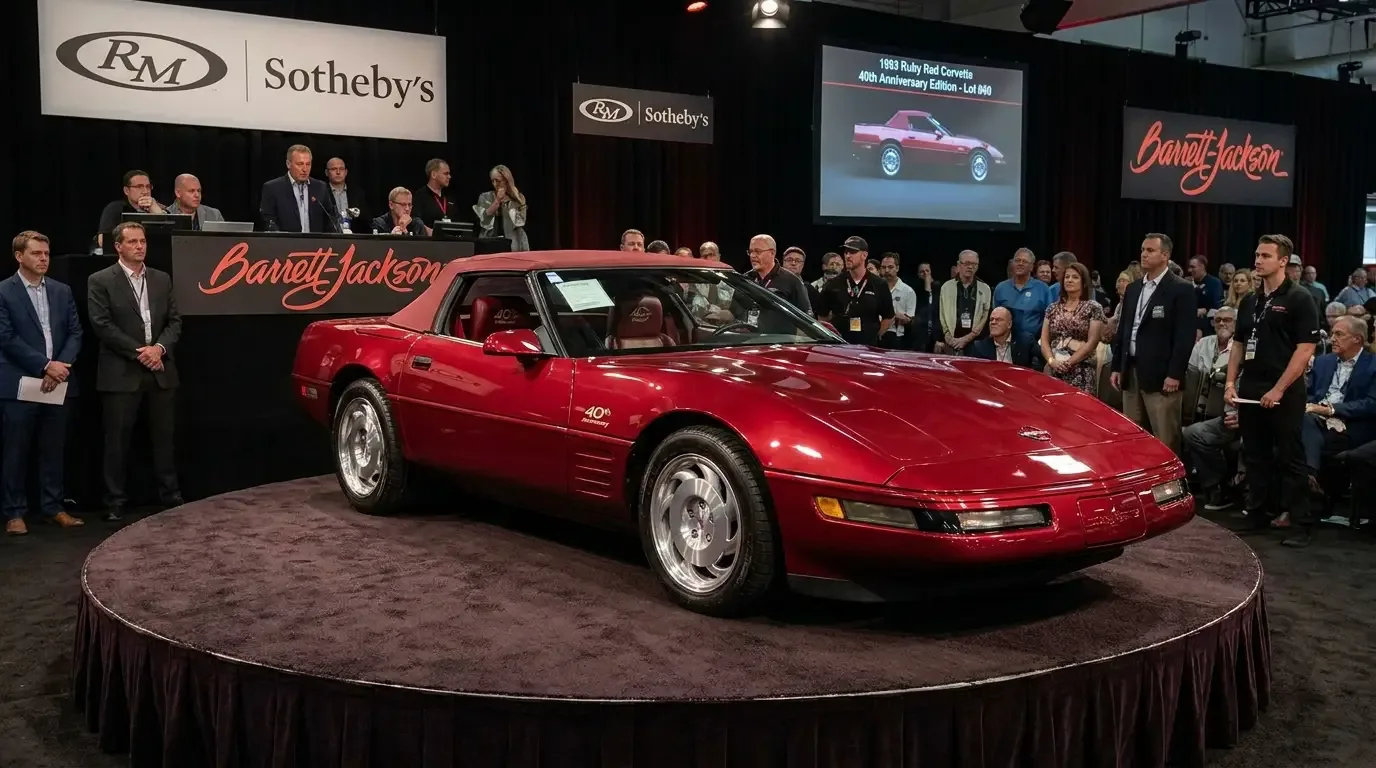
For the 40th anniversary in 1993, Chevrolet took a more immersive approach. The 40th Anniversary package (RPO Z25) wrapped the car inside and out in a dedicated Ruby Red finish -- exterior, interior leather, and engine cover all matched. Unlike the 35th Anniversary coupe, the Z25 option was available across coupe, convertible, and ZR-1 body styles, giving buyers more flexibility. Of the 21,590 Corvettes built that year, 6,749 carried the Z25 package. The ZR-1 version, with only 245 of those 6,749 units, represents the most performance-capable anniversary variant in the C4 generation.
| Edition | Year | Platform | Distinguishing color/trim | Approx. production |
|---|---|---|---|---|
| Silver Anniversary (25th) | 1978 | C3 | Two-tone Silver/Gray (RPO B2Z) | 15,283 |
| 35th Anniversary | 1988 | C4 | White/White only (RPO Z01) | 2,050 |
| 40th Anniversary | 1993 | C4 | Ruby Red inside and out (RPO Z25) | 6,749 |
| 50th Anniversary | 2003 | C5 | Anniversary Red Metallic/Shale two-tone interior (RPO 1SC) | 11,632 |
| 60th Anniversary | 2013 | C6 | Arctic White with Blue Diamond interior (RPO Z25) | ~2,059 (multiple body styles) |
The 50th Anniversary: the most complete package in the series
The 2003 50th Anniversary edition stands apart from the others because Chevrolet put real resources behind it. This was the final C5 model year, and the factory used the occasion to build a commemorative package (RPO 1SC) with an exclusive color (Anniversary Red Metallic, a deep Xirallic-crystal finish distinct from standard Magnetic Red), a specific two-tone Shale interior, and a head-up display as standard equipment on Anniversary cars. Magnetic Selective Ride Control was also part of the package.
The 50th Anniversary ran on both the coupe and convertible, which is atypical for anniversary editions that often restricted body styles. It was available with the manual transmission or the automatic. Production reached 11,632 units (4,085 coupes and 7,547 convertibles), which makes it the largest of the modern anniversary runs by a significant margin. That production volume keeps values from climbing as fast as the lower-volume editions, but it also means finding one in clean condition is not a multi-year search.
From a documentation standpoint, the 50th Anniversary cars are well-supported. Window stickers regularly survive, build sheets are traceable, and the NCRS has established correct specs. What to watch: interior Shale leather that has faded or been conditioned incorrectly, and wheels that have been refinished in the wrong finish.
"The 50th Anniversary package is one of the few times Chevrolet put the commemorative content where it was actually visible in the car. The two-tone interior reads as intentional, not as a decal package. When I see one that's been kept correctly, the documentation matches and the color is right, those are the ones worth paying for."
— Tom Ramirez
What to prioritize when buying an anniversary edition
Anniversary editions carry a collector premium when they are correct. That premium disappears fast when something is wrong. Paint that has been blended through a repaint, wheels refinished in a non-factory spec, or missing documentation all push these cars back toward the value of a standard model-year car with equivalent mileage.
The 1978 Silver Anniversary is the oldest in the serious collector pool, which means paint correctness is the first question. The two-tone finish requires two separate color codes on the tank sticker; if the sticker is missing or inconsistent, factor in authentication cost before buying. For the 2003 50th Anniversary, the head-up display unit is a known failure point on high-mileage examples and not cheap to replace. For the 60th Anniversary in 2013, the Arctic White paint is forgiving to repaint correctly, but the Blue Diamond sport seats were a specific design that aged better in some trim configurations than others.
The series continues as the Corvette does. Next in the series covers the 1978 Pace Car replica in detail, which overlaps with but is distinct from the Silver Anniversary discussed here.
Sources and notes
- Corvette Action Center 1978 production data: confirmed RPO B2Z Silver Anniversary production at 15,283 units and total 1978 output of 46,776
- CorvSport 1988 35th Anniversary guide: confirmed RPO Z01, 2,050-unit production run, white-only coupe specification
- Corvette Action Center 1993 production data: confirmed RPO Z25 40th Anniversary at 6,749 units including 245 ZR-1 variants
- Vettes of Atlanta 50th Anniversary deep dive: confirmed RPO 1SC, Anniversary Red Metallic color, 11,632 production total, Shale interior, MSRC standard
- CorvSport 2013 C6 guide: confirmed RPO Z25 60th Anniversary package at approximately 2,059 units, available across multiple C6 body styles in Arctic White with Blue Diamond interior
- CorvSport 1998 Pace Car guide: confirmed no factory 45th Anniversary edition existed in 1998; the 1998 special was the Indy 500 Pace Car replica (1,163 units, purple/yellow)