
What the Grand Sport actually was in 1996
The 1996 Corvette Grand Sport is one of those cars where the story behind it matters as much as the car itself. Chevrolet was ending C4 production after the 1996 model year, and the Grand Sport package was a send-off. It was not a separate model. It was an RPO option applied to the base Corvette coupe and convertible, built around a specific exterior treatment and a set of performance upgrades that put it well above a standard LT1 car. If you want the full picture of how Chevrolet used limited editions through the C4 run, it helps to understand that the Grand Sport sits at the end of that tradition.
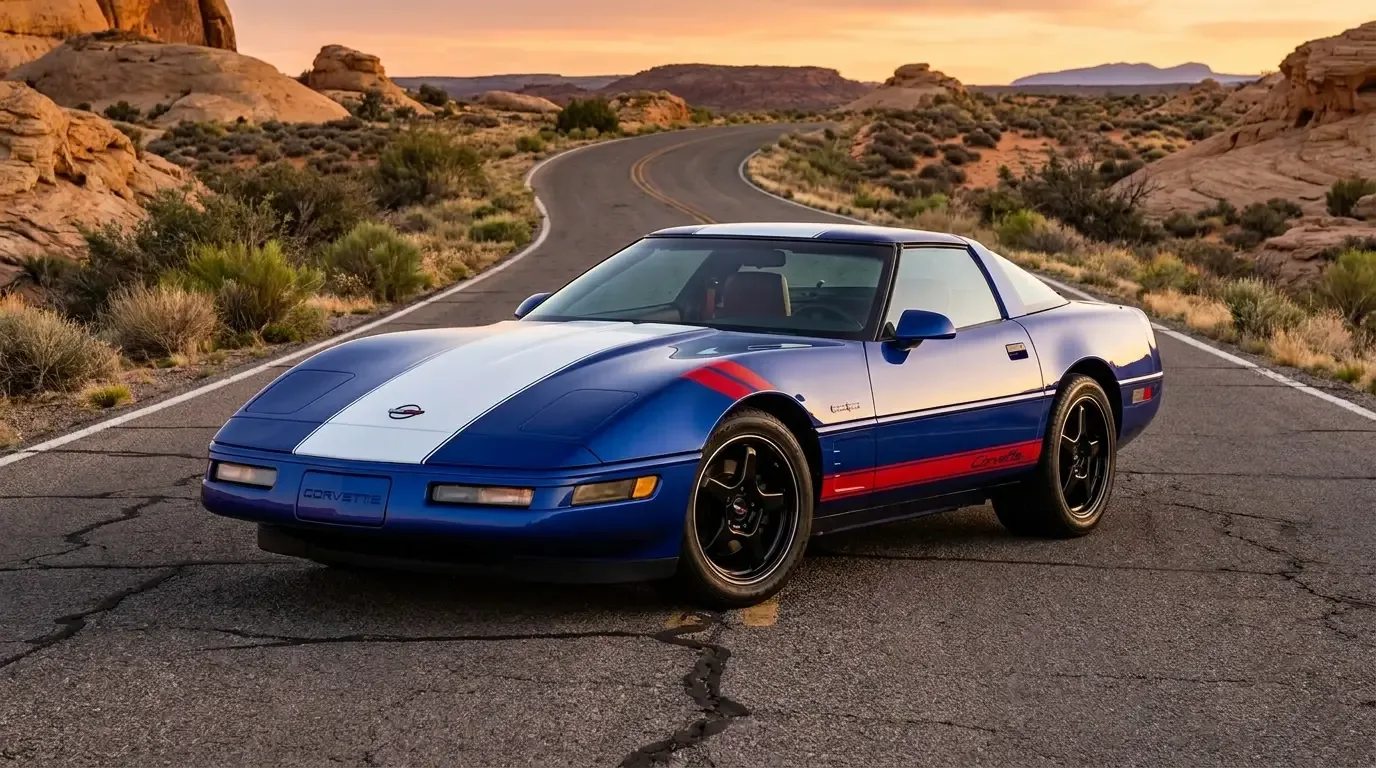
Admiral Blue is the color most collectors associate with the Grand Sport, and for good reason. The package used a two-tone exterior scheme: Admiral Blue body paint paired with white hash marks on the front fenders and a red stripe running along the lower rocker panels. The graphics referenced the original 1963 Grand Sport racing program, though the connection was more visual tribute than direct lineage. Chevrolet was careful with that distinction.
Production numbers and what the records show
Total 1996 Grand Sport production came to 1,000 units: 810 coupes and 190 convertibles. The Admiral Blue exterior was the standard Grand Sport color. A small number were built in other colors, but the blue-over-white-stripe treatment is what most people mean when they say "Grand Sport." The NCRS and Corvette enthusiast community have documented the production breakdown in detail, and it is worth pulling tank sticker data if you are buying one, since the option code records confirm what left the factory versus what someone added later.
The RPO code for the Grand Sport package was Z16. It included the LT4 engine rather than the standard LT1 found in most 1996 Corvettes. The LT4 was rated at 330 horsepower, which was a meaningful step up. It also required the six-speed manual transmission. You cannot get a Grand Sport with an automatic. That combination, the LT4 and the six-speed, is part of what separates the Grand Sport from a standard car wearing similar graphics.
The LT4 engine and what it means for buyers
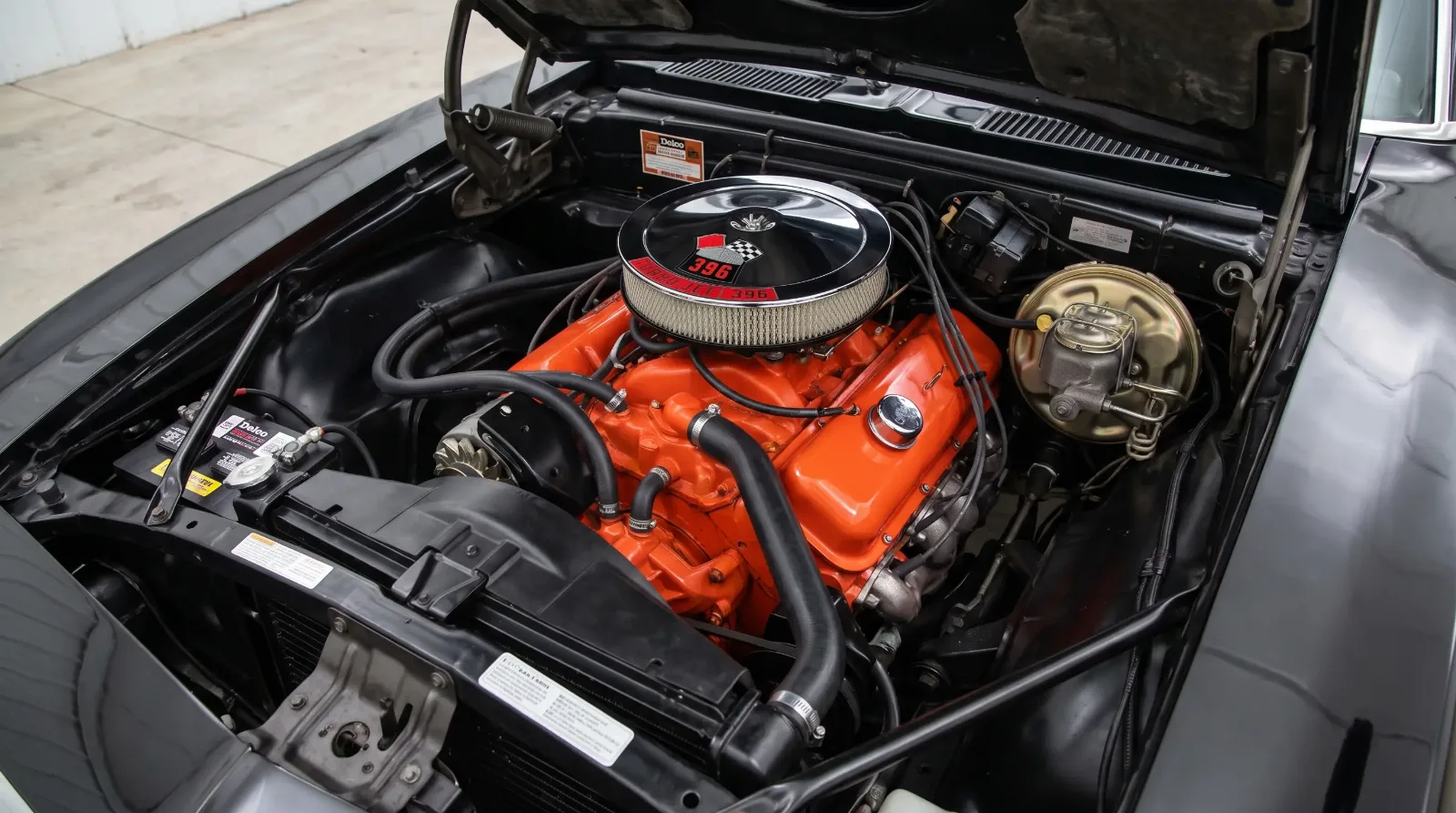
The LT4 is the reason to buy a Grand Sport over a standard 1996 LT1 car. Both engines share the same basic small-block architecture, but the LT4 received revised cylinder heads with more flow, a higher-compression ratio, a more aggressive camshaft, and roller rocker arms. The combination pushed output above what the LT1 made in the same year. For a driver who actually uses the car, the LT4 pulls harder at higher rpm and feels more purposeful than the LT1 in back-to-back comparison.
The six-speed manual that came with every Grand Sport is a ZF S6-40 unit, built by Zahnradfabrik Friedrichshafen and used throughout the C4 generation from 1989 onward. It holds up well in normal use. High-mileage examples can develop synchronizer wear, and the linkage can feel loose if the bushings have not been maintained. These are fixable problems. They show up at inspection and should show up in the asking price if present.
| Spec | 1996 Grand Sport (Z16) | 1996 Standard Corvette (LT1) |
|---|---|---|
| Engine | LT4 5.7L V8 | LT1 5.7L V8 |
| Horsepower | 330 hp | 300 hp |
| Transmission | 6-speed manual only | 6-speed manual or 4L60-E auto |
| Exterior color | Admiral Blue (primary) with white hash marks and red stripe | Multiple color options |
| Production quantity | 1,000 total (810 coupes, 190 convertibles) | Standard production |
| RPO code | Z16 | N/A |
What to watch for when buying one
The graphics are an immediate concern. The Admiral Blue paint and the white hash marks on the fenders are period-correct factory work, but they have had thirty years to get repainted, touched up, or replaced entirely. A car with resprayed graphics is not worthless, but it is a different conversation than one with original paint. Look at the fender hash marks under good light and check the edges where the white meets the blue. Factory application has a specific profile. Repaint work often shows slight height differences or texture variations at the boundary. If you are evaluating one, the 1996 Grand Sport Corvettes for sale on the market range from driver-quality examples with some paint work to concours-level survivors with documented histories.
The red stripe along the rocker panels is harder to evaluate because it sits low and takes road debris. Chips are common. What you are looking for is whether the stripe has been replaced entirely or just touched up, and whether the replacement matches the original in color and thickness. This matters more for show-quality buyers than for drivers.
Underneath the graphics, a 1996 Corvette body has the same structural considerations as any C4. The birdcage structure around the windshield and door openings can develop stress cracks where the fiberglass panels bond to it. These appear as hairline cracks running from the corners of the windshield or at the A-pillar base. On a thirty-year-old car that has been driven, some of this is normal wear. Significant cracking suggests harder use or a prior impact. Check the door gaps while you are at it. They should be even, and the doors should open and close without resistance.
"The Grand Sport is one of the cleaner C4 stories. Chevrolet built a thousand of them, put a real engine in every one, and gave them a color combination that reads clearly in a parking lot. The factory records are there if you know where to look. Pull the tank sticker data before you buy anything."
— Tom Ramirez
Price ranges and where the market sits
Driver-quality 1996 Grand Sports with the original Admiral Blue paint intact and mechanically sound drivetrains have been trading in the $30,000 to $45,000 range in recent years. Cars with documented history, original paint in good condition, and low mileage push toward the upper end. Well-documented, concours-prepared examples have sold above $55,000 at auction, with standout convertibles reaching into the $80,000 range at major auction houses. The convertible tends to command a small premium over the coupe, though the coupe is the more common body style in this package.
The LT4 engine is a positive for value, but it also means the car has been driven more aggressively by at least some of its owners. High-mileage examples that have been properly maintained are not a problem. High-mileage examples that have not been maintained are a different matter, and the LT4 will tell you about deferred service quickly. The LT4 intake manifold is a dry design, meaning coolant does not pass through the intake gasket itself, but the throttle body coolant line is a point worth inspecting. Look for coolant condition and any evidence of slow leaks in that area. Listen for lifter noise on cold start.
The C4 Corvette has been gathering serious collector attention. For those interested in how the Corvette platform evolved from the beginning, where it all began provides useful context on why the final C4 special editions carry the weight they do. The Grand Sport sits at the end of a production run that lasted from 1984 to 1996, and Chevrolet chose to close it with a car that used the best engine available and a color combination worth remembering.
Sources and notes
- Grand Sport Registry: 1996 specifications page confirming Z16 RPO code, 810 coupes and 190 convertibles, LT4 330 hp, ZF six-speed
- Corvette Action Center: 1996 Grand Sport production numbers and specifications (810 coupes, 190 convertibles, total 1,000)
- Corvette Action Center: 1996 LT1 and LT4 engine specifications confirming 330 hp LT4, 300 hp LT1
- CorvSport: 1996 Corvette production numbers database
- CorvetteForum: ZF S6-40 vs T56 discussion confirming C4 Corvettes used the ZF S6-40 six-speed, not the T56
- CorvetteBlogger: 1996 Grand Sport market listings and recent sale price context