Rarity in the classic truck world does not work the way rarity works with cars. A truck was a tool. Most got worked until the frame cracked, then scrapped. So when a factory built a few hundred of something odd, a fancy trim, a limited performance run, a coachbuilt experiment, and most of those got used up too, the survivors climb into six-figure territory fast. The numbers below are where buyers and sellers get sloppy, and where a lot of what you read online is guesswork stated as fact. I have flagged the ones worth checking against real documentation before you write a check.
This is a companion to the broader classic truck collecting guide. Here I want to look at the genuinely scarce stuff, the trucks that turn up once a year at a major sale and disappear back into a collection.
What actually makes a truck rare
Low production is only half of it. Plenty of trucks were built in small numbers and are still cheap because nobody wants them. Value shows up when scarcity meets demand, and demand in trucks tends to cluster around three things: a factory styling exercise that looks like nothing else, a documented performance package, or a first-year-of-something that collectors treat as a milestone.
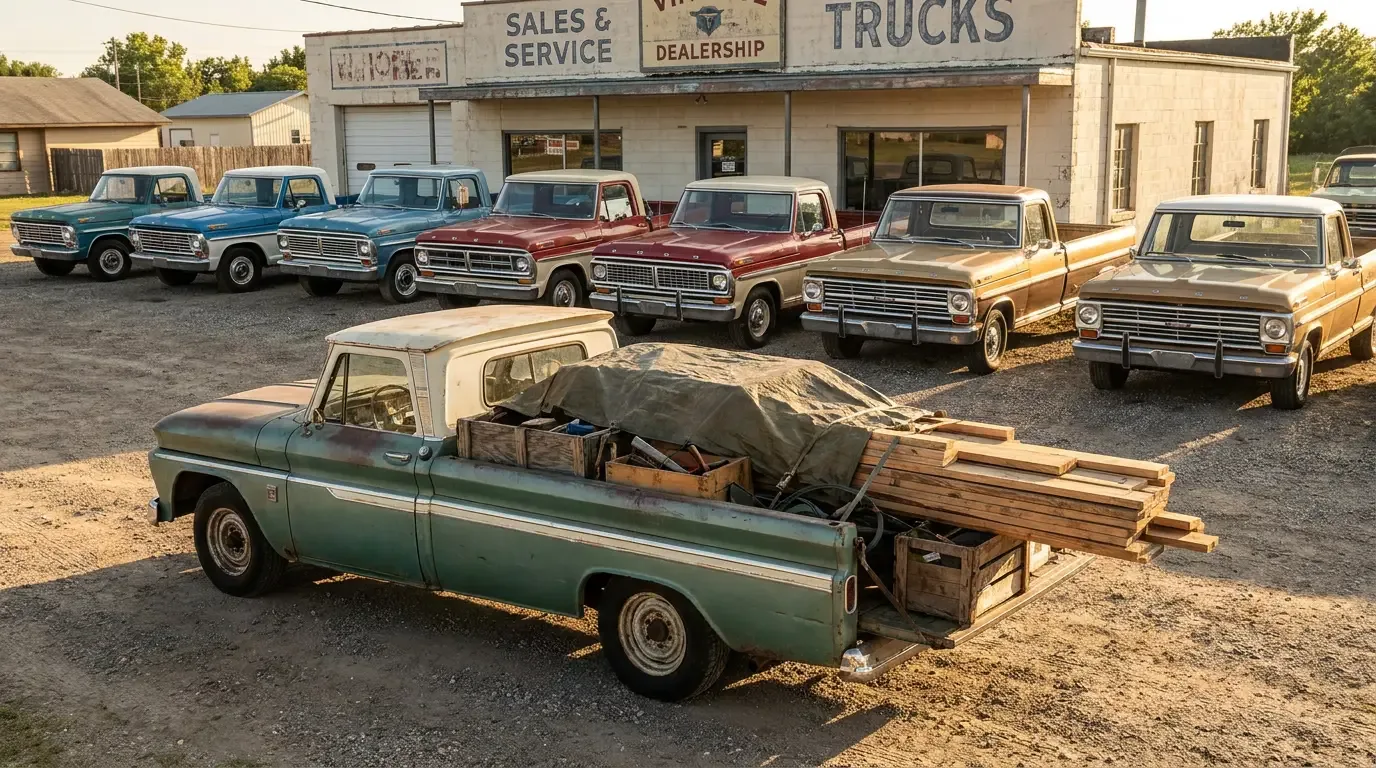
The other factor is attrition. A pickup that saw farm or fleet duty rarely survived in original form. Beds rusted, engines got swapped, bodies got repainted with a brush. So the real rarity is not "how many were built," it is "how many are left that a serious collector would accept." That second number is almost never published, and it is the one that moves prices.
- Original drivetrain, matching numbers where the factory recorded them.
- An intact, uncut bed. Bed damage on these specials is the single most expensive thing to fix correctly.
- Documentation: build records, dealer paperwork, a known ownership chain.
- Correct trim and paint, because much of what made these trucks special was cosmetic and hard to reproduce.
The finned and the chromed: styling specials
The two names that come up first are the Chevrolet Cameo Carrier and the Dodge Sweptside, and they are the clearest example of how a sales failure becomes a collector prize.
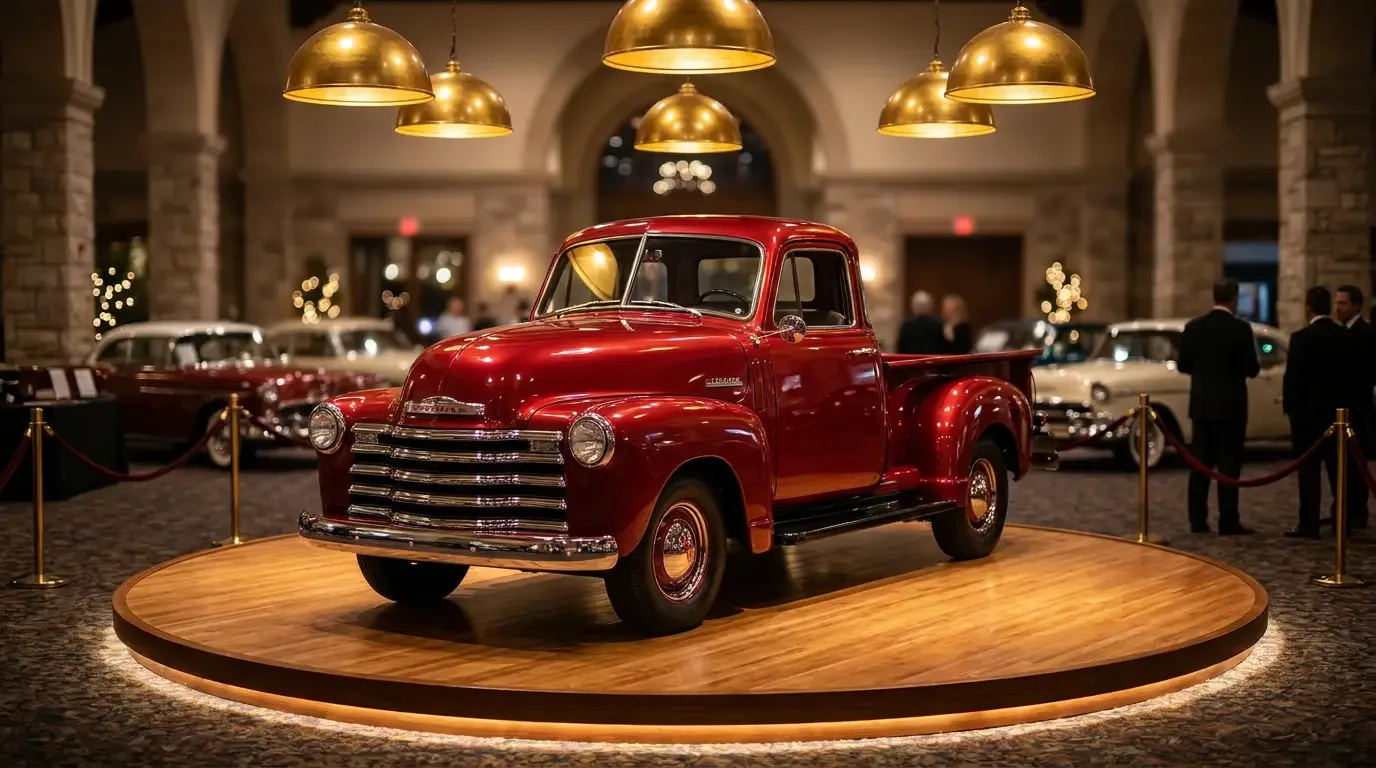
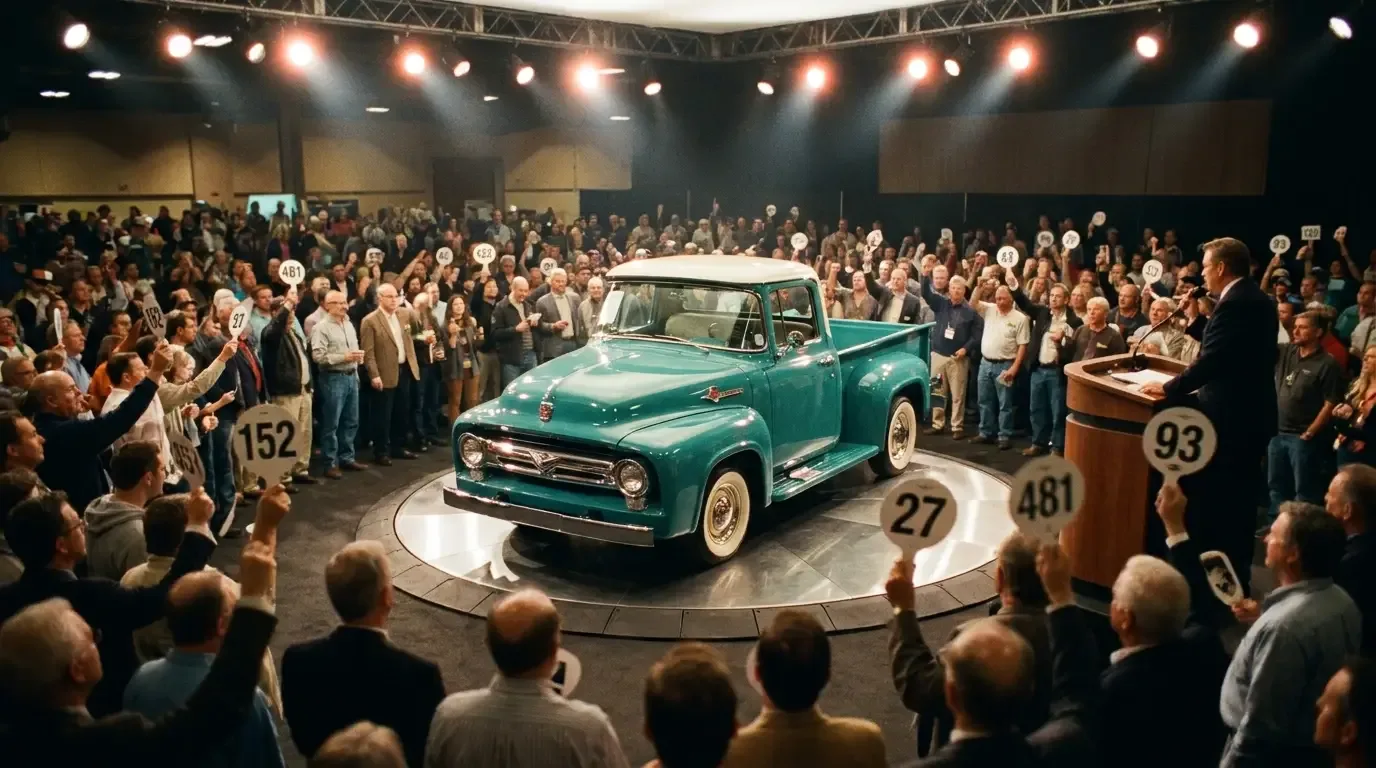
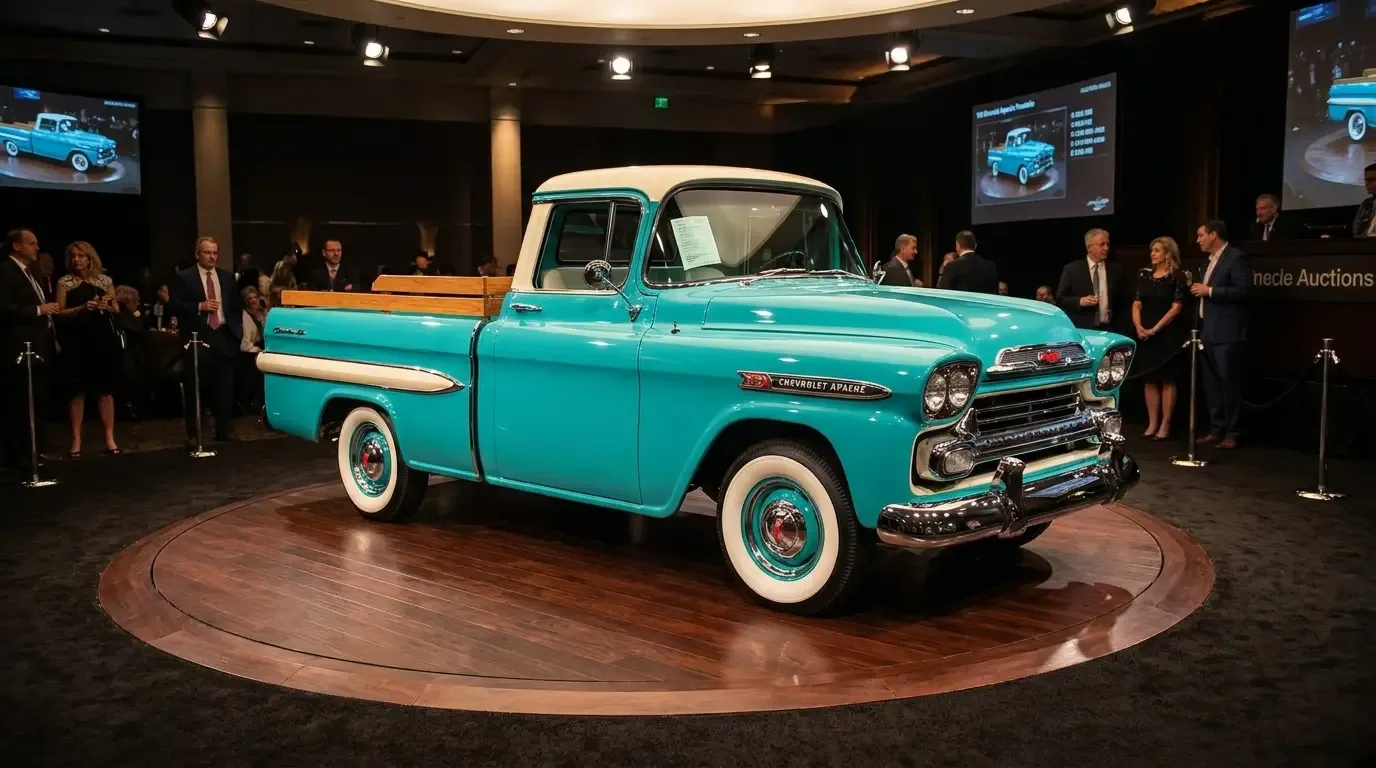
The Cameo arrived in the mid-1950s as Chevrolet's attempt at a "gentleman's pickup," with smooth fiberglass bed sides that hid the rear fenders and a level of trim nobody expected on a work truck. First-year Cameo production ran to roughly 5,200 units out of a total of about 10,300 across the model's short life, and the truck was expensive enough new that most buyers took the cheaper standard bed instead. Today a well-restored Cameo can reach well into six figures, with the strongest documented sales reported around the $130,000 to $155,000 range. That is a wide spread, and it tracks exactly with condition and documentation.
The Dodge Sweptside was Chrysler's answer, built in small numbers by a special equipment group late in the 1950s. Total Sweptside production across its short run is commonly cited as roughly 1,200 units, with only a couple hundred in the debut year. Driver-grade survivors trade for far less, while restored, documented examples have been reported to reach $100,000 or more. Treat any specific hammer price you see quoted as something to confirm against the actual auction record.
"A styling special lives or dies on originality. Reproducing that fiberglass bed or the correct two-tone is where the money goes, so a shabby original often beats a pretty restoration if the restoration cut corners you cannot see."
— David Mercer
Muscle in a pickup: the performance specials
The late 1970s gave collectors the Dodge Li'l Red Express, a truck that sidestepped emissions rules that were choking the cars of the era and ended up as one of the quickest American vehicles you could buy new for a brief moment. It is instantly recognizable: bright red, exposed vertical exhaust stacks, gold lettering, oak bed trim.
Production ran two model years. The figures reported are around 2,000 to 2,200 for the first year and roughly 5,000 for the second, for a combined total in the low-to-mid 7,000s. That makes it scarce but not vanishingly so, which is why values land below the true one-off specials. Strong sales have been reported in the $50,000 to $60,000 range for exceptional low-mileage examples, with typical good-condition trucks valued lower, in the low-to-mid $20,000s. First-year trucks generally carry a premium over second-year ones because of the lower count and a few running changes.
| Truck | Rough era | Why it is rare | Reported value band |
|---|---|---|---|
| Chevrolet Cameo Carrier | Mid-late 1950s | Costly styling special, low take rate | Into six figures for top cars |
| Dodge Sweptside | Late 1950s | Small special-equipment run | Up to ~$100k+ restored |
| Dodge Li'l Red Express | Late 1970s | Two-year performance package | ~$20k typical, $50k+ exceptional |
There are other performance-flavored specials worth naming as you shop: the GMC Syclone from the early 1990s, a turbocharged compact that outran sports cars of its day, and its Typhoon SUV cousin. Both were built in limited numbers, roughly 3,000 Syclones and 4,700 Typhoons, and have their own dedicated followings. They sit on the newer edge of "classic," but the same rules apply, documentation and originality decide the price.
The oddities that surprise people
Beyond the famous names, real money hides in trucks most people walk past. Early COE (cab-over-engine) haulers, certain factory dually and stepside combinations, dealer-installed special packages, and short-run color-and-trim editions can all be rarer than a Li'l Red Express while flying under the radar. The problem is proving it. Without factory records, "one of a handful built" is just a story, and stories do not hold up when you resell.
This is also where fakes appear. A common truck dressed up to look like a valuable special is easy to build and hard for a casual buyer to spot. The performance and styling specials are the most frequently cloned, precisely because the ingredients were cosmetic. If you are chasing a six-figure truck, the paperwork matters as much as the metal.
Is a rare truck a good buy
As an investment, the genuine one-off styling specials have held up better than the performance runs, because their production numbers are lower and harder to fake past a knowledgeable buyer. The performance specials are more liquid, they sell faster and there is a broader pool of buyers, but the ceiling is lower and the market has more clones diluting confidence.
My honest read: if you want the truck to enjoy, buy the best documented example you can afford and stop worrying about the exact production figure. If you are buying it as an asset, the documentation is the asset, and a truck you cannot fully authenticate should be priced as a common truck, not a rare one, no matter what the seller claims. If you are ready to shop at this level, start with the current six-figure classic trucks for sale and use the sold-price history to calibrate what real examples bring.
Sources and notes
- Marque histories and model registries for production figures (all specific counts to be confirmed against factory or registry records).
- Collector-car valuation guides and published auction results for value ranges.
- Period road tests and manufacturer literature for package and trim details.
- Note: production numbers are drawn from marque histories and enthusiast registries, and price bands from secondary valuation sources; confirm against primary documentation before relying on any figure for a purchase.