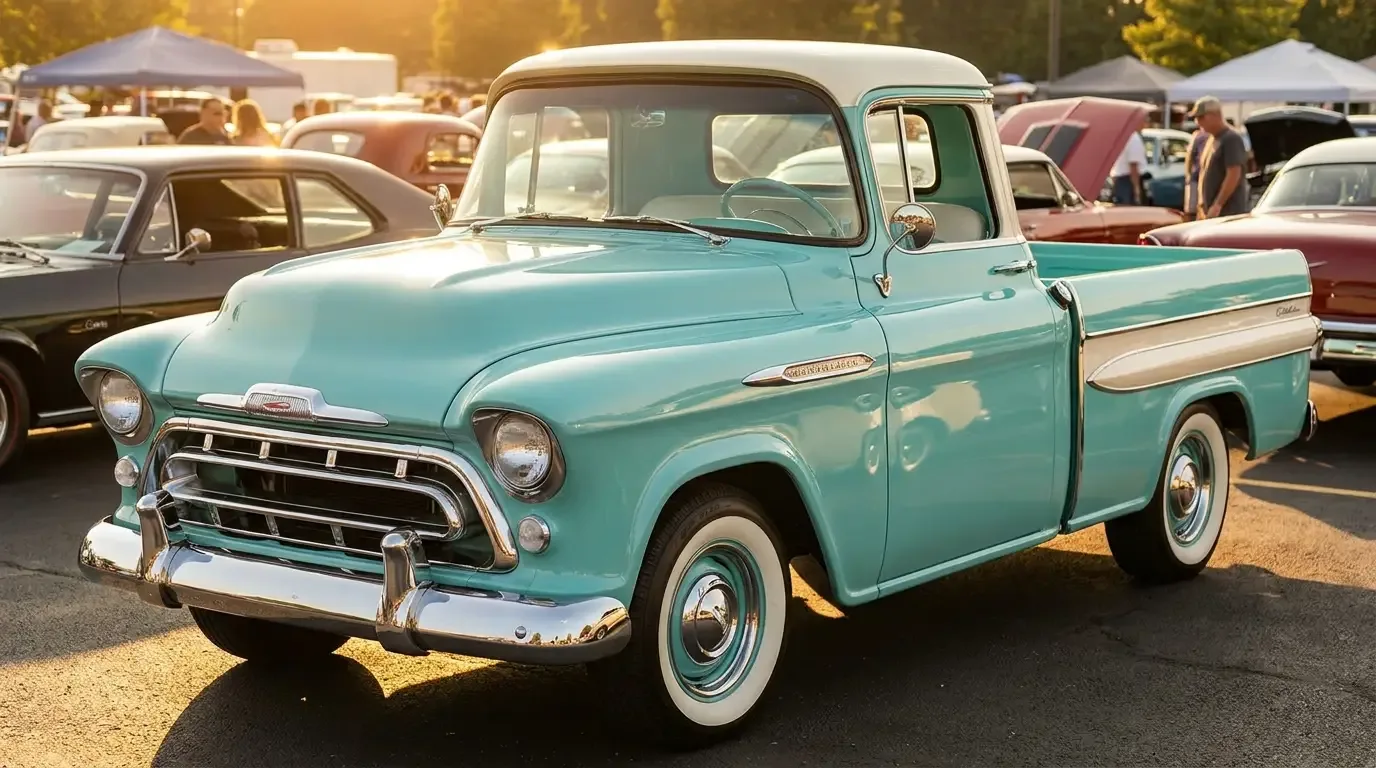

One horsepower per cubic inch. In 1957, that benchmark was theoretical for road cars, something engineers talked about, not something buyers could order. Chevrolet changed that with the fuel-injected 283 small-block. The Corvette got it first, and for a brief window in the late 1950s, the c1 corvette could be ordered from a dealership with 283 horsepower from a 283-cubic-inch engine. The number was not accidental. It was a marketing claim Chevrolet could actually back up with documentation.
The story behind that engine is more specific than the legend suggests. Understanding exactly what "one hp per ci" meant in 1957, which version of the fuel injection produced it, how the system worked, what it cost, and how many cars actually left the factory with it, separates the fact from decades of enthusiast shorthand.
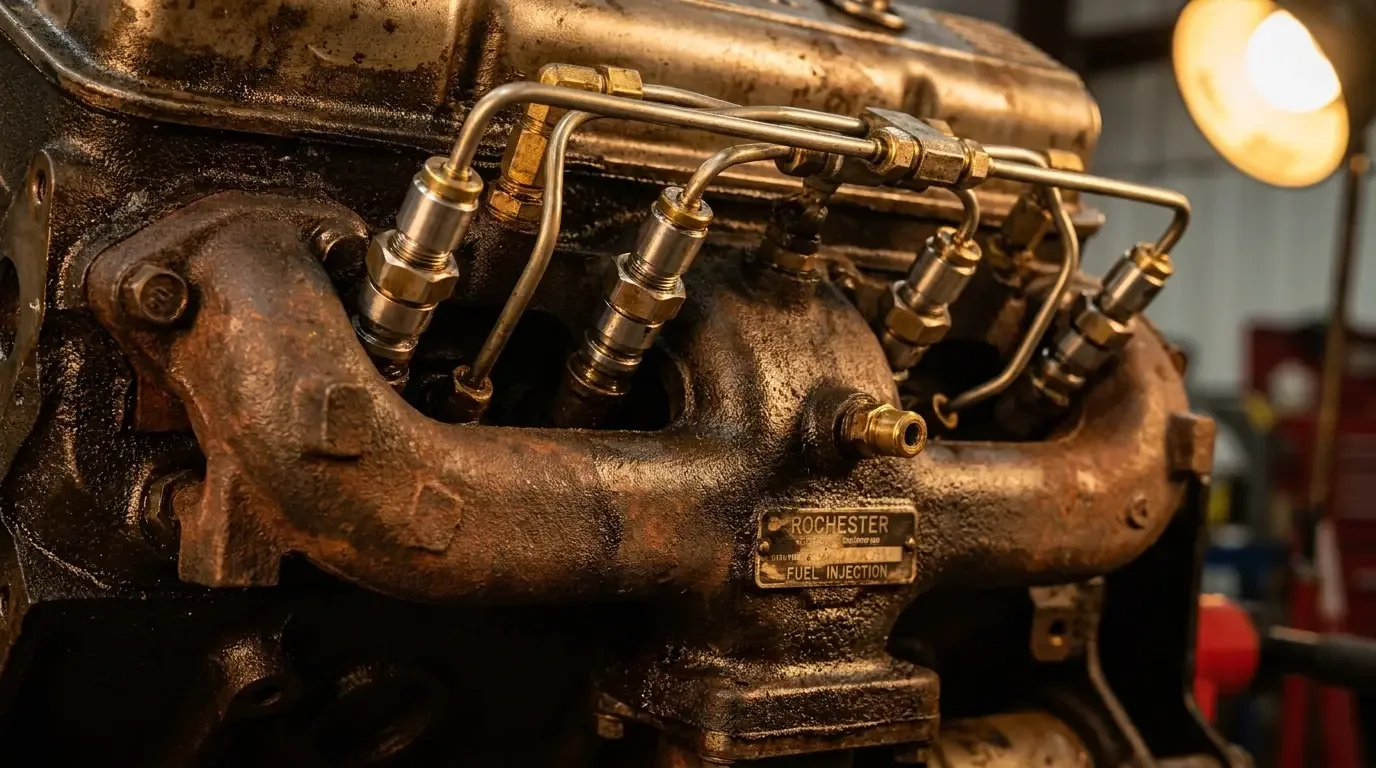
The Rochester fuel injection system
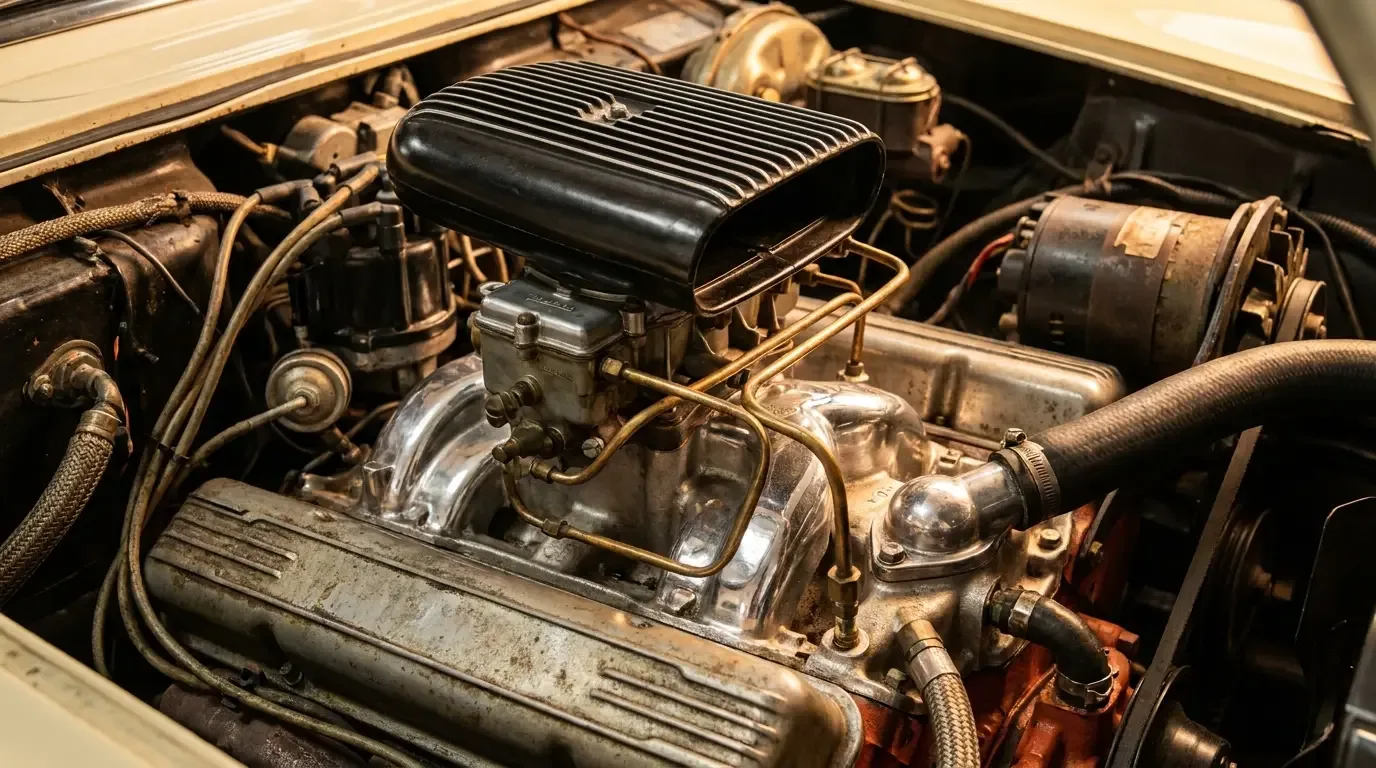
Chevrolet's fuel injection was developed by engineer John Dolza in collaboration with Zora Arkus-Duntov, and it was offered on both the Corvette and the full-size Chevrolet passenger cars beginning in 1957. The base 283-hp fuel-injected engine was ordered as RPO 579B, with RPO 579E designating the rare "Airbox" competition version of the same engine. The system replaced the carburetor with a continuous-flow injection setup. Rochester Products Division supplied the hardware. It was not the port injection system that would become standard decades later; it metered fuel through a single air-meter unit that fed individual injectors at each intake port.
The system's advantage was throttle response and high-rpm breathing. A carburetor relies on a venturi to draw fuel; at high engine speeds, the venturi becomes a restriction. The Rochester unit removed that restriction. The result was an engine that pulled cleanly to its redline without the hesitation that plagued high-performance carbureted setups at wide-open throttle.
Two states of tune were offered in 1957. The 250-hp version used a hydraulic-lifter cam and 9.5:1 compression. The 283-hp version, the one that earned the one-hp-per-ci claim, used a solid-lifter camshaft and 10.5:1 compression, turning 6,200 rpm. Both used the Rochester injection hardware, but the high-output version required premium fuel and was less tolerant of cold starts and low-speed traffic than the carbureted alternatives.
What the 283-hp rating actually meant
Horsepower ratings in 1957 were SAE gross figures, measured at the flywheel without accessories, in test conditions that favored higher numbers. A 283 gross horsepower engine did not deliver 283 horsepower to the rear wheels. Net power, measured with the alternator, air cleaner, and exhaust system in place, was meaningfully lower. The gap between gross and net ratings was not unique to the fuelie, it applied across the industry, but it matters for anyone comparing 1950s claims against modern dyno numbers.
The 283-hp engine was also sensitive to tuning state. The Rochester system required periodic adjustment of the fuel metering, and owners who did not maintain it found performance degraded noticeably. Chevrolet dealerships in 1957 were not all equipped to service fuel injection, many had never seen the hardware. This contributed to owner complaints and, in some cases, owner-installed conversion to carburetion. A correctly tuned fuelie in good operating condition was a different machine than one running rich from a maladjusted metering unit.
The solid-lifter camshaft in the 283-hp engine contributed to the power figure but also to the car's temperament. Valve adjustment was a regular maintenance item. Cold-weather starting required more care than a carbureted engine. For buyers who understood what they were getting, the performance trade-off was worth it. For buyers who expected a docile daily driver, it was not.
| Engine version | Induction | Power (gross SAE) | Compression | Cam type |
|---|---|---|---|---|
| 283 base | Single 4-bbl carburetor | 220 hp | 9.5:1 | Hydraulic |
| 283 dual four-barrel | Two 4-bbl carburetors | 245 hp / 270 hp | 9.5:1 | Hydraulic / Solid |
| 283 fuel injection (low tune) | Rochester FI | 250 hp | 9.5:1 | Hydraulic |
| 283 fuel injection (high tune) | Rochester FI | 283 hp | 10.5:1 | Solid |
Production realities and surviving examples
Total 1957 Corvette production was 6,339 units. Of those, roughly 713 left the factory with fuel injection in either state of tune, a figure widely cited among Corvette historians though exact counts depend on documentation surviving from the factory. Within that total, the 283-hp version was a smaller subset, and the 250-hp fuelie was somewhat more common. The carbureted 270-hp dual-quad was the high-performance choice for buyers who wanted power without the maintenance demands of injection.
If you are researching 1957 fuel-injected Corvettes for sale, the first thing to understand is that the RPO code on the tank sticker is the starting point, not the finish line. The tank sticker records what the car was built with. What it has now is a different question. Decades of owners, service shops, and parts swaps mean that a Corvette presenting today as a fuelie may have the original intake manifold but a replacement unit, or the correct-appearing external hardware over a carbureted block that was substituted at some point.
NCRS judging has specific protocols for fuel injection authenticity. The Rochester units have casting numbers and date codes that can be cross-referenced against the vehicle's assembly date. The intake manifold is a machined casting with identifying markings. None of this is impossible to fake, and experienced NCRS judges have seen enough to know what to look for. If provenance matters to you, bring someone who has done this work before.
"The tank sticker tells you what left the factory. Everything after that is documentation work. A fuelie without a paper trail isn't a write-off, but it's a negotiation, not a premium."
— Tom Ramirez
The 283 fuelie in context of 1957 Corvette history
The 1957 model year was a turning point for the Corvette beyond the engine options. It was the first year for the four-speed manual transmission, which combined with the fuel injection to produce a drivetrain configuration that defined what the car could do on a road course. Zora Arkus-Duntov's influence on the 1957 car was significant, the four-speed, the fuel injection, and the suspension tuning that year all reflected his push toward a genuine sports car rather than a boulevard cruiser.
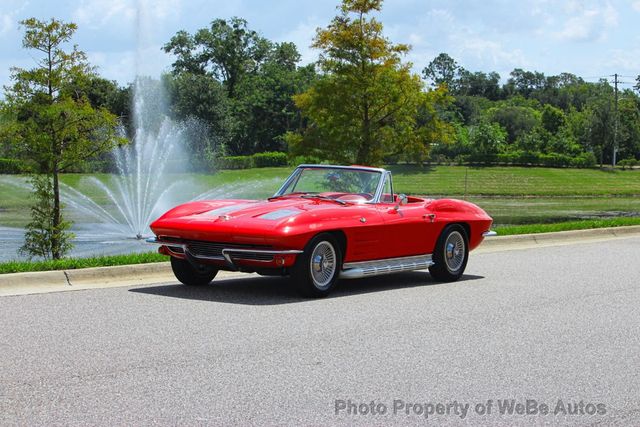
The 1958 model brought quad headlights, a heavier body, and some interior changes that the early C1 purists have always viewed skeptically. A related piece covers what changed in 1958 and why the styling debate around that year persists. The 1957, by contrast, carried the clean two-headlight face of the original 1953-1955 design into its final production year. For that reason, 1957 holds a particular place in C1 collecting, the combination of the original body style with the most developed mechanical specification of that generation.
The fuel injection option continued into 1958 and beyond, and the Rochester system was refined over subsequent years. But 1957 is where the one-hp-per-ci claim was first made and first delivered. That historical position is real, and the collector market reflects it consistently.
What a 1957 fuelie costs now
Documented 1957 fuel-injected Corvettes with verifiable provenance trade at premiums over carbureted cars of the same year. Hagerty's #2-condition valuation guide has put the 283/283 fuelie at around $125,000, with the 283/250 fuelie close behind at around $114,000, both ahead of the carbureted 283/270 and 283/245 dual-quad cars. Auction results bear this out in a range: documented fuelies have sold anywhere from roughly $80,000 to over $100,000 depending on condition and originality, and rare Airbox-optioned cars have drawn bids far beyond that ceiling. Driver-quality examples with questions about the injection authenticity sit in a different tier, where price depends heavily on how much documentation risk a buyer will accept.
The market for these cars is not liquid. They come up infrequently enough that a single exceptional sale can move the reference point. Watch the Mecum and Barrett-Jackson results carefully, and treat any single sale as a data point rather than a market definition. Condition variation within what any catalog calls "#2" is wide enough to produce $40,000 swings on otherwise similar cars.
Cars with replaced injection hardware but original engine blocks and documentation present a middle case. If the replacement unit is correct-type and date-appropriate, some buyers accept it. NCRS will note it in judging. Whether you accept it depends on why you're buying the car and what premium you're being asked to pay for the fuelie designation.
Sources and notes
- CorvSport: 1957 Corvette engine RPO codes, horsepower, and compression ratios for all four engine options
- National Corvette Museum: 1957 Corvette specifications and total production of 6,339 units
- CorvetteForum: discussion of 1957 fuel-injected production figures, commonly cited at 713 units
- Remember Road: RPO 579E "Airbox" competition fuelie details, confirming the 43-unit production count
- Hagerty Valuation Tool: 1957 Corvette configuration values, including #2-condition pricing for the 283/283 and 283/250 fuelie
- Curbside Classic: history of the Rochester fuel injection system and RPO 579E specification details