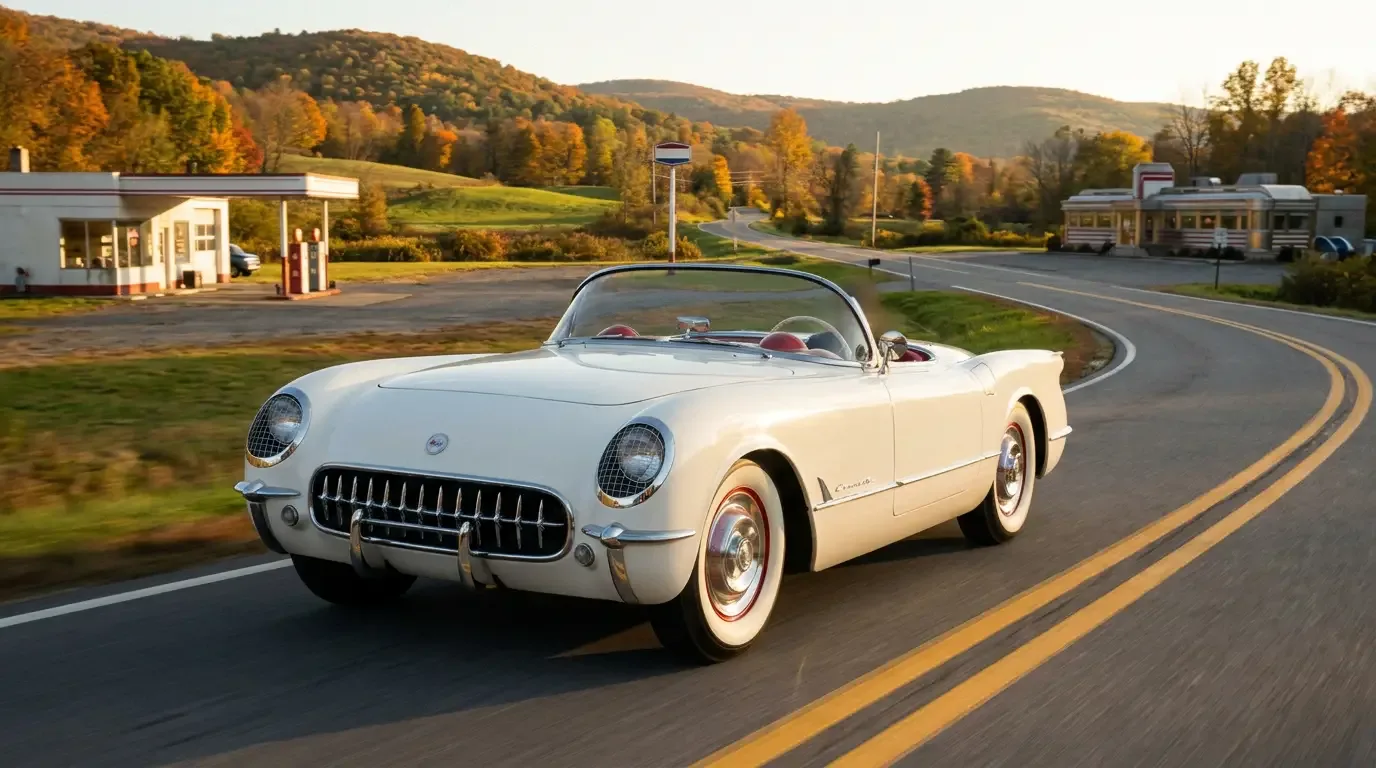
The 1953 Corvette was a compromised car. It arrived with a six-cylinder engine, a two-speed automatic transmission, and side curtains instead of roll-up windows. Enthusiasts were polite about it. Most were disappointed. By 1955, Chevrolet was seriously considering ending the entire program. What turned it around was a combination of competitive pressure, a new chief engineer, and a year of design work that culminated in what collectors now recognize as the first Corvette that genuinely delivered on the original promise. That car was the 1956. For the full picture of how the C1 got started, the earlier history matters. But 1956 is where the car finally became something worth defending.
What Chevrolet changed and why
The pressure came from two directions. Ford launched the Thunderbird for 1955, and it sold far better than the Corvette. Internally, Zora Arkus-Duntov had joined Chevrolet in 1953 and spent his first years writing memos about what was wrong with the car and what it would take to fix it. He was systematic about it, and the 1956 redesign reflects his influence even if he did not control every decision.
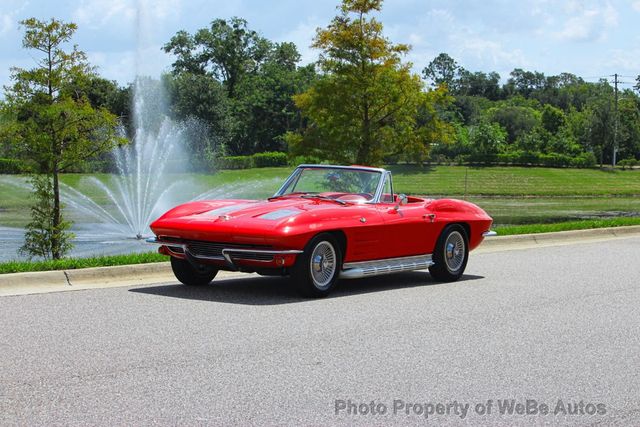
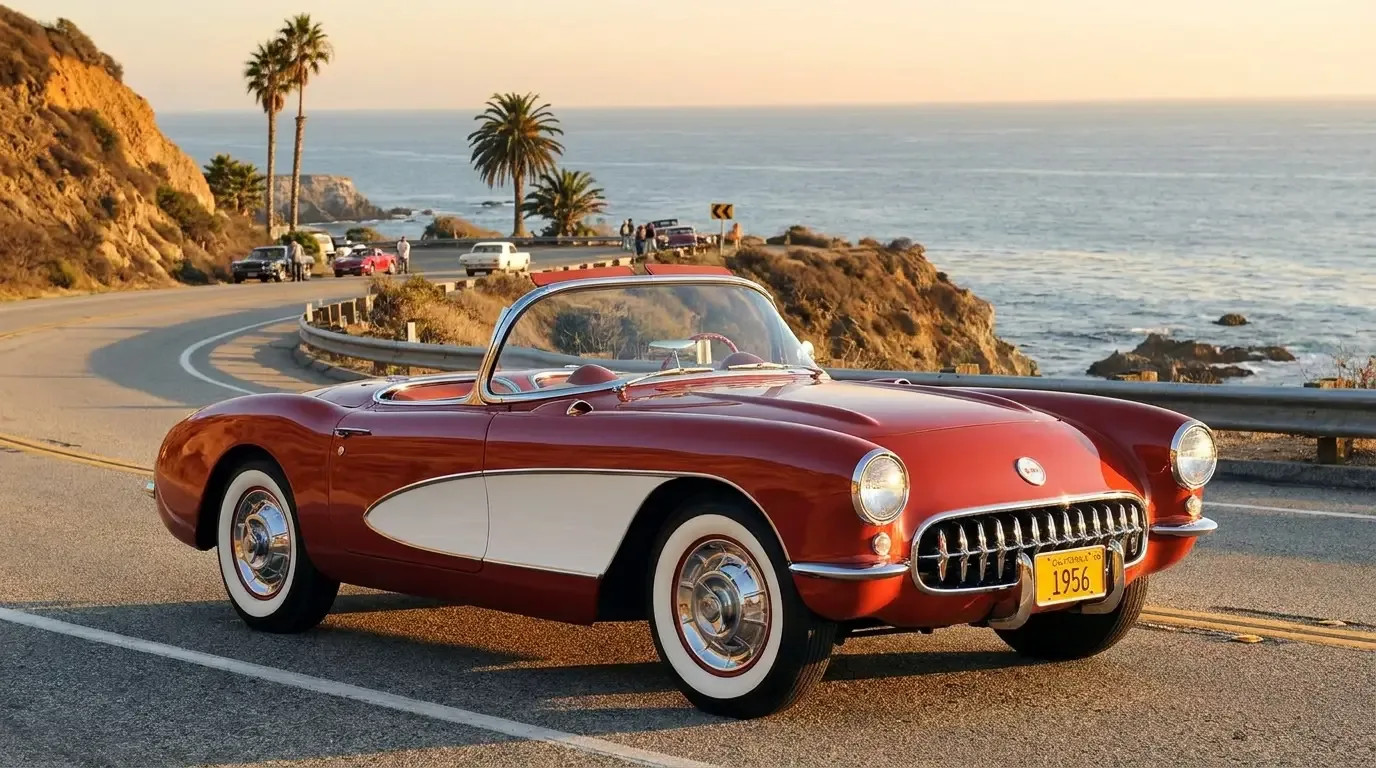
The body was the most visible change. The slab-sided shape of the first three model years gave way to a sculpted body with concave side coves, which became one of the defining visual features of the C1 era. Buyers could order the cove in a contrasting color, and many did. Roll-up windows replaced the side curtains. An outside door handle was added. These were not trivial improvements: the 1955 Corvette required climbing in with the top up and no easy way to exit from the outside. The 1956 car was something a person could actually use.
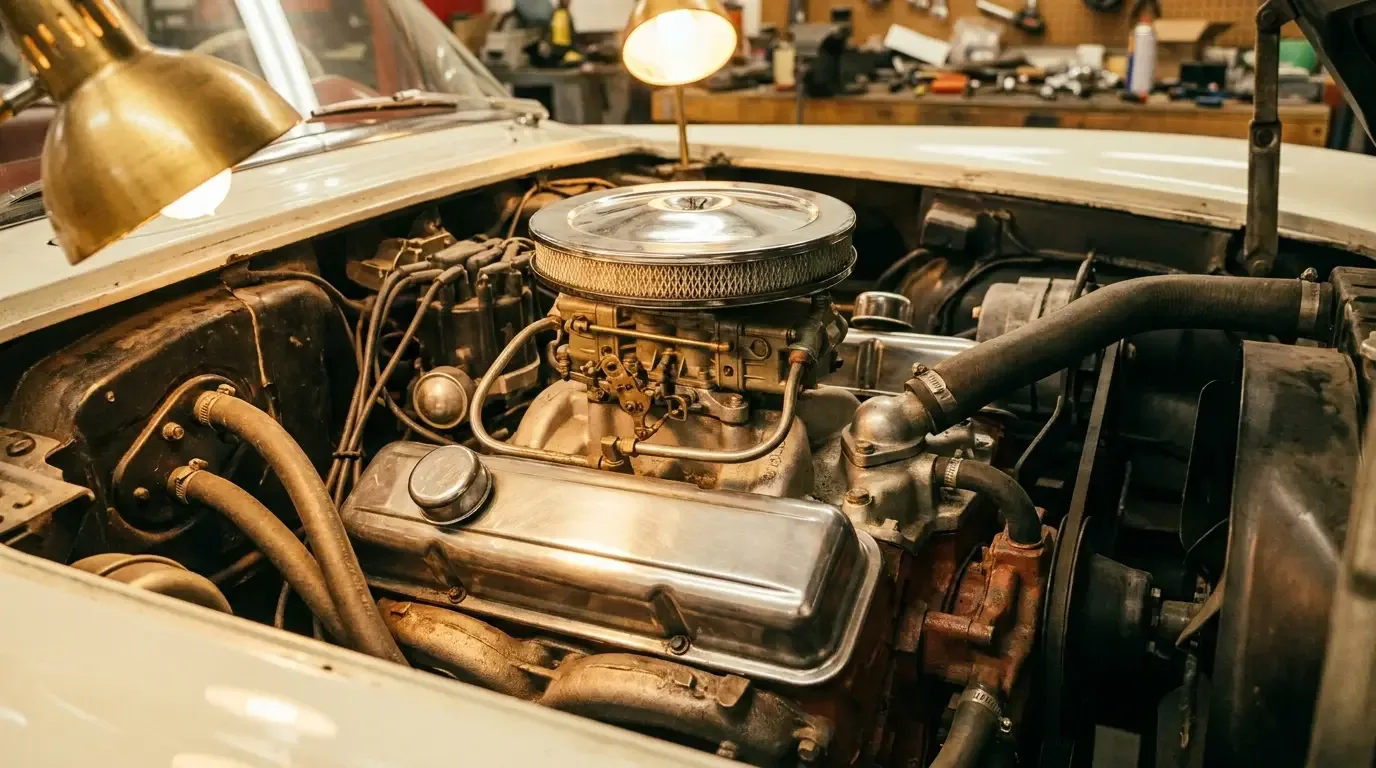
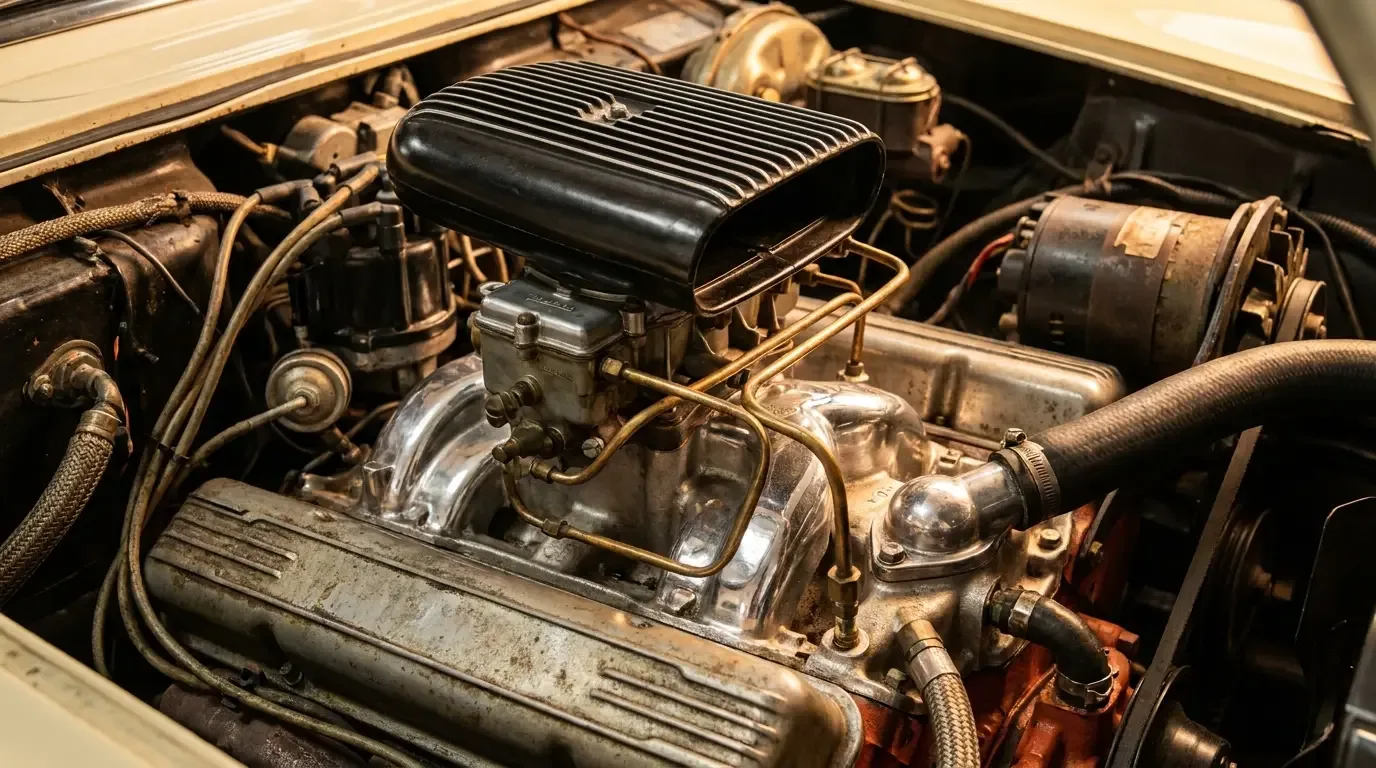
Under the hood, the 265-cubic-inch V8 that had arrived for 1955 continued, but with revised cam specifications that lifted output. The base engine in 1956 was rated at 210 hp (SAE gross) at 5,200 rpm, and buyers who checked the right option box could order a dual four-barrel carburetor setup rated at 225 hp, or the higher-compression version with the Duntov high-lift cam that was rated at 240 hp. Three distinct power levels from one basic engine architecture was a meaningful change from the earlier years, when options were limited.
The 1956 specification at a glance
| Feature | 1953-1955 (base) | 1956 |
|---|---|---|
| Engine | 235ci six (1953-54); 265ci V8 (1955) | 265ci V8 standard |
| Top power output | 195 hp (1955) | 240 hp with Duntov cam |
| Transmission | 2-speed Powerglide automatic | 3-speed manual available; Powerglide continued |
| Windows | Side curtains | Roll-up glass |
| Body style | Straight slab sides | Concave side coves, redesigned front and rear |
| Production | 300 (1953); 3,640 (1954); 700 (1955) | 3,467 |
The manual transmission question
One of the most significant mechanical additions for 1956 was the availability of a three-speed manual transmission. The original Corvette had shipped only with the two-speed Powerglide automatic, which drew immediate criticism from the sports car crowd that Chevrolet was trying to attract. Offering a manual was not just a feature addition; it was a correction of a fundamental mismatch between what the car was marketed as and what it actually was.
The Powerglide remained available for 1956, and a meaningful number of buyers chose it. But the option to row your own gears changed the character of the car in a way that the styling revisions alone could not. For buyers who actually drove in the manner the Corvette's looks suggested, the three-speed was the correct choice. Documentation of which transmission a particular car left the factory with lives on the tank sticker, and for collectors today that detail matters to valuation.
"The tank sticker on a 1956 tells you what actually left the line. People argue about whether a car has the Duntov cam option or not, and the sticker settles it. Without that documentation, you're relying on the seller's memory, which is not where I want to be when I'm establishing what a car is."
— Tom Ramirez
Production numbers and what they mean for collectors
The 1956 Corvette production run came to 3,467 units, a significant jump from the 700 or so 1955 cars that were built. The low 1955 production number reflects how close the program came to being cancelled; the 1956 increase shows that the redesign was working commercially. For collectors, those surviving 1955 cars are rarer, but the 1956 represents a more coherent and complete automobile and commands attention on its own terms.
Among the 1956 cars, the high-output dual-carburetor and Duntov cam configurations are the most desirable. Factory documentation is essential for sorting original high-performance cars from later modifications, and the 1956 is early enough in the C1 era that undocumented cars circulate with some regularity. The NCRS has extensive resources for authentication work on these cars, and anyone buying a claimed high-output 1956 should treat verification as part of the purchase process, not optional.
If you are looking at examples on the market today, mid-50s Corvettes for sale represent some of the most historically significant early American sports cars available in the collector market.
How 1956 set the direction for what followed
The significance of the 1956 redesign is not just what it did for that model year. It established the visual language that carried through the rest of the C1 generation. The side coves became a signature element. The basic body proportion worked well enough that Chevrolet developed rather than replaced it through 1962. And the increasing power outputs that started in 1956 continued through fuel injection in 1957 and beyond.
The 1957 Corvette is probably the most famous C1 because of the Rochester fuel injection system, but the 1957 car is the 1956 car with more power options added to it. The body is essentially the same. The architecture is the same. Understanding what changed in 1956 is prerequisite to understanding why 1957 matters, and you can read the related story on what the fuel injection addition meant for the car's competition credentials and collector value.
Where the 1956 sits in the C1 story
Collector opinions on which C1 year is best vary. The 1953 has historical significance as the first. The 1955 is genuinely rare. The 1957 has the fuel injection story. But the 1956 makes a strong case for itself as the year the car became what it was supposed to be. Every major deficiency of the original design got addressed in a single model year: the body, the windows, the door handles, and the engine options. That is an unusual amount of correction to accomplish at once, and the result holds up.
For anyone studying C1 history seriously, the 1956 is the inflection point. Everything before it is context for what went wrong. Everything after it is development of what the 1956 got right.
Sources and notes
- National Corvette Museum: 1956 Corvette specs, confirming engine and production overview
- Corvsport 1956 C1 Corvette Guide: confirmed 210/225/240 hp ratings, 3,467 total production, and 3-speed manual/Powerglide transmission options
- Corvette Action Center: 1956 production and performance numbers
- Corvsport: 1955 Corvette specifications, confirming 195 hp 265ci V8 and 700-unit production
- Corvsport: 1953 Corvette production numbers, confirming 300 units built (corrects earlier draft figure)
- Wikipedia: Zora Arkus-Duntov biography, confirming the January 1956 Daytona Beach speed run of roughly 150 mph that validated the Duntov cam