A record nobody wanted to break
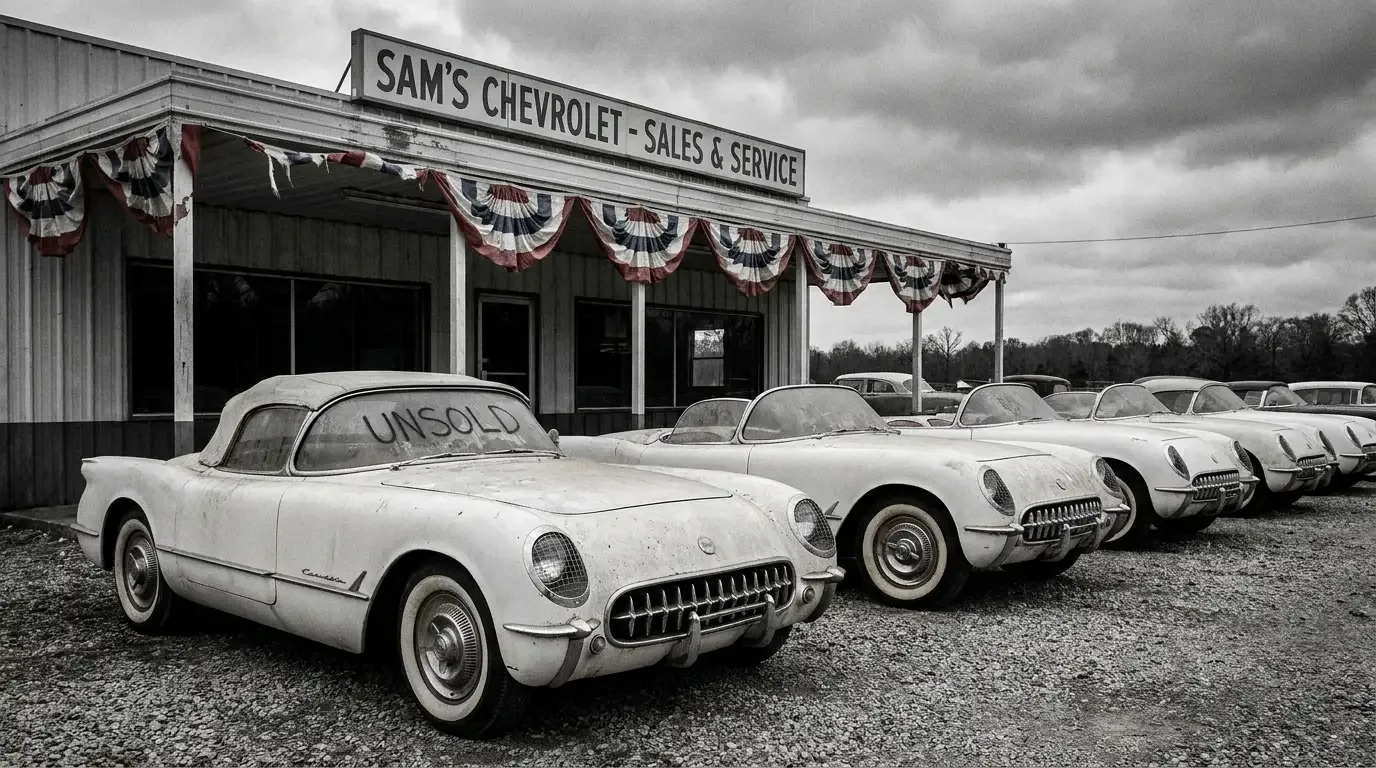
The 1953 Corvette sold 300 units. Every one of them went to a GM executive, a dealer, or someone with the right connections. The car wasn't ready for normal retail. But 1954 was supposed to be the year it actually reached buyers. Chevrolet built 3,640 Corvettes that model year. They sold fewer than 2,000 of them. At year's end, around 1,500 units sat unsold in dealer lots and storage facilities across the country. That is not a strong debut. That is a near-fatal one.
The situation got serious enough that GM management held internal discussions about discontinuing the program entirely. The Corvette was two years old and losing ground. Ford had just announced the Thunderbird for 1955. The accountants were asking uncomfortable questions. To understand how the car survived, you need to understand exactly what went wrong and who intervened when it mattered.
For background on the original concept and how the C1 came to exist, read more here before continuing.
What the 1954 car was actually selling
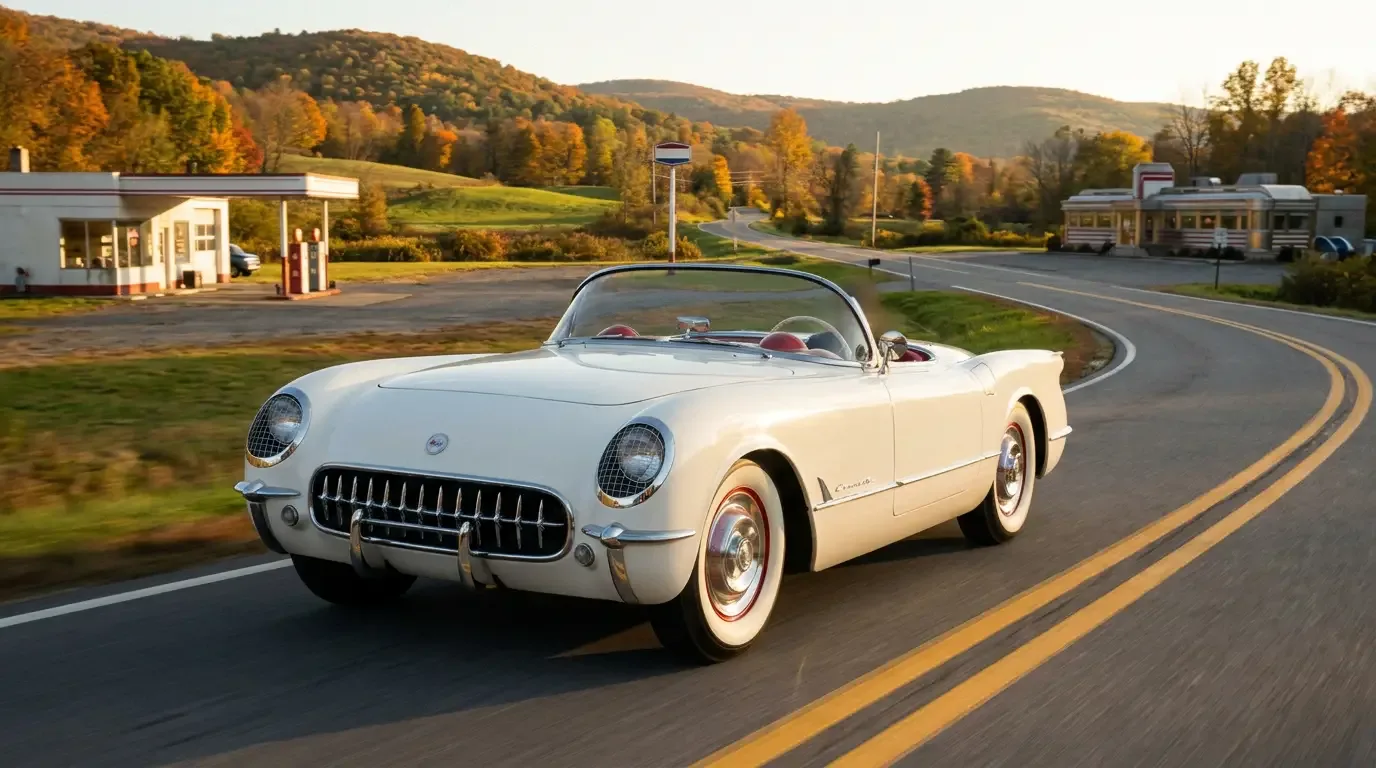
The 1954 Corvette came with a Blue Flame inline six producing around 150 to 155 hp, depending on when in the model year the car was built, mated to a two-speed Powerglide automatic. That combination was the car's single biggest commercial problem. Sports car buyers in 1954 expected a manual gearbox. The Jaguar XK120 had one. The MG TD had one. European buyers who crossed the Atlantic to sample American sports car culture wanted to shift their own gears. The Powerglide automatic read as a compromise, and the sports car press said so in print.
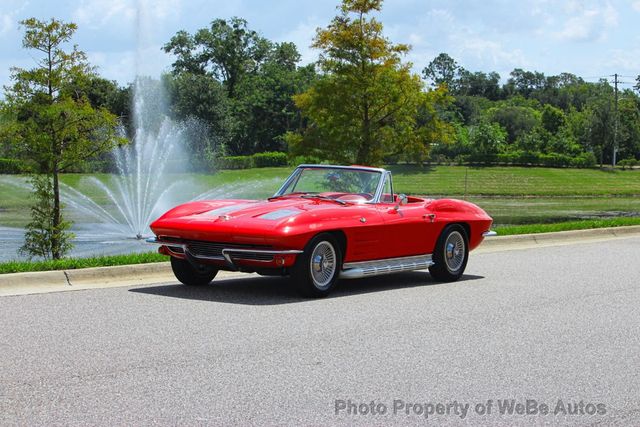
The body was fiberglass, which was either innovative or alarming depending on who you asked. Early production cars had wind leaks around the side curtains. The curtains themselves, which replaced conventional roll-down windows, were a legitimate source of buyer complaints. Exterior color choices for 1954 expanded from the all-Polo White of 1953 to include Pennant Blue, Sportsman Red, and a small run of Black cars, though the options remained limited in practice.
At an advertised base price of around $2,774, the Corvette looked competitive on paper, but the figure was misleading. Once mandatory options and destination charges were added, the real price a buyer paid was closer to $3,254. That put the car well above a Ford or Chevrolet passenger car and closer to imported sports car territory, which meant it competed in a space where buyers had expectations the six-cylinder automatic couldn't fully meet. The Thunderbird that Ford announced for 1955 would offer a V8 from the factory. Chevrolet's sports car had no comparable answer yet.
The cancellation pressure and who felt it
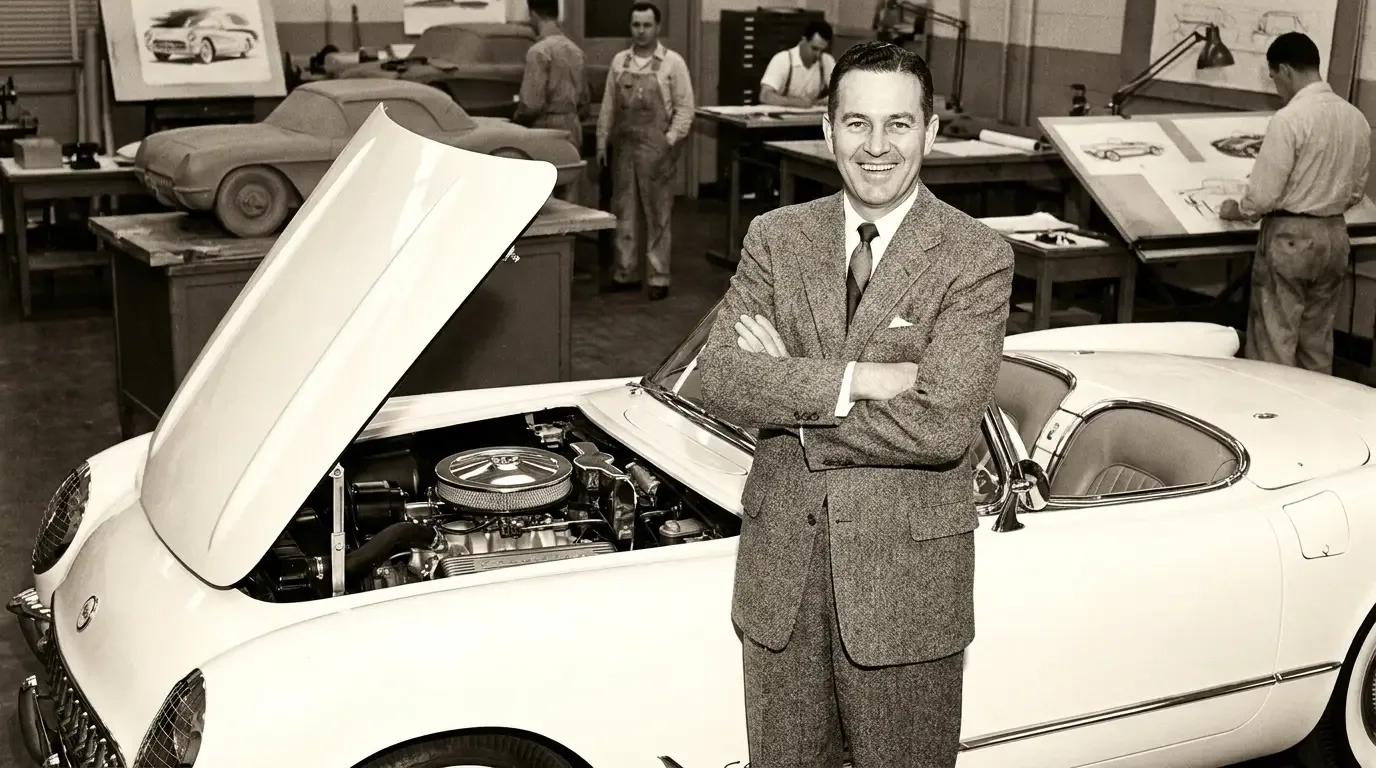
By late 1954, the internal position at GM was that the Corvette had to either change or end. The car had not captured the market Harley Earl envisioned when he pushed it into production. Sales figures told a straightforward story: demand was not meeting supply, and the gap was large enough that continuing the program at existing investment levels was hard to defend.
The argument for cancellation was simple. The Corvette was pulling resources, occupying production space, and sitting on dealer lots. Ford's Thunderbird entry for 1955 reframed the competitive situation as a two-car race the Corvette might lose before it started. Some within GM believed the Thunderbird would finish the job the market had already started.
What changed the outcome was a combination of engineering advocacy and competitive pressure from an unlikely direction. The small-block V8 that Chevrolet was already developing for its passenger cars was about to become available. Zora Arkus-Duntov, who had joined Chevrolet's engineering staff in 1953, saw the V8 as the component that could turn the Corvette into what it was supposed to be. He made that argument internally, persistently, and with the kind of technical specificity that carried weight in engineering discussions.
The story of what that V8 meant for the car's future is worth following in full. Read on for how Ed Cole's engine program transformed the Corvette's direction.
"The 1954 production numbers look bad on paper, but they tell you something more specific if you read them carefully. The car wasn't failing because nobody wanted a two-seat sports car. It was failing because the drivetrain didn't match the package. Fix that one thing and you have a different conversation."
— Tom Ramirez
The 1955 model year as the turning point
The 1955 Corvette arrived with the 265 cubic inch small-block V8 as the primary offering, alongside a continued option for the inline six in very limited quantities. Production for 1955 dropped to around 700 units, which sounds like the situation got worse. It didn't. The reduced number reflected a deliberate decision to pull back and recalibrate rather than repeat the unsold-inventory problem of 1954.
The V8 cars sold. The press responded differently to a Corvette with a proper eight-cylinder engine. Road test coverage became more favorable. The gap between what the car promised and what it delivered narrowed considerably. A three-speed manual transmission option followed shortly after, addressing the other major complaint from sports car buyers.
| Year | Engine | Transmission | Units built (approx.) |
|---|---|---|---|
| 1953 | Blue Flame inline six (150 hp) | Powerglide auto | 300 |
| 1954 | Blue Flame inline six (150-155 hp) | Powerglide auto | ~3,640 |
| 1955 | 265 cu in V8 (primary, 195 hp) / inline six (limited) | Powerglide; manual added | ~700 |
Why the cancellation didn't happen
The Corvette survived 1954 for a few reasons that had nothing to do with sales figures. First, Chevrolet already had the V8 solution in development. Cancelling the program in late 1954 would have meant walking away from a fix that was months away rather than years. The investment in the small-block engine program would happen regardless; directing some of it toward the Corvette was a marginal additional commitment.
Second, the Thunderbird. Whatever internal doubts existed about the Corvette, surrendering the two-seat sports car segment entirely to Ford was a harder position to defend at the executive level. General Motors was not in the habit of conceding ground to Ford without a fight. The Thunderbird's announcement may have accelerated the cancellation discussion, but it also gave the Corvette's advocates inside GM a competitive argument for continuing.
Third, Zora Arkus-Duntov's December 1953 memo to chief engineer Ed Cole, titled "Thoughts Pertaining to Youth, Hot Rodders and Chevrolet," argued that Chevrolet needed to win over the young performance-car crowd who were overwhelmingly building with Ford parts, and that a V8-powered Corvette was central to that case. It planted a longer-term idea in the program's direction. Duntov's involvement gave the car an internal champion with technical credibility at a moment when it needed one.
The combination held. GM did not pull the plug. The 1955 Corvette reached buyers with the engine the 1953 and 1954 cars should have had. From that point the program's direction changed, and the question of cancellation stopped being a live one.
Sources and notes
- CorvetteActionCenter: 1954 Corvette production and performance numbers, confirmed 3,640 units built and roughly 1,500 unsold at year's end
- CorvSport 1954 Corvette guide: confirmed advertised base price of $2,774 versus real transaction price near $3,254, and 150-155 hp Blue Flame output
- Corvette Central Tech Blog: 1954 color production estimates, Polo White dominant with Pennant Blue, Sportsman Red, and rare Black examples
- CorvSport: 1955 Corvette production figures, confirmed approximately 700 units built and 195 hp for the 265 cu in V8
- Wikipedia: Zora Arkus-Duntov biography, confirmed May 1953 hire date and the December 1953 "Thoughts Pertaining to Youth, Hot Rodders and Chevrolet" memo to Ed Cole
- CorvSport 1953 Corvette guide: confirmed 300-unit production total and 150 hp Blue Flame six specification for the 1953 model year