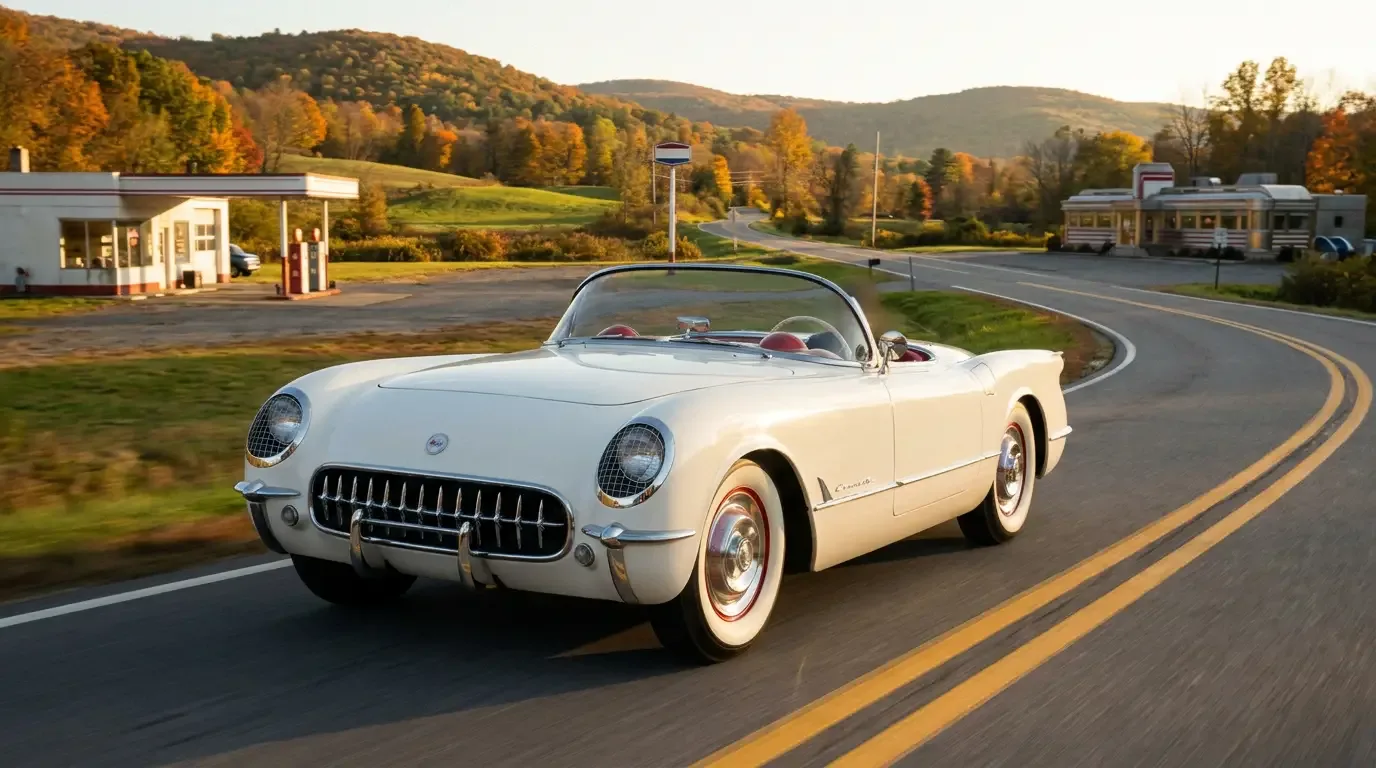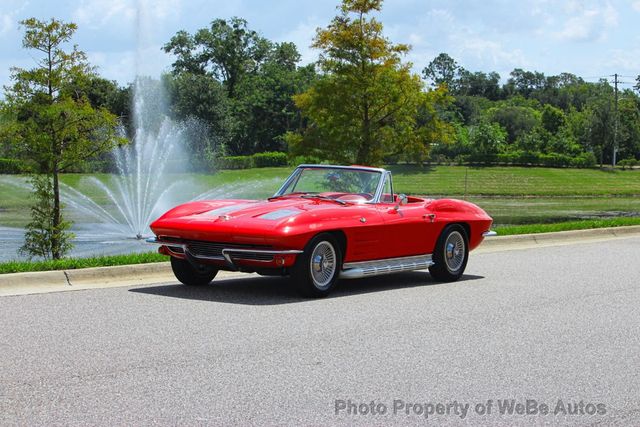


The 1962 Corvette arrived at a strange crossroads. The C1 body was already six years old, the tooling was paid for, and Chevrolet's product planners knew the all-new Sting Ray was coming for 1963. What they gave buyers in the meantime was something more considered than a stopgap: the last refinement of the original Corvette shape, cleaned up in ways that mattered and carrying engine options that remain impressive today. The duck-tail restyle that defined the 1961 and 1962 models deserves a closer look, because it was not the obvious holding action it appeared to be from the outside.
For the full arc of where this car fits, the classic Corvette story lays out how the model survived long enough to become what it is. The 1962 specifically represents the end of that first chapter, and understanding the restyle tells you why Zora Arkus-Duntov and the Chevrolet design team considered it worth doing at all.
Where the duck tail came from
The 1961 model year introduced the restyled rear end that collectors now call the duck tail, though the factory never used that term. Bill Mitchell's design studio had been working on what would become the Sting Ray racer, and elements of that shape fed back into the production car. The clean break between the body sides and the trunk lid, the inboard taillights arranged horizontally, the absence of the chrome-laden fins that had characterized the 1958 through 1960 cars: these were all deliberate moves toward the direction the C2 would take two years later.
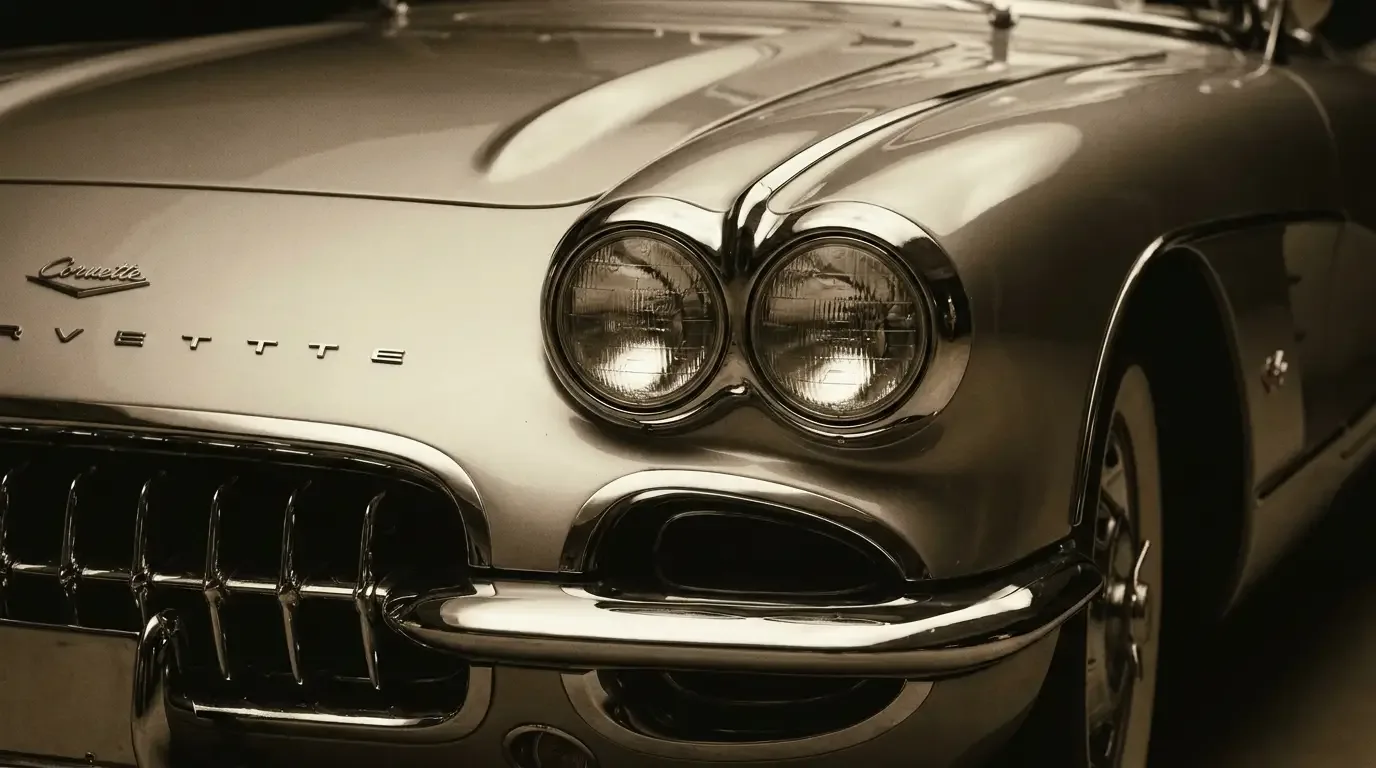
The 1962 carried that same rear treatment but refined it further. The chrome side coves from earlier years were deleted, giving the bodyside a cleaner read. The grille texture changed. The wheel covers were updated. None of these were dramatic revisions, but together they made the 1962 read as the most resolved version of the original shape, which is exactly what it was.
What changed on the 1962 body
The side cove area is where the most visible change landed. Earlier C1 cars used the contrasting color cove as a styling feature, and many buyers optioned them in two-tone. For 1962, Chevrolet deleted the chrome outline molding that had framed the cove and offered it only in body color. This is the detail that makes a 1962 read differently from a 1961 at a show, and it is one of the first things an NCRS judge will note if the car has been incorrectly restored with chrome cove trim.
The interior got a revised instrument panel layout. The earlier cars used a different arrangement of gauges, and the 1962 moved toward the more legible setup that would inform the Sting Ray design. The steering wheel changed. Seat upholstery patterns were revised. These are not the things that draw buyers to the 1962, but they matter for documentation and for anyone pursuing NCRS Top Flight certification.
The fuel filler door location, the trunk hinges, the door gap tolerances: these were all carryover from the previous year, which matters practically because a 1961 body panel will often fit a 1962 without modification. The fiberglass construction of all C1 cars means rust is not the structural concern it would be on a steel-bodied car from the same era, but it does mean you need to look carefully at previous repairs, because bad fiberglass work from forty years ago can hide under paint that looks factory-correct at fifteen feet.
The engine options and what they mean for buyers
The 1962 model year marked the first appearance of the 327 cubic inch small block in the Corvette. The 283 that had powered C1 cars since 1957 was out. In its place came four versions of the new engine, ranging from a base 250 hp carburetor version to the fuel-injected 360 hp unit designated RPO 582. The fuel injection option had been available since 1957, but the combination of the 327 displacement with the Rochester mechanical fuel injection produced numbers that were genuinely competitive with the best European sports cars of the period.
| Engine option | Displacement | Rated output | Induction |
|---|---|---|---|
| Base 327 | 327 cu in | 250 hp | Single 4-barrel carburetor |
| 327 / 300 hp (RPO 583) | 327 cu in | 300 hp | Single 4-barrel carburetor |
| 327 / 340 hp (RPO 396) | 327 cu in | 340 hp | Single 4-barrel carburetor |
| 327 Fuelie (RPO 582) | 327 cu in | 360 hp | Rochester mechanical fuel injection |
The fuel-injected cars carry a significant premium in today's market, and that premium is justified by scarcity. Production numbers for Fuelie C1 Corvettes in any year are relatively low, and the mechanical fuel injection system is complex enough that finding a correctly functioning, correctly documented example requires patience. If the system has been converted to a carburetor, the car is worth less, and the conversion is not always disclosed by sellers.
For buyers considering a 1962, 1962 Corvettes for sale in the current market show a wide range of asking prices depending on engine, transmission, and documentation. The carburetor cars are more accessible, the four-speed gearbox is the transmission to have, and the three-speed manual and Powerglide automatic both reduce desirability and value.
How the 1962 fits into C1 history
The C1 Corvette came within a decision or two of being cancelled before it became an American institution. The companion piece on the companion story of the 1954 crisis covers how close the model came to disappearing after its slow initial sales. That it survived long enough to reach the 1962 refinement, and then the 1963 transformation, is the result of a sequence of decisions by a handful of people at Chevrolet who believed in the car when the sales numbers did not.
The 1962 model sits at the end of that story's first phase. It is the most polished version of the shape Harley Earl's team introduced in 1953, carrying an engine that would not have been recognizable to the buyers who took delivery of the original Polo White roadsters. Production for 1962 reached 14,531 units, all convertibles, making it the highest-production year of the C1 run. The buyers knew something new was coming; the factory did nothing to hide it. They bought anyway, and the cars they got were worth buying.
"The 1962 is the car I recommend when someone wants a C1 that's actually resolved. Every earlier year is working toward something. The 1962 got there. The Sting Ray got somewhere else entirely."
— Tom Ramirez
What to look for when buying a 1962
The tank sticker is the starting point. Corvettes of this era left the factory with a build record attached to the firewall area, and a surviving tank sticker tells you what the car was supposed to be. If the sticker is gone, you are working from the VIN and whatever documentation the seller can provide, and that means more work before you can be confident about what you have. The NCRS has processed enough of these cars that their documentation resources are worth consulting before you negotiate a price.
Fiberglass repairs are the other major inspection item. The C1 body does not rust, but it cracks, and prior owners have had sixty-plus years to repair cracks with varying degrees of competence. Look carefully at the rear tail area where the duck tail treatment meets the lower body. This junction can develop cracks from the fiberglass flexing over time, and the repairs done in the 1970s and 1980s often used body filler rather than proper fiberglass work. That filler will eventually show through paint, and redoing it correctly is not cheap.
Frame condition matters more than it looks. The C1 uses a separate ladder-type frame under the fiberglass body, and those frames do rust. A car with a beautiful body and a neglected frame is a more expensive project than it appears. Get under the car with a light before you commit to a price.
Sources and notes
- National Corvette Museum: 1962 Corvette specifications overview
- CorvSport: 1962 C1 Corvette engine RPO codes (583, 396, 582) and per-engine production splits
- CorvSport: 1962 Corvette total production figure of 14,531 units, all convertibles
- Corvette Action Center: 1962 Corvette production and performance numbers
- Curbside Classic: early Corvette transmission history, confirming RPO 685 close-ratio four-speed
- RM Sotheby's: 1962 Corvette 327/360 fuel-injected auction listing confirming RPO 582 specification