Route 66 and the Corvette arrived at roughly the same moment in American consciousness, which is not a coincidence. The Mother Road had been paved and named by the late 1920s, but it became mythologized in the postwar years, the same decade that Chevrolet sent its fiberglass two-seater out of Flint for the first time. Both stood for something: speed, freedom, the open West, a version of America that the country wanted to believe about itself.
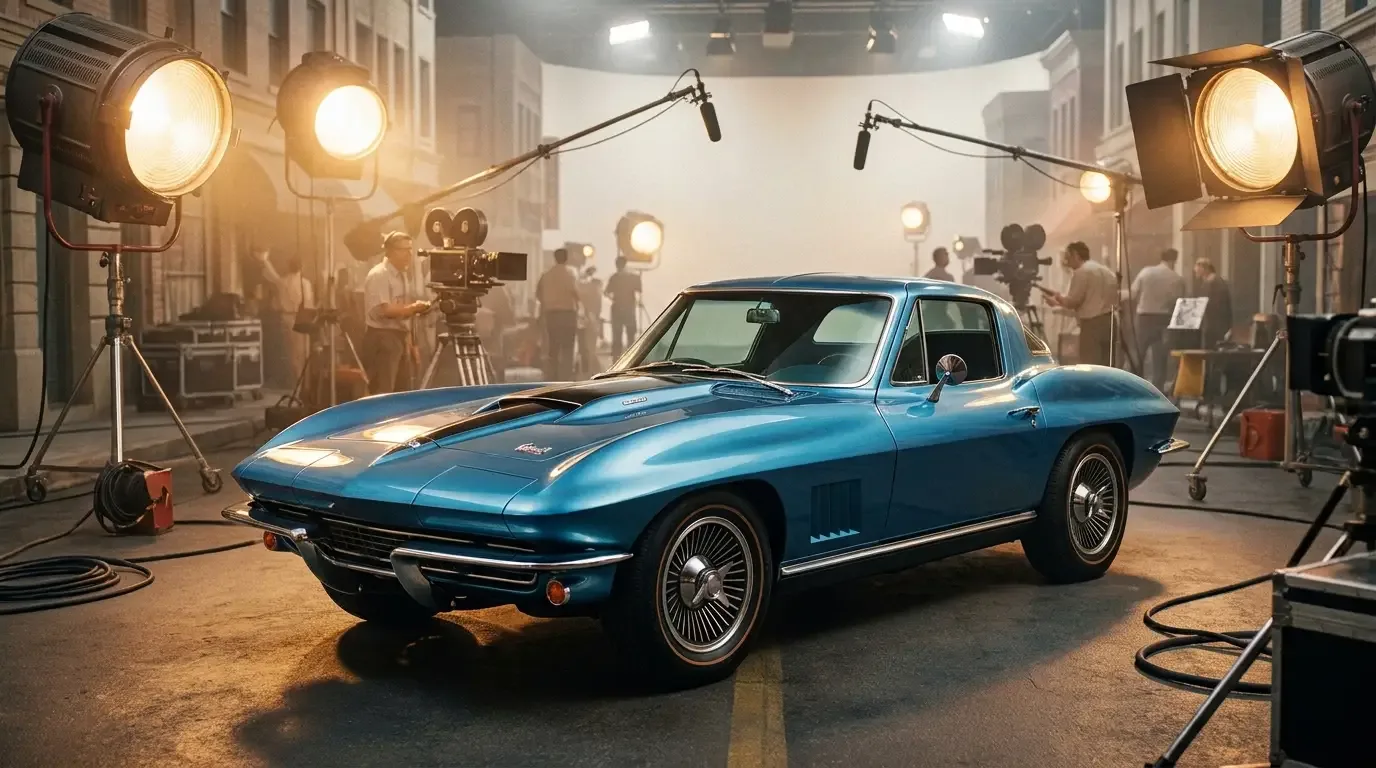
By the early 1960s, the connection was literal. The CBS television series Route 66 ran from 1960 to 1964 and followed two young men driving a Corvette across the country, picking up work and trouble in roughly equal measure. Tod Stiles drove, Buz Murdock rode shotgun, and every week there was a new town, a new problem, a new supporting cast of actors who later became famous. The show used the road and the car as the same symbol: mobility, reinvention, the possibility that the next town might be different. For four seasons it put a Corvette in front of a national audience and made it mean something beyond a spec sheet.
The television years and what they built
The Route 66 series was not a car show. The Corvette was the vehicle for the premise, literally and figuratively. Creator Stirling Silliphant and producer Herbert B. Leonard understood that the convertible's image, young, American, always moving, mapped cleanly onto the wandering-protagonist structure they'd built. The cars changed as the show ran, cycling through early C1 models in seasons one and two and then C2 Sting Ray models from mid-season three onward, and Chevrolet cooperated with the production, providing fresh Corvettes each season, typically three or four cars rotated out every few thousand miles to keep them looking pristine. The brand relationship gave the show its visual continuity and gave Chevrolet something money couldn't buy: four years of weekly placement in a critically respected drama.
What the show built in the culture lasted longer than its four-season run. Viewers who watched Tod and Buz in 1961 were the buyers who walked into Chevrolet dealers through the 1960s and 1970s. The Corvette's connection to the open road wasn't manufactured by ad copy; it was dramatized by weekly television, embedded in the memory of an entire generation at the peak of their car-buying years. That is a different kind of brand work, and it explains some of why the Corvette's pop culture presence proved so durable.
Route 66 as geography and as idea
The actual highway, US Route 66 from Chicago to Santa Monica, runs about 2,400 miles across eight states. The mythology runs further. John Steinbeck called it "the mother road" in The Grapes of Wrath, which was published in 1939, more than a decade before the Corvette existed, but the phrase attached itself to the road's postwar identity as a route for people moving toward something rather than fleeing something. Bobby Troup's song "Get Your Kicks on Route 66" was recorded in 1946 by Nat King Cole and covered dozens of times over the following decades, making the road's specific geography, Flagstaff, Gallup, Amarillo, a kind of American litany.
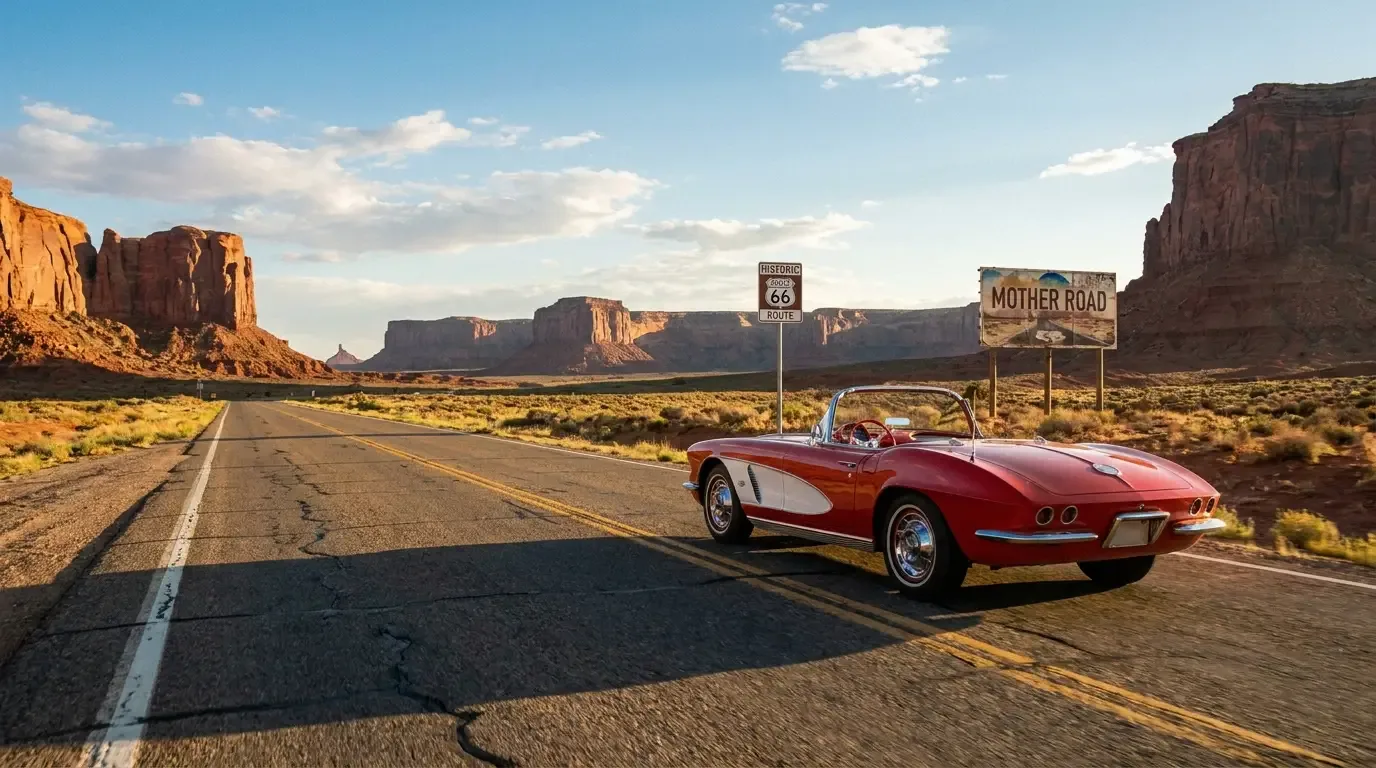
The Corvette fit this geography partly by luck and partly by design. A two-seat convertible with a large V8 is exactly the vehicle for a two-lane highway running through the Mojave and across the Oklahoma panhandle. The car's profile, low, open, no roof unless you want one, is a visual match for horizon-line road photography of the kind that defined Route 66 imagery through the 1950s and 1960s. Photographers knew it. Advertisers knew it. The pairing became reflexive: put a Corvette on a desert highway and you have the image before the shutter clicks.
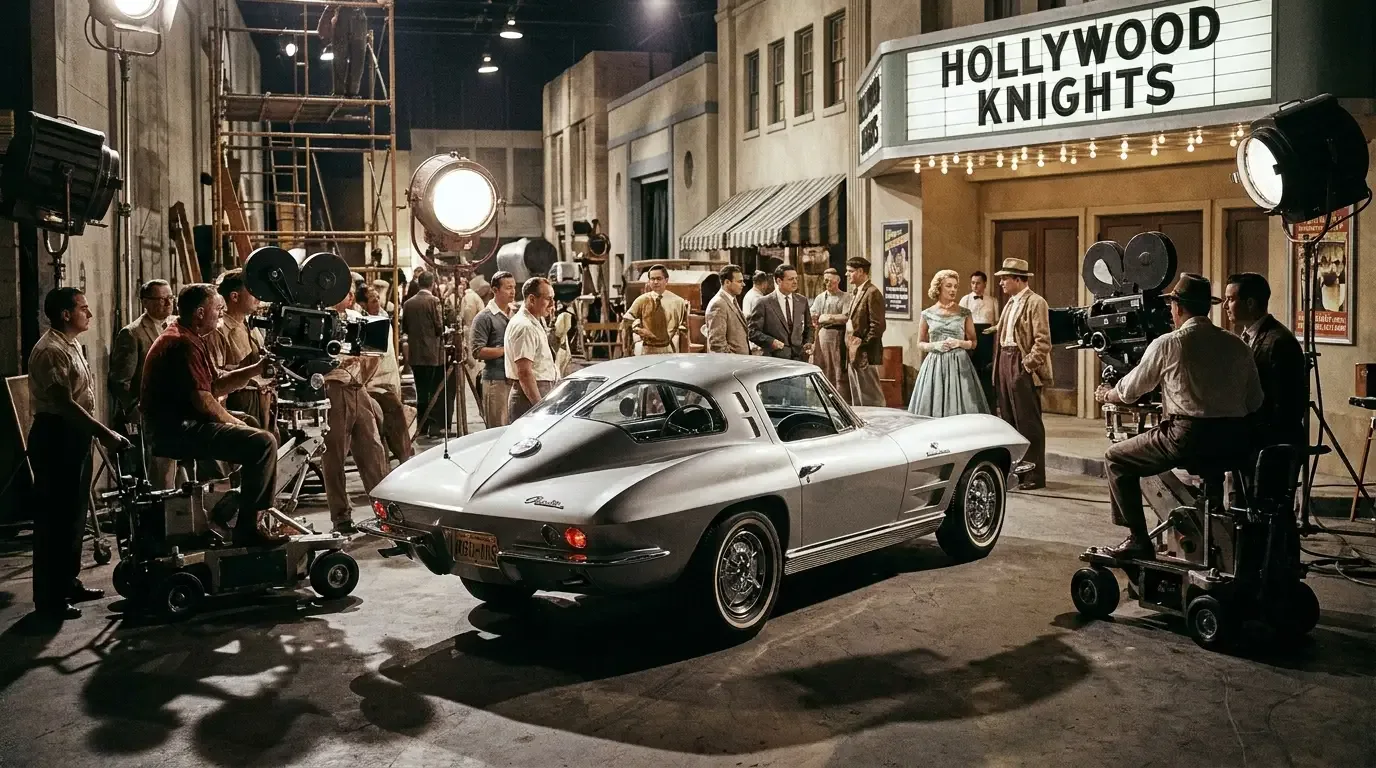
For those wanting to explore the deeper story of how the Corvette found its way into American film and television beyond the Route 66 years, the connections run through decades of productions that kept reaching for the same car to signal the same things.
Music, movies, and the long cultural conversation
The Corvette's presence in American pop culture isn't limited to one television series or one highway. It shows up in country music (the car's speed and independence translate naturally), in rock songs where it stands for recklessness or escape, and in films where it marks a character as someone who goes fast and doesn't explain themselves. Prince's "Little Red Corvette" is the most famous example, released in 1983, not about the car at all but using it as the vehicle for an entirely different set of meanings. The song reached number six on the Billboard Hot 100 and introduced the car's name to an audience that had never thought about Chevrolet.
That kind of cultural penetration doesn't happen to many cars. The Mustang has it. The Porsche 911 has it in certain circles. The muscle cars of the late 1960s have it in narrower channels. The Corvette has it broadly, across demographics, across decades, in ways that still show up in contemporary film and television when a director wants a shorthand for American ambition. The car became a symbol without any single party managing it, which is the kind of cultural status that can't be engineered and can't be bought back once it's lost.
"The interesting thing about the Corvette and Route 66 is that neither one needed the other to survive, but each made the other more interesting. The road gave the car a story about going somewhere. The car gave the road a face that fit the times."
— Patrick Walsh
What collectors actually buy when they buy a piece of this history
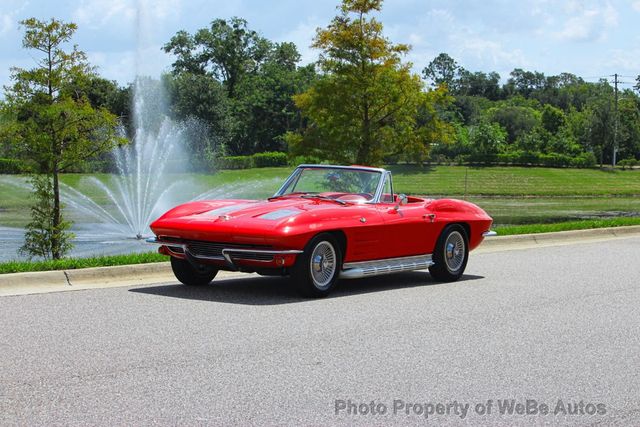
For buyers drawn to the Corvette for these reasons, the early C1 cars from 1960 to 1962 carry the most direct connection to the television era. The C2, the Sting Ray introduced in 1963, arrived as the show was ending its run but benefited from the cultural groundwork the series had built. Neither generation is cheap at current prices, and the C1 in particular has a narrow window of appeal, the design is of its time in ways that some buyers love and some don't.
The more practical entry for someone drawn to the Route 66 aesthetic is a mid-1960s C2, specifically the convertibles, which carry the open-road profile that the show made famous. A driver-quality example has been trading in a wide range depending on condition and options. Show-quality numbers-matching cars command multiples of that. The gap between driver and show, in this segment, is significant enough that buyers should decide which camp they're actually in before starting to shop. If the appeal is the experience of driving on remaining Route 66 segments, a driver-quality car makes more sense. If the appeal is the connection to television history, provenance documentation matters more.
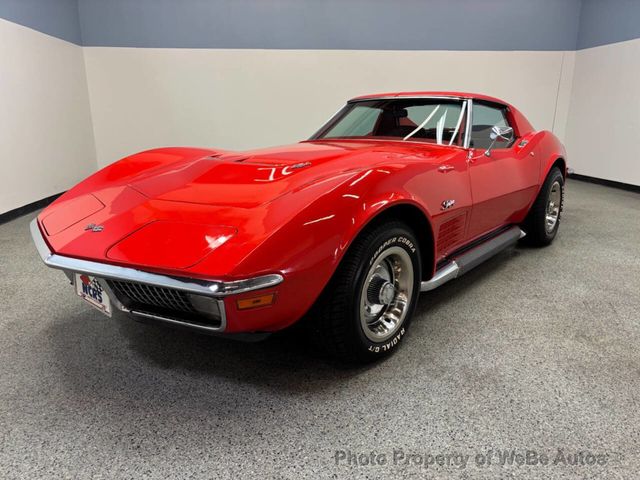
Anyone seriously exploring the market should look at classic Corvette for sale listings with attention to the model years that actually appeared on the show, 1960 through 1962 in C1 form and the 1963-1964 C2 years that finished the series and inherited the cultural moment.
Why the connection held
The Route 66 and Corvette pairing remained in the culture partly because both became nostalgic at roughly the same time. The highway was officially decommissioned in 1985, replaced by the interstate system that had been undercutting its traffic since the 1960s. The Corvette, by then in C4 form, was struggling with emissions regulations and a performance gap compared to its early years. Both were in transition, both carried the weight of what they had been in the postwar decades, and both attracted the kind of preservation interest that comes when something is recognized as having mattered.
The road came back first, as a tourist attraction, a nostalgia circuit, a subject of television documentaries and photography books. The Corvette came back in performance terms with the C5 and then C6, and the old cars appreciated accordingly. The cultural memory that the television series had built four decades earlier was still there, sitting in the minds of people now in their sixties and seventies who had watched Tod and Buz drive west on a black-and-white screen and decided that was what freedom looked like.
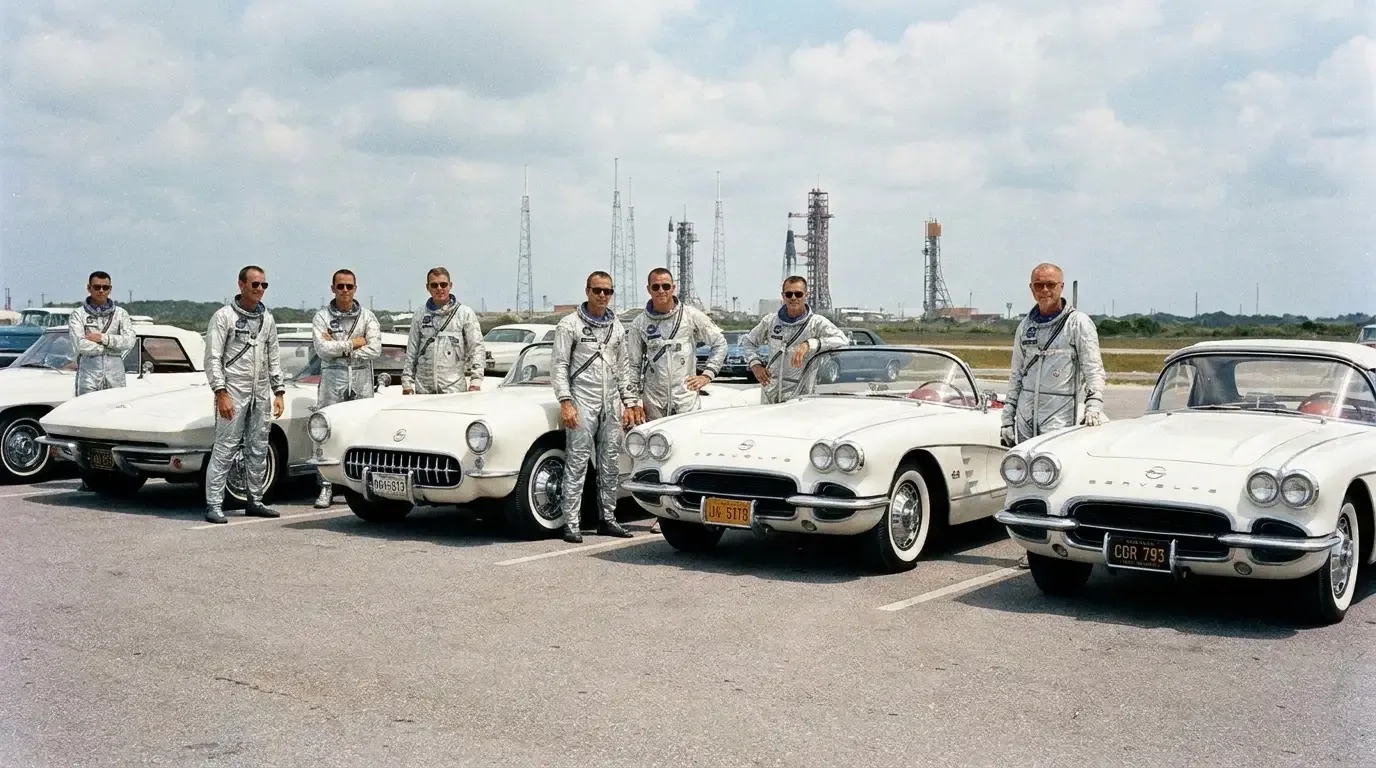
From the next chapter in the Corvette's broader cultural life, the NASA astronaut program's long relationship with the car in the 1960s, it becomes clear that the Corvette was doing double work in the same decade: Route 66 on prime-time television, and the Kennedy Space Center parking lot in Florida.
Not many cars get that many assignments from the culture at once. Fewer still hold onto all of them for sixty years.
Sources and notes
- Wikipedia: Route 66 (TV series) — confirmed run dates 1960-1964, 116 episodes, creators Herbert B. Leonard and Stirling Silliphant, cast (Martin Milner as Tod Stiles, George Maharis as Buz Murdock)
- Aldan American: Cool Facts About the Corvettes on TV's Route 66 — confirmed Corvette model-year rotation by season (C1 1960-1962, C2 Sting Ray from mid-season 3), Chevrolet supply arrangement, three to four cars per season
- Nelson Riddle official website: Route 66 Theme — confirmed Nelson Riddle as composer of the television theme
- Wikipedia: Little Red Corvette — confirmed peak chart position of number 6 on the Billboard Hot 100 and 1983 release date
- Wikipedia: (Get Your Kicks on) Route 66 — confirmed Bobby Troup composition and Nat King Cole's 1946 recording
- History.com: Route 66 decertified — confirmed official decommissioning date of June 27, 1985