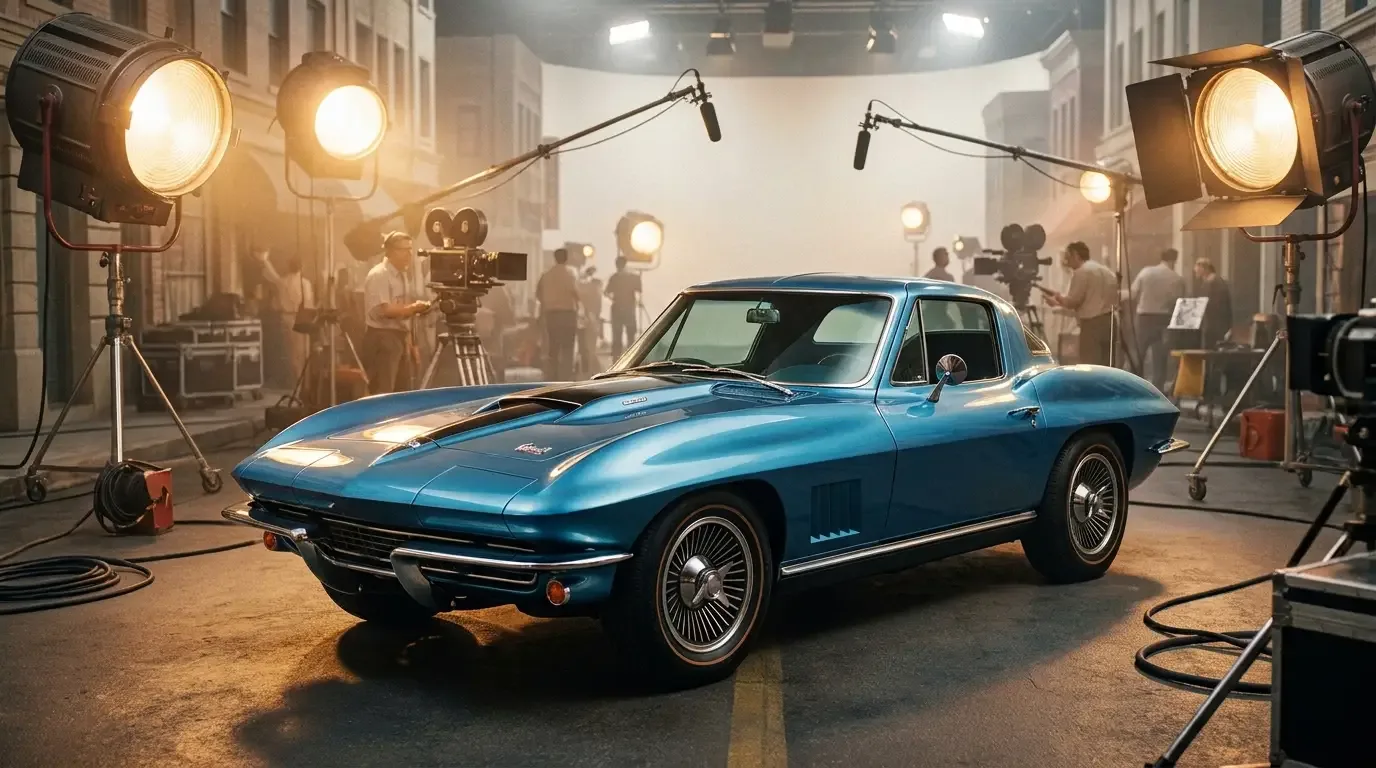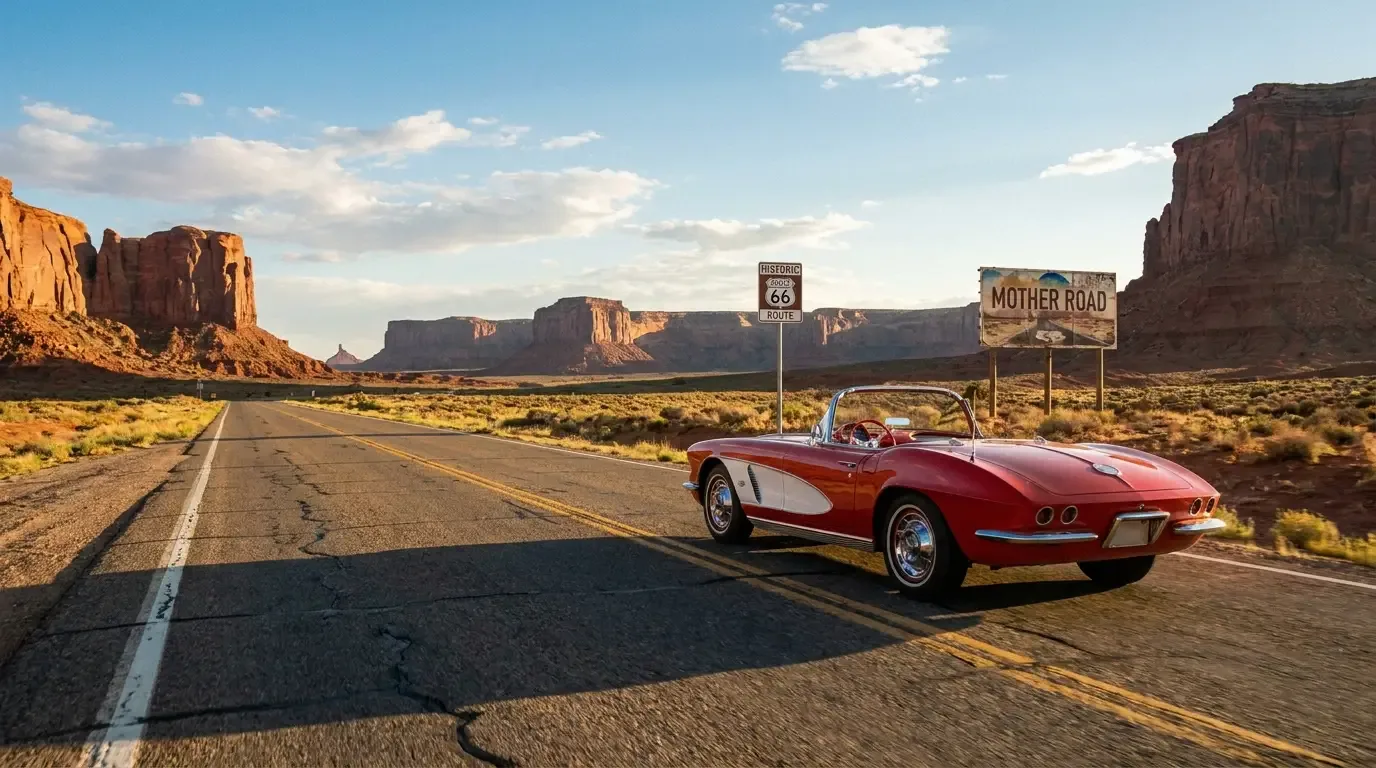
Before there was a Corvette in your driveway, there was probably a Corvette on your television. The car entered the American imagination not just through showrooms but through screen after screen, decade after decade. A kid who grew up watching Route 66 in black and white, a teenager who caught Corvette Summer at the drive-in, a college student who wore out a VHS tape of C4 chase scenes, each generation got its Corvette moment on film. You can trace the Corvette timeline through production records and option codes, but you can also trace it through what Hollywood reached for whenever a story needed something beautiful, fast, and unmistakably American.
How the Corvette became a character, not just a prop
Most cars appear in films because a production company needed transportation. The Corvette appeared because somebody on the crew wanted it there. That distinction matters. The car had narrative weight from its earliest Hollywood appearances. It signaled aspiration, restlessness, arrival. A character who drove a Corvette wasn't just getting somewhere. They were somebody.
The earliest notable screen appearances came in the 1950s, when the C1 was new enough to carry genuine novelty. The car fit the era: sharp, modern, a little showy. Producers understood the optics. If you wanted a visual shorthand for a certain kind of American confidence, you put your lead behind a Corvette wheel.
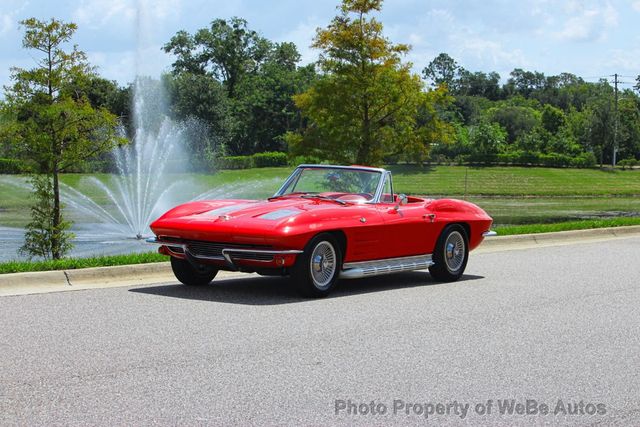
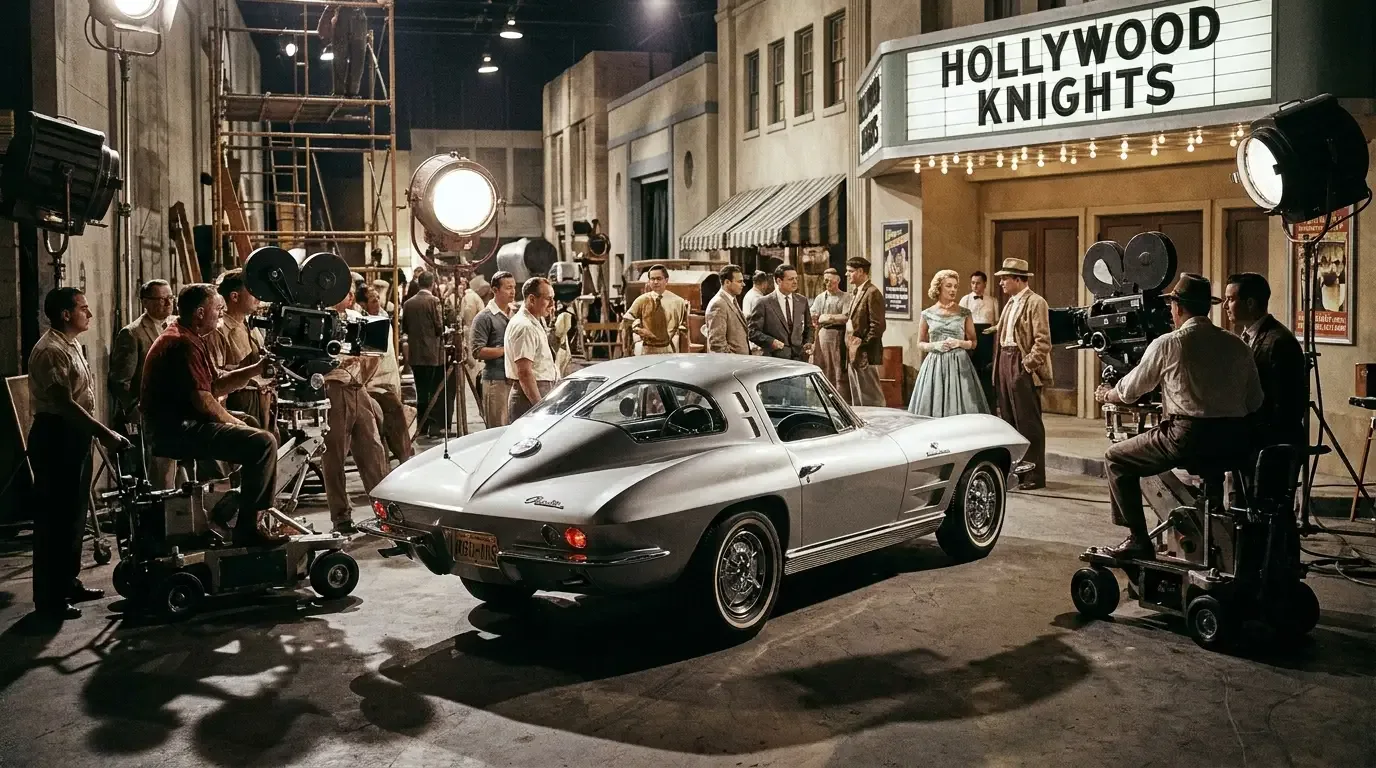
By the 1960s, the shorthand had shifted. The C2 Sting Ray arrived in 1963 and changed what the car could mean cinematically. The split-window coupe in particular photographed unlike anything else on the road. It didn't look like a prop. It looked like a statement. Route 66, the CBS series that ran from 1960 to 1964, built its entire identity around two young men crossing the country in a Corvette. The car wasn't background. It was the through-line. Each episode started from the premise that two guys in the right car could find America. That idea landed. the corvette in movies story traces the full arc of how those TV appearances shaped public perception of the car in ways that no amount of advertising could replicate.
The C3 era and Corvette Summer
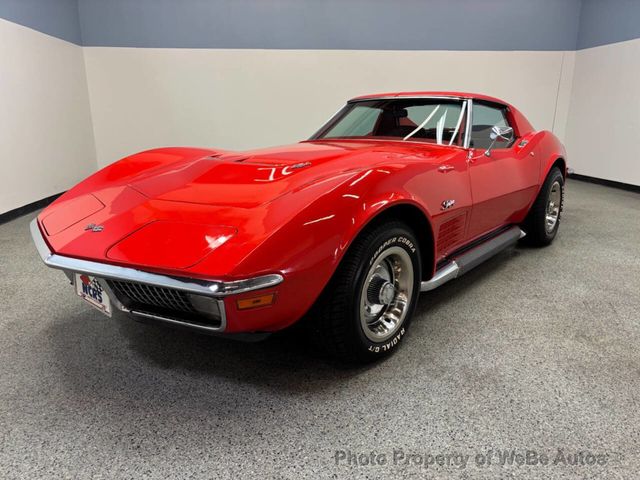
The C3 generation (1968-1982) spent its years on screen doing everything from chase sequences to character studies. The long hood, the wide hips, the T-top roof, these were visual elements that held up in tight shots and wide ones. Directors knew what they had.
The clearest example of what a C3 Corvette could carry narratively is Corvette Summer (1978). Mark Hamill, fresh off Star Wars, plays a high school student who builds a custom Corvette in shop class only to have it stolen. The film follows his cross-country pursuit of the car. On paper it sounds thin. What makes it work is that the Corvette in the film is genuinely spectacular, a stretched, customized show car that became one of the more recognizable one-off builds of the 1970s. The car was built by Richard "Korky" Korkes at his Korky's Kustom Studios in Van Nuys, California, using a 1973 Chevrolet Corvette Stingray as the base. It toured auto shows after production wrapped, which tells you something about how seriously people took it. The film itself is modest. The car is not.
The C3 also turned up in police procedurals, crime dramas, and action films throughout the 1970s, usually on the wrong side of a chase. The car's performance profile made it a natural fit for any story that needed something fast and American. Producers didn't have to explain why the villain drove one. The audience already understood.
The 1980s and 1990s: from Magnum to mainstream
Television did more sustained work on the Corvette's image than movies did during the C4 era. Magnum, P.I. kept a Ferrari front and center, but the Corvette turned up throughout network television as shorthand for the same aspiration. The C4, introduced in 1984, was a more capable car than the public initially credited it for, and screen appearances helped reframe it. By the mid-1980s, a C4 on screen read as contemporary rather than retro.
The 1990s brought the C4 to its final years. Vintage Corvettes also found their way into period productions during this era, where a classic C1 or C2 carried a different register than the current model in showrooms. That distinction was deliberate. The early cars signaled glamour and nostalgia in ways the later generations could not yet claim.
"Hollywood has always known something about the Corvette that the spec sheets don't capture: the car looks like it has somewhere to be. That's not an accident of design. That's decades of screen appearances teaching audiences to read it that way."
— Patrick Walsh
Modern appearances and what they say about the car's staying power
The C5 and C6 generations found their way into action franchises that were hungry for American iron with contemporary performance credentials. The Corvette turned up in supporting roles in everything from network crime dramas to cable series that needed a character's success communicated visually in a single shot. The car kept working because the visual language had been established over forty years. You didn't need to explain a Corvette to an audience. The work had already been done.
The C7 (2014-2019) era coincided with a period when the automotive press was reassessing the Corvette as a genuine supercar competitor rather than an American also-ran. Film and television reflected this. The car appeared in contexts that assumed a sophisticated viewer who understood what a Z06 meant. The C7 Z06, produced for model years 2015 through 2019, gave screenwriters a concrete performance reference that held up against European rivals on paper. If you wanted to read the related story about how Corvette culture extends beyond the highway into drive-ins, cruises, and Americana, read the related story for the full picture of how deep that cultural thread runs.
Finding the cars that made the screen
For collectors, the filmography adds a dimension to the Corvette that pure performance or originality numbers don't cover. A C3 that appeared in a regional television commercial, a C1 that spent three days on a studio lot, a C4 from a single episode of a long-running series, these cars have stories that documentation can support or undermine. Screen-used provenance is its own category of research, and it rewards the same kind of careful checking that any serious Corvette purchase requires.
The broader point is that the Corvette's screen history isn't separate from its collector history. They're the same history. The reason a 1963 split-window coupe stops people at a show isn't only the engineering. It's that people have been seeing that roofline since childhood, on screens and in person, and they know what it means. If you're looking to own a piece of that story, you can browse classic Corvette for sale and see what's currently available across generations, from the first C1 roadsters to the C6 Z06s that made the supercar comparison stick.
The filmography is long and it keeps getting longer. Each generation of the car adds new appearances, new contexts, new audiences who see it for the first time. That continuity is part of what makes the Corvette's screen presence different from a car that had one famous movie and disappeared. The Corvette keeps showing up because the stories keep finding uses for it. Forty years from now, somebody will probably be writing about the C8's screen history. The pattern holds.
Sources and notes
- Wikipedia: Corvette Summer — confirmed 1973 base car, Korky's Kustom Studios as builder, Mark Hamill casting
- Wikipedia: Route 66 (TV series) — confirmed CBS run 1960-1964, Chevrolet product placement arrangement
- Aldan American: Cool Facts About the Corvettes on TV's Route 66 — confirmed Chevrolet supplied and rotated cars each season
- Kustomrama: Richard "Korky" Korkes — confirmed builder biography and Corvette Summer project details
- IMCDb: The Mask (1994) vehicle database — confirmed no Corvette appears in the film
- Wikipedia: Chevrolet Corvette C7 — confirmed production years 2014-2019, Z06 model years 2015-2019