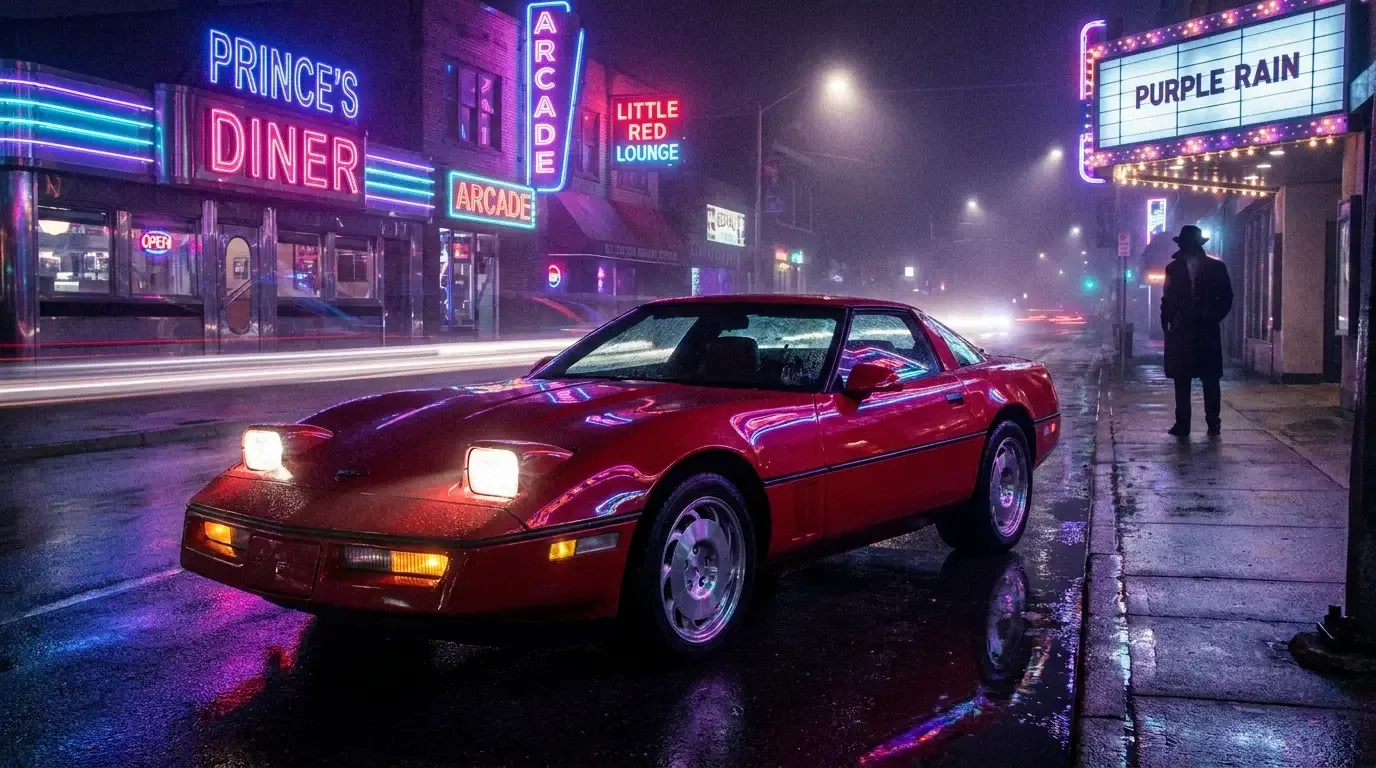
The Corvette's soundtrack: how America's sports car became a lyrical fixture
There's a moment early in the classic-car cultural record where you encounter a song and can almost hear the car. Not literally, of course. But the enthusiasm is real, the reverence is unmistakable, and the Corvette sits at the center of it the way it would sit at the center of dozens of songs, films, and cultural moments across the decades that followed. If you've been spending time with our corvette in movies guide, you already know how deep that visual mythology runs. The musical thread is just as long, and in some ways more personal.
The Corvette arrived in 1953 as a two-seat experiment that Chevrolet wasn't fully sure about. By the time the mid-1950s gave way to the 1960s, it had become something else entirely: a symbol. And symbols get songs written about them.
Prince, Devo, and the unlikely Corvette canon
The most famous Corvette song in pop history isn't by a country act or a rockabilly singer. It's "Little Red Corvette" by Prince, released in 1983 on the 1999 album. Prince has said in interviews that he wrote the song in the back of a tour bus, half-asleep, after a night that left an impression. The Corvette in the title is a metaphor, which Prince never pretended otherwise. But the car choice was deliberate. A Corvette meant something specific in 1983: fast, American, a little dangerous, conspicuous without apology.
The song hit number six on the Billboard Hot 100 and spent months on the charts. More importantly, it embedded the Corvette into the vocabulary of a generation that wasn't necessarily thinking about horsepower ratings. The car became cultural shorthand, and Prince's specific choice of the Corvette over any other sports car said something about what the car meant in American life at that point.
Around the same time, Devo had released "Beautiful World" (1981), which used images of American abundance and popular culture in a tone that was deliberately ironic. Devo's vision of America wasn't Prince's. Where Prince used the Corvette to write about desire and excess with genuine feeling, Devo pointed at the gap between what America promised and what it delivered. Car culture and consumer goods were part of that ironic landscape. That's what cultural symbols do when they're durable enough.
Country music's long relationship with Corvette mythology
Country music found the Corvette earlier than rock did, and the relationship was simpler at first. The car showed up in songs the way it showed up in small-town life: as the thing somebody's older brother drove, or the car you saved for, or the vehicle that carried you out of somewhere you wanted to leave.
The Corvette appears throughout the country catalog of the 1960s as a marker of aspiration. It was recognizable enough that listeners knew exactly what a Corvette meant without explanation, which is the precondition for any object becoming a lyrical reference. You can't write a metaphor that requires a footnote.
By the 1980s and 1990s, the Corvette had accumulated enough history that country writers could use it as a time marker. A song about a Corvette from 1967 or 1969 was a song about a specific moment in American life, not just a car. That layering of meaning is something the car earned over three decades of consistent production and cultural presence.
"The Corvette shows up in music the same way it shows up everywhere else in American culture: as a stand-in for whatever the writer needs it to mean. Speed, freedom, youth, desire, loss. It's versatile because it's specific enough to be recognizable and vague enough to hold meaning. That's a rare combination for a manufactured object."
— Patrick Walsh
The car in rock and roll, from Sun Records to arena rock
The earliest Corvette references in rock music track almost exactly with the car's production history. The 1953 original was too new, too uncertain, to show up in songs immediately. By 1956 and 1957, as the car found its identity with the small-block V8 and the styling that would define it for years, it started appearing in the lyrics that were coming out of the Sun Records era and the early California sound.
The connection between California car culture and the Corvette is worth noting. The Beach Boys wrote about cars with more technical specificity than any other major act of the early 1960s. Brian Wilson knew what a four-barrel carburetor was. The Corvette appears in that catalog not as a featured subject but as part of the landscape, which in some ways says more. It was ambient. It was just there, the way a specific car becomes part of a place's identity.
Arena rock of the 1970s and 1980s gave the Corvette a different kind of presence. Bands that played to stadium crowds used car imagery as a proxy for freedom and mobility, and the Corvette was the American car that carried that weight most efficiently. It was two seats, no back seat, not practical for a family. It was the car you drove when you had somewhere to be and nothing else was required of you. That's a useful image for a rock band to work with.
What the Corvette offered that other cars couldn't
The question worth asking is why the Corvette specifically, and not the Mustang or the Camaro or the Dodge Charger. All of those cars appear in music. None of them appear with quite the same frequency or cultural weight.
Part of the answer is age. The Corvette is older than all of them. It had fifteen years of cultural accumulation by the time the Mustang arrived in 1964. Songs and stories had already attached to it. That kind of inertia matters. The first reference to a car in a hit song makes the next reference easier to write and easier to understand.
Part of it is the sports car specificity. The Corvette has always been a two-seat sports car. The Mustang and Camaro are pony cars, which is a different category with a different meaning. Pony cars are democratic. The Corvette has always been a little more pointed, a little more committed to being exactly what it is. That particularity translates into lyrical utility. Writers reach for the more specific tool.
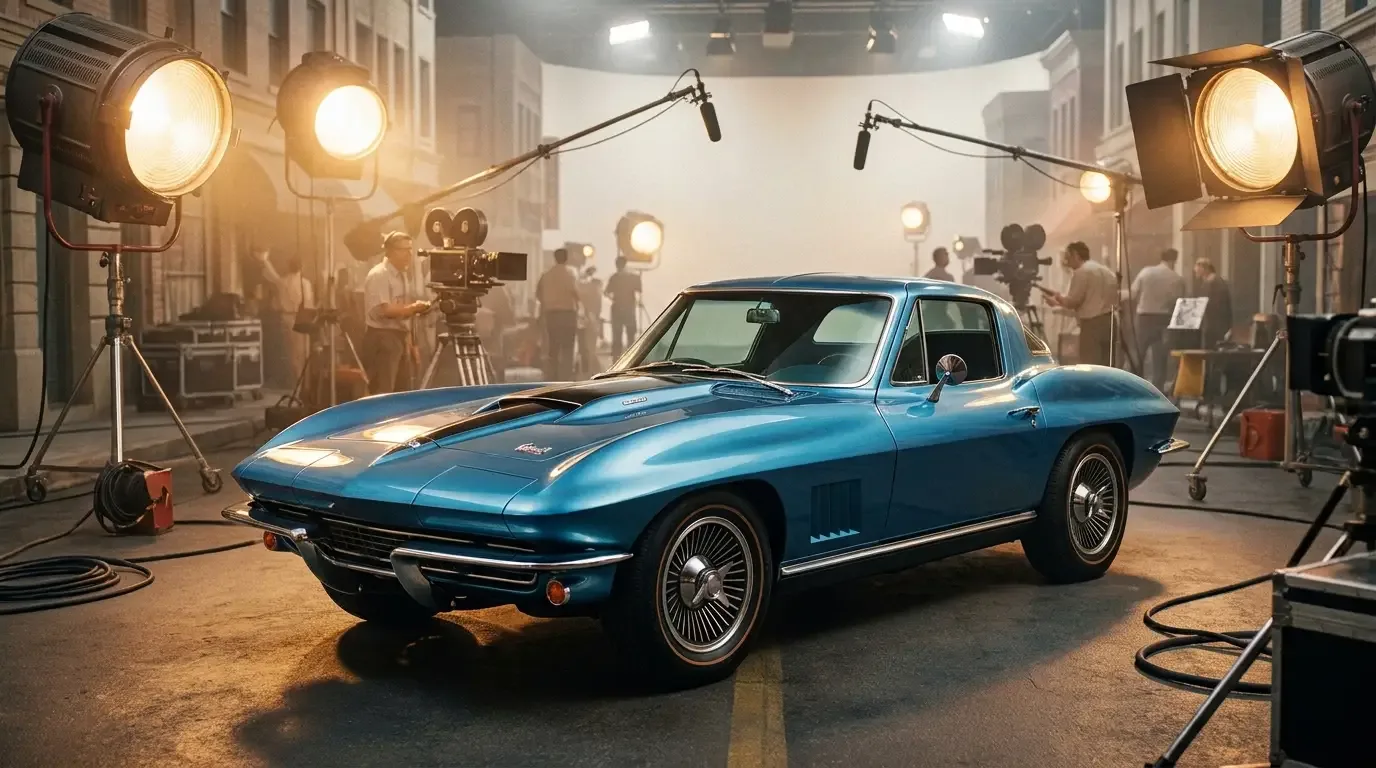
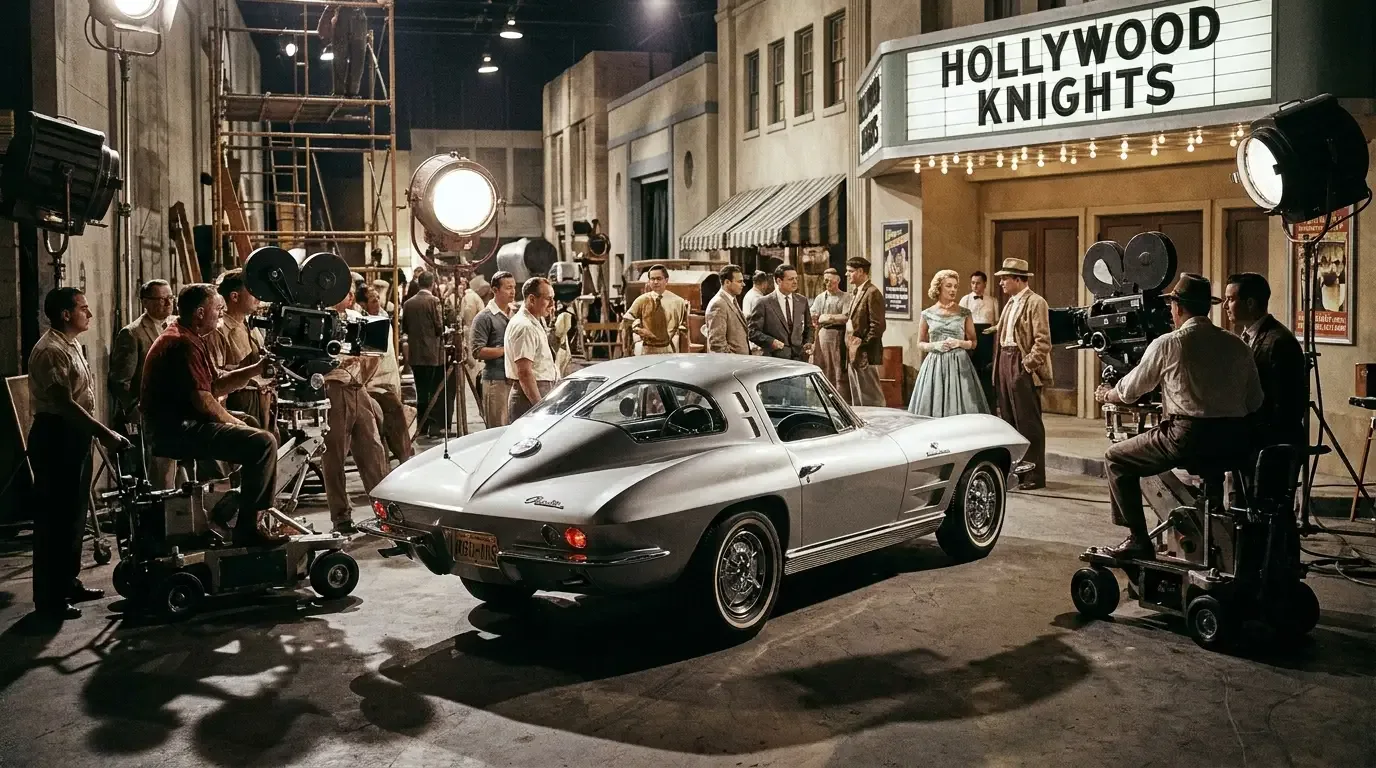
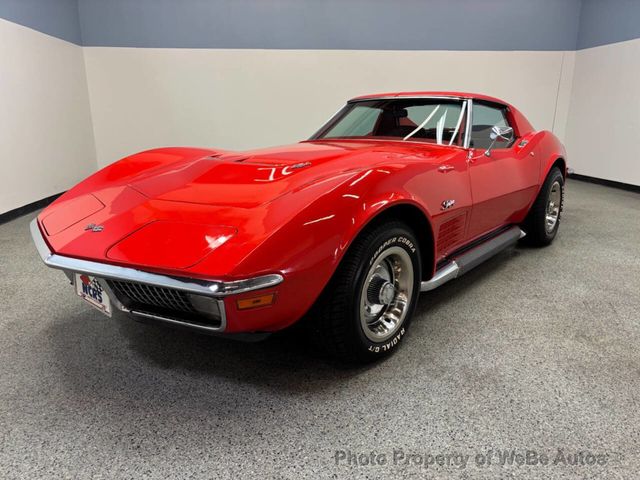
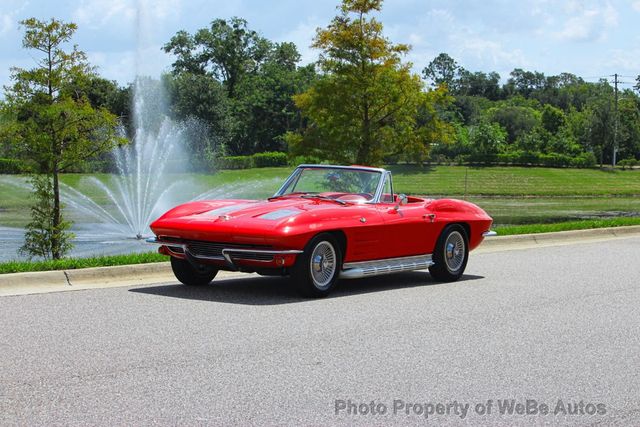
If you want to see the cars that inspired the culture, browsing classic Corvette for sale gives you a sense of what the real objects look like now, decades after the songs were written about them. The C2 Stingray in particular, the 1963 to 1967 generation, is the car that shows up most often in the music from the mid-1960s onward. It's the shape that settled into the collective memory.
The Corvette's cultural staying power, and what comes next
The mid-engine C8, introduced for the 2020 model year, raised genuine questions about whether the Corvette's cultural identity would shift. The car moved its engine behind the driver for the first time in its history, adopting a layout that had defined European exotics for decades. Some longtime enthusiasts weren't happy. The song catalog didn't immediately update itself.
But cultural meaning doesn't turn over on a model year. The accumulated weight of six decades of Corvette references in American music, film, television, and literature doesn't disappear because the engine moved. The C8 will generate its own cultural associations over time, the way every generation of the car eventually did. The C3 of the 1970s was once the new thing that felt wrong to people who loved the C2. Now the C3 has its own music, its own films, its own defenders.
The series continues with next in the series, where the Corvette's screen presence gets the same treatment. The musical and cinematic threads run parallel, and together they explain something about why a production sports car from a mass-market American brand became one of the more durable cultural symbols of the twentieth century.
The car earned its place in the American songbook by being real and specific and present across enough decades that writers kept returning to it. That's not a marketing achievement. It's a cultural one, and those are harder to manufacture than horsepower.
Sources and notes
- Wikipedia: Little Red Corvette — chart peak (#6 Hot 100), recording history (Kiawa Trail home studio and Sunset Sound mixing), and MTV context
- MusicRadar: The inside story of "Little Red Corvette" — origin of the song's inspiration and recording details
- Wikipedia: Devo "Beautiful World" — confirmed 1981 release on New Traditionalists; ironic Americana imagery in the music video
- Wikipedia: Chevrolet Corvette C2 — confirmed 1963 to 1967 production years for the Stingray generation
- Wikipedia: Chevrolet Corvette C8 — confirmed 2020 as the first model year of the mid-engine generation
- Ultimate Prince: How 1999 helped Prince break down barriers at MTV — context for Black artists and early MTV programming history