There's a particular kind of movie that doesn't try to be important. It just wants to be fun, a little trashy in the best sense, and it puts a beautiful car front and center where everyone can admire it. Corvette Summer, released in June 1978, is exactly that kind of movie. It stars Mark Hamill, riding the wave of the first Star Wars twelve months earlier, and a custom-built 1973 Corvette so outrageous that the car is really the headliner. The film disappointed at the box office relative to the summer's bigger releases. The Corvette became a legend.
To understand why anyone still talks about this movie nearly fifty years later, you have to start with the car. Not the plot, which is a road-trip caper through Las Vegas, and not the performances, which are serviceable. The car is the reason. If you want to trace the corvette in movies era, this film sits at one of its most flamboyant peaks.
The car that launched a thousand teenage daydreams
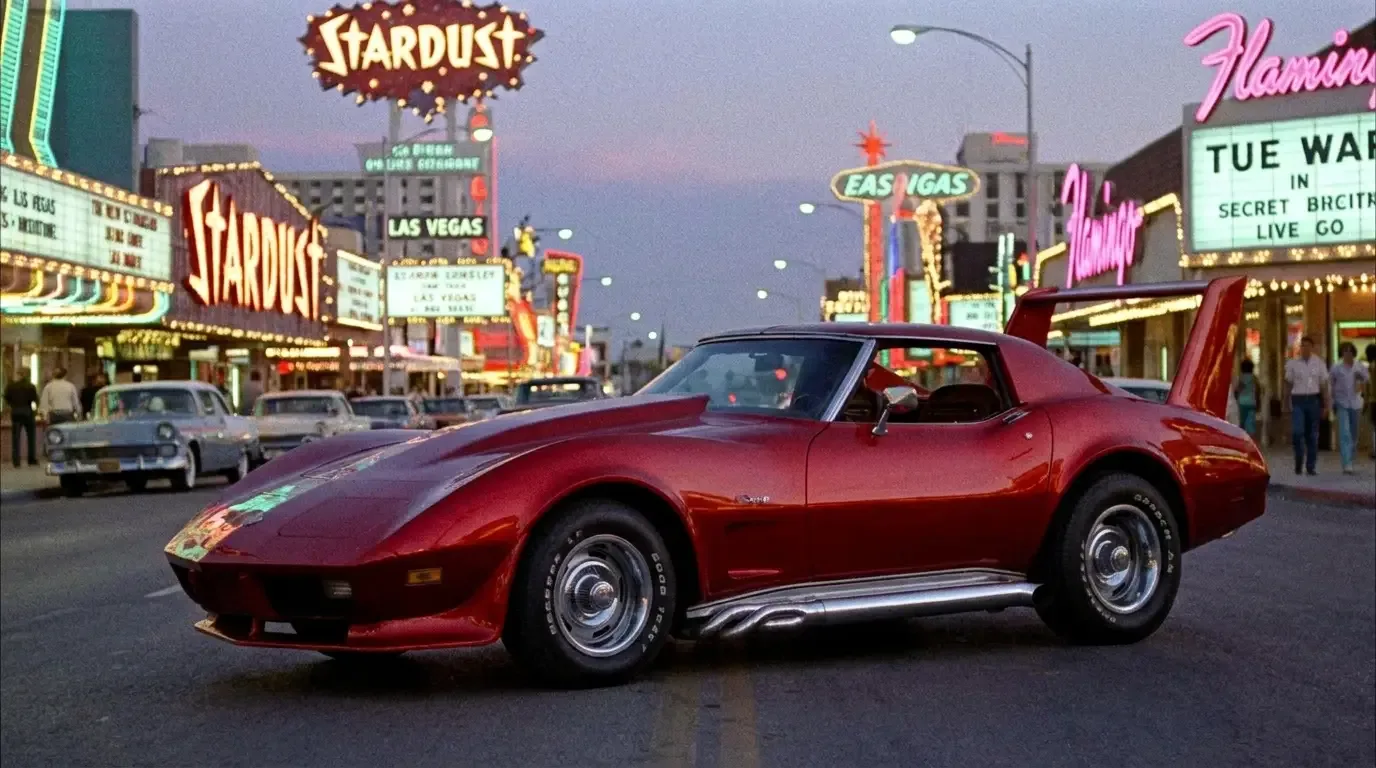
The Corvette built for the film started life as a production C3 but was transformed into something the factory never imagined. Two cars were built for filming by Dick Korkes of Korky's Kustom Studios, and the result was a car with a dramatically raked nose extension, a high rear spoiler, side exhaust pipes running along the rocker panels, and a paint scheme in candy apple red that left no one guessing about its intentions. The interior was no less wild, with custom seats and enough period-correct Las Vegas-adjacent detail to make the whole thing feel like a prop from a show that had escaped its stage.
The engine was left largely stock under all that custom bodywork, which is actually part of what makes the car interesting from a collector standpoint. The C3 Corvette in 1973 was running the L48 base V8 or the optional L82, and the film car reportedly retained functional mechanicals beneath its show exterior. The custom coachwork was designed to be driven, not just looked at. And driven it was, through the streets of Hollywood and on location in Nevada.
Mark Hamill and the year after Star Wars
The casting of Hamill makes the film a document of a specific cultural moment. He had just come out of Star Wars (1977) as Luke Skywalker, a role that would define his career for decades, and Corvette Summer was an attempt to show he could anchor a more grounded, earthbound kind of movie. His character, Kenny Dantley, is a high school shop student who builds the Corvette in class and then, when the car is stolen, sets out to find it. The story takes him to Las Vegas, where he meets a would-be showgirl played by Annie Potts in her film debut, a performance that earned her a Golden Globe nomination for Best Motion Picture Acting Debut, Female.
Hamill has spoken in interviews about how much he enjoyed the physical reality of the movie compared to the green-screen work of Star Wars, particularly the driving sequences. The production gave him genuine time behind the wheel of the custom Corvette, and it shows in the easy comfort he has around the car. Whether or not the film itself worked as a movie, it worked as a document of what it felt like to be young and obsessed with a particular car in the late 1970s.
To understand why the Corvette carried that kind of emotional weight, it helps to know how the Corvette came to be as America's sports car from the very beginning.
What the film got right about Corvette culture
The shop-class premise is not entirely fabricated. By the mid-1970s, automotive shop programs in American high schools were teaching real skills, and project cars built by students were a genuine part of that curriculum in well-funded programs. The idea that a class would acquire a Corvette body and chassis and rebuild it was a stretch even then, but it was not a complete fantasy. Programs with industry connections sometimes had access to donated or discounted components, and a Corvette project would have been the kind of thing a determined shop teacher might spend years arranging.
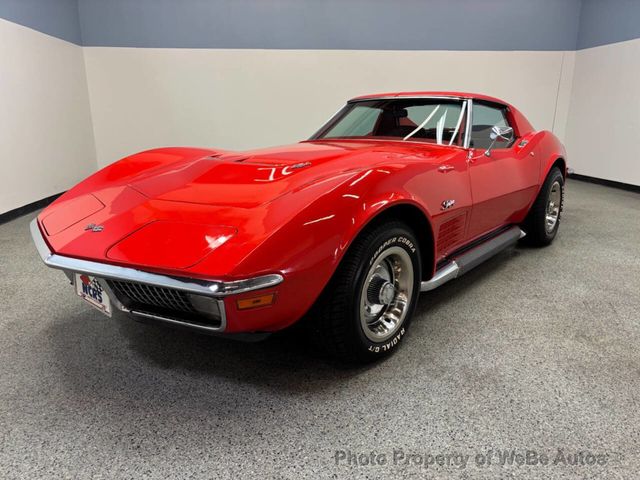
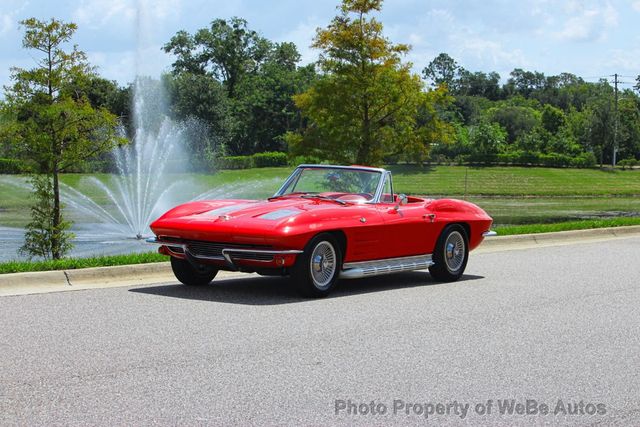
More accurately, the film captured the way American teenagers in 1978 related to the Corvette as an aspirational object. This was still the C3 era, the long-running third-generation body that had been in production since 1968. By 1978, the car had survived the emissions and fuel economy crises of the early and mid-1970s with its reputation intact, even if the power figures had come down significantly from the high-compression peaks of 1969 and 1970. The Corvette was still the car you pinned on your bedroom wall.
"The movie didn't try to be about something. It was about a car and a kid who loved it. That's an honest subject, and the Corvette was the right car to build the story around."
— Patrick Walsh
The 1978 Corvette on screen and in showrooms
The film arrived in a year when the production Corvette was actually doing something newsworthy. The 1978 model year was the Corvette's 25th anniversary, and Chevrolet marked the occasion with a special two-tone Silver Anniversary edition and a pace car replica package for the Indy 500. The pace car replicas, finished in black and silver with a distinctive decal package, became immediately collectible. Dealers were marking them up significantly over sticker, with some reportedly demanding more than double the $13,653 list price, and a number were bought purely as investments. If you want to browse what actual examples sell for today, 1978 Corvettes for sale show the full range from driver-quality examples to the pace car replicas that serious collectors seek out.
The film's release that same summer put two very different Corvette images into the cultural conversation at once: the wild custom on movie screens and the tasteful anniversary editions in dealership windows. The contrast said something real about how broad the Corvette's appeal was. It could be a precision instrument for the buyer who wanted correct factory colors and documentation, and it could be a starting point for a custom build that bore almost no resemblance to what left the St. Louis assembly plant. The car was flexible in a way that few American performance cars ever achieved.
The long tail of a small film
Box office disappointment turned out to be a strange kind of preservation. Because Corvette Summer was not a major hit, it did not get endlessly sequelized or turned into a franchise. It just existed: a specific, slightly weird movie about a kid and his car, made in a specific moment when American pop culture was looking for something lighter after Star Wars had upended everything. The car itself, rather than being lost to the usual fate of Hollywood props, became a sought-after piece of automotive history.
The film shows up regularly in conversations about the Corvette's presence in American entertainment, and it connects to the broader question of how cars become characters. The Corvette in Corvette Summer is not a tool the protagonist uses. It is the thing he loves, the thing he mourns when it's gone, the reason he crosses the country. The movie understands, at some basic level, that this is how people actually feel about specific cars. That emotional truth is why the film has any audience at all today, and it connects to the related article about how the Corvette has functioned as a symbol in American culture well beyond the automotive world.
Forty-some years on, the film holds an honest place in the timeline. It is not the best Corvette movie ever made. It is not trying to be. It is a document of a particular American summer, a particular car, and a particular young actor who had just become famous and wanted to go for a drive.
Sources and notes
- Wikipedia: Corvette Summer — director (Matthew Robbins), cast, Annie Potts film debut and Golden Globe nomination, production companies (MGM/United Artists), box office figures
- Street Machine Australia: Corvette Summer (1978) — car builder confirmed as Dick Korkes of Korky's Kustom Studios; main car's journey to Australia after filming
- Street Muscle Magazine: Corvette Summer movie car — 1973 base model confirmed, built-350 engine, backup car history through private U.S. ownership
- CorvSport: 1973 C3 Corvette specifications — L48 base V8 and L82 optional engine confirmed available for model year 1973
- CorvSport: 1978 Corvette Indy Pace Car replica — dealer markup over sticker confirmed; St. Louis assembly plant for all 1978 production
- Hagerty Media: 40 years ago, Luke Skywalker took a wild ride in Corvette Summer — cultural context, box office performance relative to summer competition