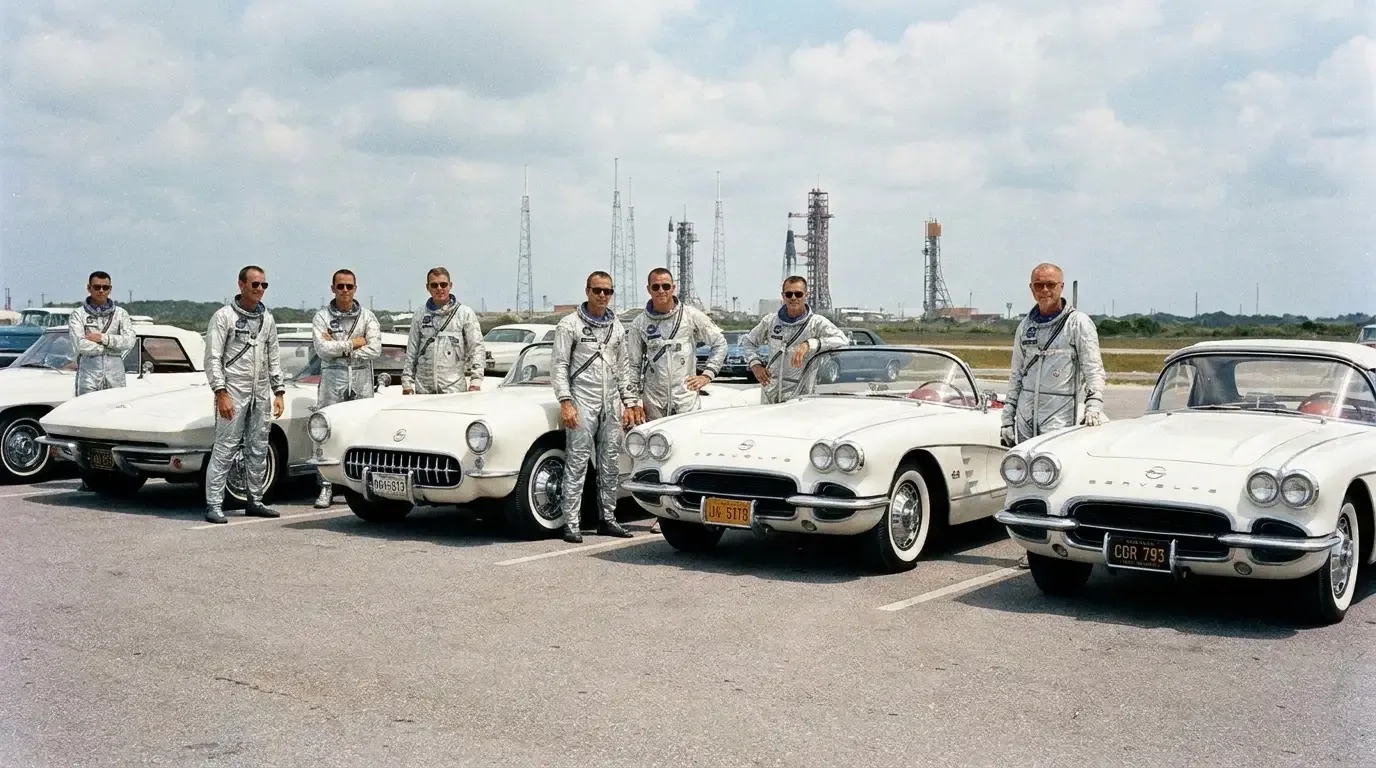
There is a photograph taken at the Johnson Space Center parking lot sometime in the early 1960s that tells you everything about how this relationship started. Seven men in short-sleeve shirts stand next to seven identical Corvettes. The cars are white. The men are the Mercury astronauts. They look comfortable in a way that people usually do not look comfortable in publicity photographs. That is because for once they were not being asked to pose in front of a capsule or a rocket. They were just standing next to cars they actually wanted.
The Corvette's connection to NASA's astronaut program is not a marketing story. It started with a handshake between two men who understood each other, grew into a tradition that lasted decades, and pulled in some of the most famous names in the history of American space exploration. If you have ever wondered why so many astronauts drove Corvettes, the answer is part generosity, part logistics, and part something harder to explain about what the car meant to that generation of test pilots and aviators. For background on the car itself, read the overview of the Corvette's broader story before coming back to this one.
How Jim Rathmann started it all
The man who made the astronaut-Corvette connection happen was not a GM executive or a marketing director. He was a race car driver named Jim Rathmann, who won the Indianapolis 500 in 1960 and then retired to run a Chevrolet-Cadillac dealership in Melbourne, Florida, not far from Cape Canaveral. When the Mercury astronauts arrived at the Cape for training, Rathmann was already well-known in the community. He got along easily with the astronauts because they shared the same instincts: men who pushed fast machinery to its edges for a living tend to recognize each other.
Rathmann proposed an arrangement to Chevrolet that was simple and smart. The astronauts would lease Corvettes for a dollar a year each. GM got the association without any formal advertising obligation. The astronauts got cars they could actually afford, since the early Mercury program did not pay what the public might have assumed. Rathmann worked the deal through his dealership and handled the logistics himself. The program ran quietly for years before most people outside the Cape knew it existed.
The Mercury Seven and their cars
Alan Shepard was probably the most photographed astronaut with his Corvette, and he made no secret of how he felt about it. He drove hard and he drove fast, and the stories from the Cape in those years are full of him pushing whatever he was in. Gordon Cooper was another Corvette regular. Gus Grissom had one. So did Deke Slayton. Not every member of the Mercury Seven signed up: John Glenn drove an NSU Prinz as his daily car, reasoning that the German two-cylinder's fuel economy made more sense for his long commute, while Wally Schirra briefly leased a Corvette before switching to a Maserati, and Scott Carpenter preferred a Shelby Cobra. They were a group with strong preferences, and the Corvette fit the image that most of them projected to the public even before NASA started thinking carefully about image.
What actually connected these men to the car was something more practical. They were test pilots. They had spent careers in machines that required exact inputs and gave you nothing back without earning it. A car that had real steering feel, real feedback through the seat, a chassis that responded to what you were doing rather than filtering it out was simply more interesting to them than something comfortable and soft. The Corvette of the early 1960s was not a perfect car. The independent rear suspension that arrived on the 1963 Sting Ray was a significant development over the earlier solid axle, and the early cars had their handling limits in the wet. But they were alive in a way that very few American production cars were, and that mattered to that group.
The car also fit their budget reality. The astronauts were military officers on military pay, which was not generous even with the Life magazine contracts the Mercury Seven had negotiated. A dollar-a-year Corvette was a practical solution to a real problem. You will occasionally read accounts that make this sound purely like a perk or a public relations arrangement. It was partly that, but it also filled a genuine gap.
Apollo-era astronauts kept the tradition
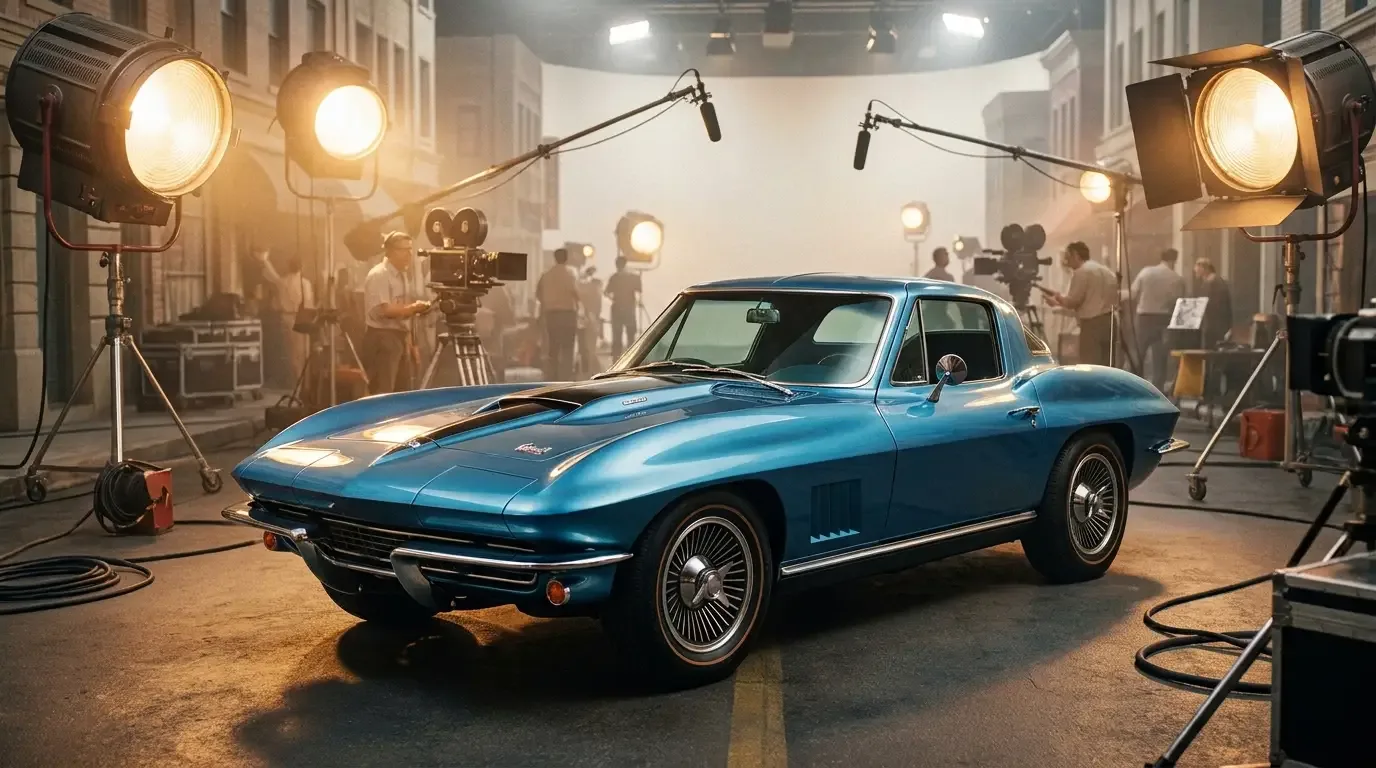
The program extended into the Apollo years and picked up some of the most recognizable names in American space history. Pete Conrad drove Corvettes. Jim Lovell, who commanded Apollo 13, was another regular. Neil Armstrong took part in the program before and after Apollo 11, driving a Marina Blue 1967 Sting Ray coupe in the period leading up to the mission. There are photographs from July 1969 of both Armstrong and Buzz Aldrin with Corvettes at the Cape in the days before launch. Michael Collins, the command module pilot for Apollo 11, was the exception among his crewmates: he drove a Volkswagen Beetle and did not participate in the Corvette program.
The photographs from that period are worth looking at carefully if you have not. The mood is relaxed. These were professional men going about their preparation, not men performing enthusiasm for a camera. The Corvettes in the background are part of the working lives of the astronauts who drove them. Those images do more to connect the car to a particular moment in American history than any advertisement could have managed.
"The astronaut connection was not something Chevrolet manufactured. It happened because the men who flew the Mercury capsules and the Apollo missions were the same type of people who wanted to drive a Corvette. The car and the program existed in the same cultural moment, and Jim Rathmann was perceptive enough to see the connection before anyone else did."
— Patrick Walsh
Buzz Aldrin has talked about his Corvette in several interviews over the years, consistently describing it in practical terms. It was his car. He drove it. The fact that it was a Corvette was partly because of Rathmann's program and partly because it was the car he wanted. That distinction between "what NASA provided" and "what these men would have chosen anyway" runs through the whole story. The astronauts were not passive recipients of a publicity arrangement. They were active participants who happened to find the deal attractive because the car was actually good.
The cars in context
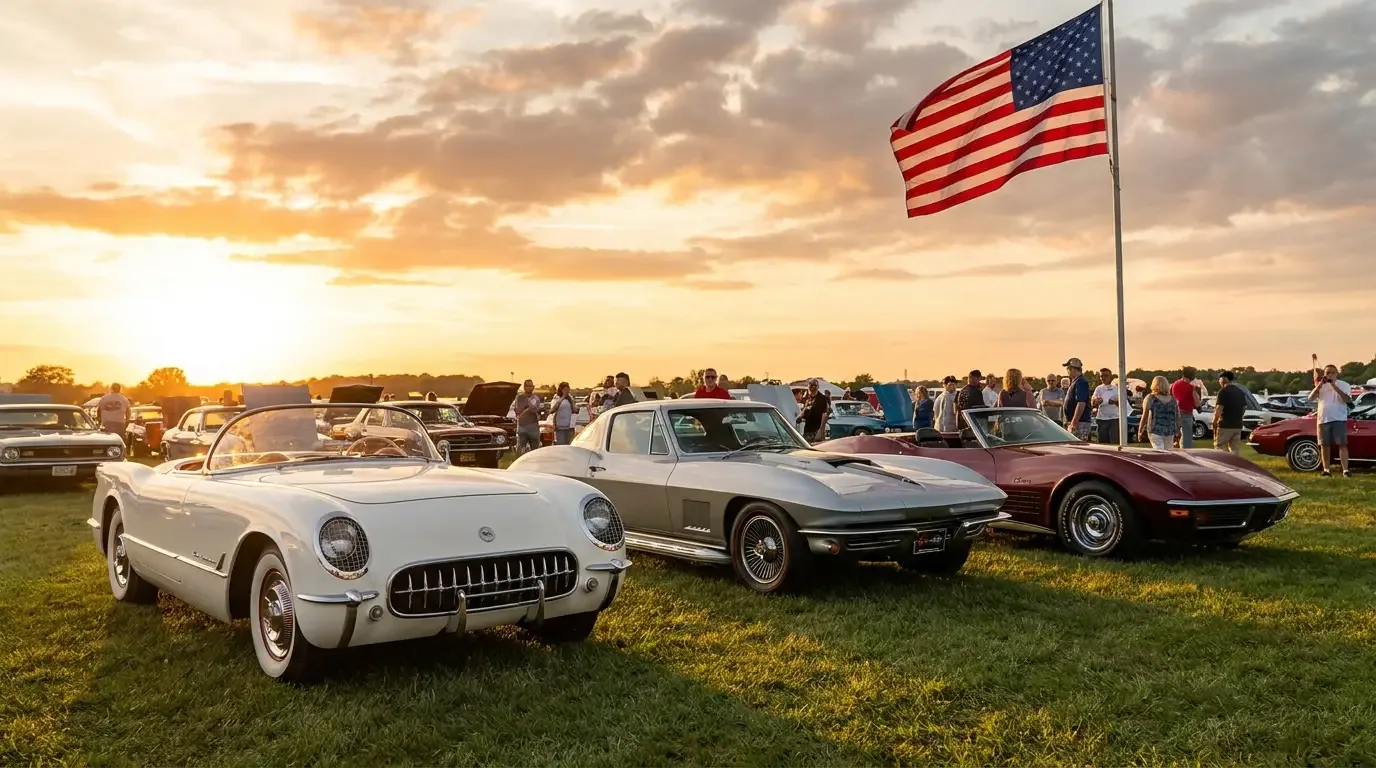
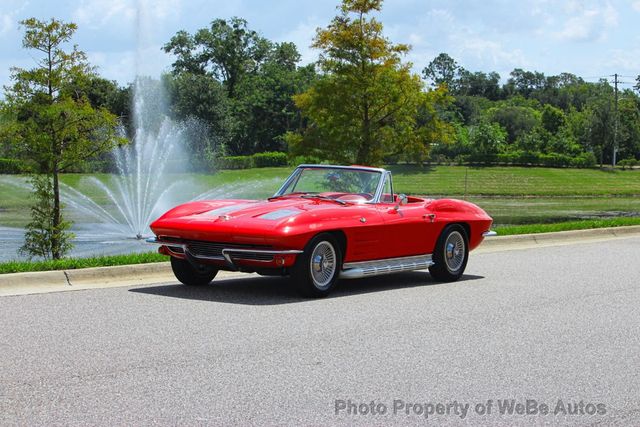
The Corvettes the astronauts drove were production models, not specially prepared cars. The early Mercury-era cars were C1 roadsters and coupes from the final years of that generation. The 1963 model year introduced the C2 Sting Ray, which represented the biggest leap in Corvette development since the original 1953 car. The split-window coupe that appeared in 1963 only is now among the most collectible Corvettes made. The mid-year cars from 1963 through 1967 overlap almost exactly with the most active years of the Mercury and Gemini programs.
| Generation | Years | Key development | Astronaut era overlap |
|---|---|---|---|
| C1 (late) | 1962 | 327 V8, 4-speed available | Mercury program start |
| C2 Sting Ray | 1963-1967 | IRS, split-window coupe ('63 only) | Mercury / Gemini peak |
| C3 | 1968-1982 | Shark body, big-block availability | Apollo program / Skylab |
| C4 | 1984-1996 | Digital instrumentation, LT1 | Space Shuttle era |
By the time the Space Shuttle program was underway, the formal Rathmann arrangement had wound down or changed in structure, but the cultural connection between astronauts and Corvettes had taken on a life of its own. Shuttle-era astronauts continued to be photographed with Corvettes, and the association had become self-reinforcing. You drove a Corvette partly because the people before you had driven Corvettes, and the car still earned that loyalty on its own terms. For a broader view of the models and moments that made the car iconic, a related piece covers the most famous individual Corvettes in the car's history.
What it means for collectors now
The astronaut connection shows up in Corvette collecting in two ways. First, there is genuine enthusiasm for cars from the Mercury and Apollo eras simply because of the cultural overlap. A correct 1963 Sting Ray split-window coupe carries meaning beyond its mechanicals for buyers who grew up watching the space program. Second, there are actual astronaut-owned examples in the collector market from time to time, and those provenance stories add real premium when they can be documented.
The key word is documented. A Corvette that was "owned by an astronaut" is a different thing from a Corvette where ownership can be traced through title history, correspondence, or contemporaneous photographs. The Rathmann arrangement was a lease, not a sale, which means many of the cars eventually went back to GM or to the dealership rather than staying with the individuals. Some did transfer into private hands. Sorting out which cars have clean provenance chains and which have been given stories after the fact is exactly the kind of research that determines whether the premium is justified.
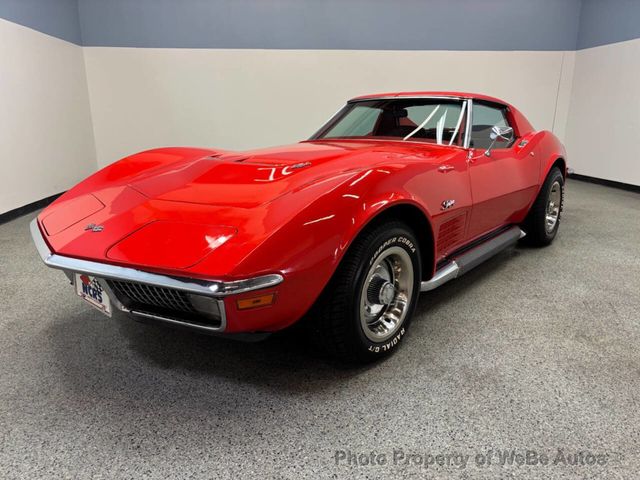
If you are interested in owning a Corvette from this era, the connection to the astronaut program is background context worth knowing rather than a buying criterion on its own. What you are actually buying is a C2 Sting Ray or an early C3, and those cars stand or fall on their own merits of condition, originality, and documentation. The history is real. The romance is real. But the rust under the wheel arches is also real, and that is what your inspection should focus on. You can browse classic Corvette for sale listings to see what the current market looks like across conditions and years.
The Corvette's cultural presence has never been limited to automotive circles. It shows up in film, television, music, and now in this particular slice of American history where the space program and a two-seat sports car from Kentucky found each other in a Florida parking lot. For more on how the car has appeared in American culture beyond the astronaut story, the corvette in movies piece covers a different side of the same broad cultural moment the car has occupied for seventy years.
Sources and notes
- Smithsonian Air & Space Magazine: "My Other Ride Is a Spaceship" — confirmed individual astronaut Corvette details, Mercury Seven non-participants, program timeline 1962-1971
- Wikipedia: Jim Rathmann — confirmed 1960 Indianapolis 500 win, Melbourne Florida Chevrolet-Cadillac dealership, and role in astronaut car program
- Hagerty Media: "To the Moon: The Cars of the Apollo 11 Astronauts" — confirmed Neil Armstrong drove a Marina Blue 1967 Sting Ray, Michael Collins drove a VW Beetle
- Jalopnik: "The AstroVettes: Why So Many NASA Astronauts Drove Corvettes In The '60s" — confirmed program details, John Glenn's NSU Prinz, Wally Schirra's Maserati, Scott Carpenter's Shelby Cobra
- Core77: John Glenn's NSU Prinz — confirmed Glenn declined the Corvette program; quoted Glenn's own explanation about fuel economy and college savings
- National Corvette Museum: Jim Lovell 1968 Corvette and Apollo Program Artifacts — confirmed Lovell's participation and preserved examples from the astronaut era