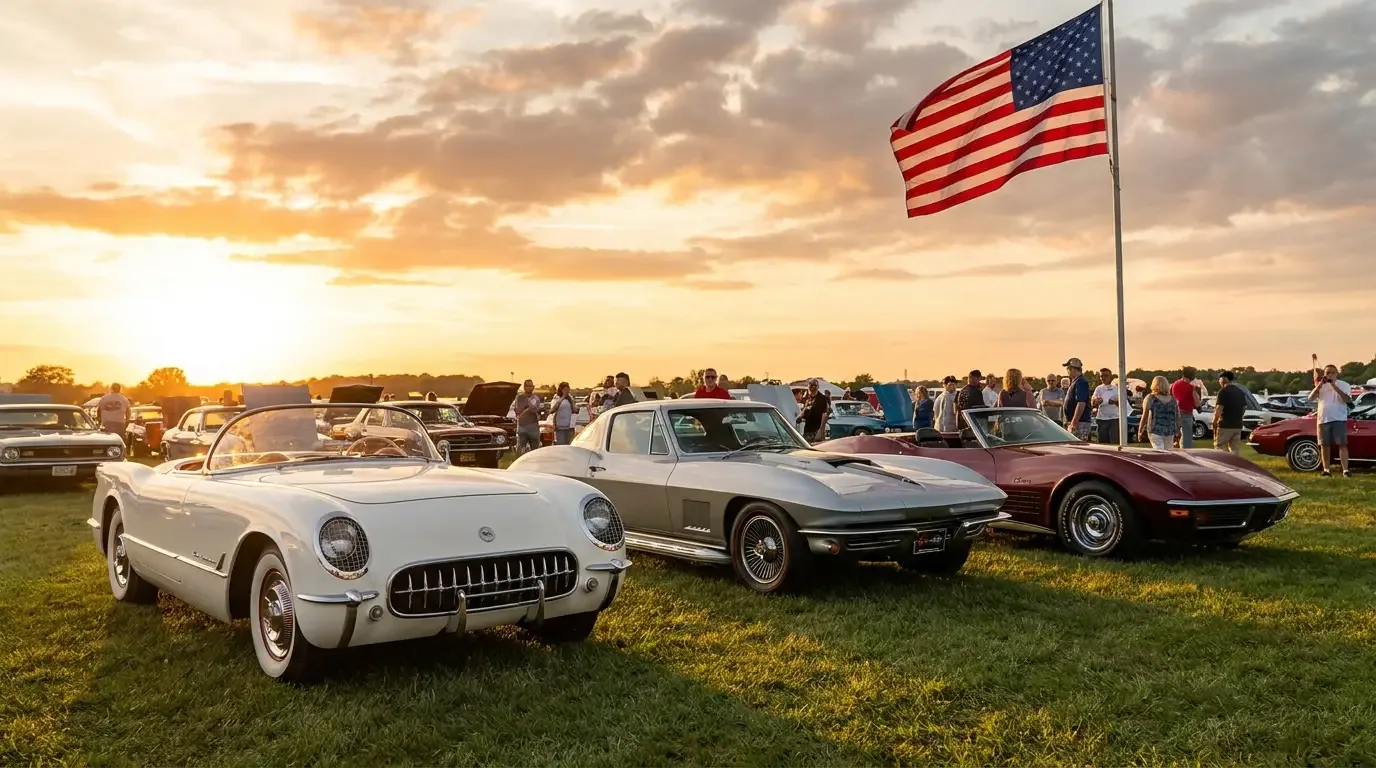
The first time most people saw a Corvette up close, they probably did not expect to feel anything in particular. It was just a car. Then something shifted. Maybe it was the shape of the C2's hood, or the way a C1's chrome caught the sun at a summer show, or the sheer noise of a big-block idling at a stoplight. Whatever the moment was, the Corvette had a way of making it matter.
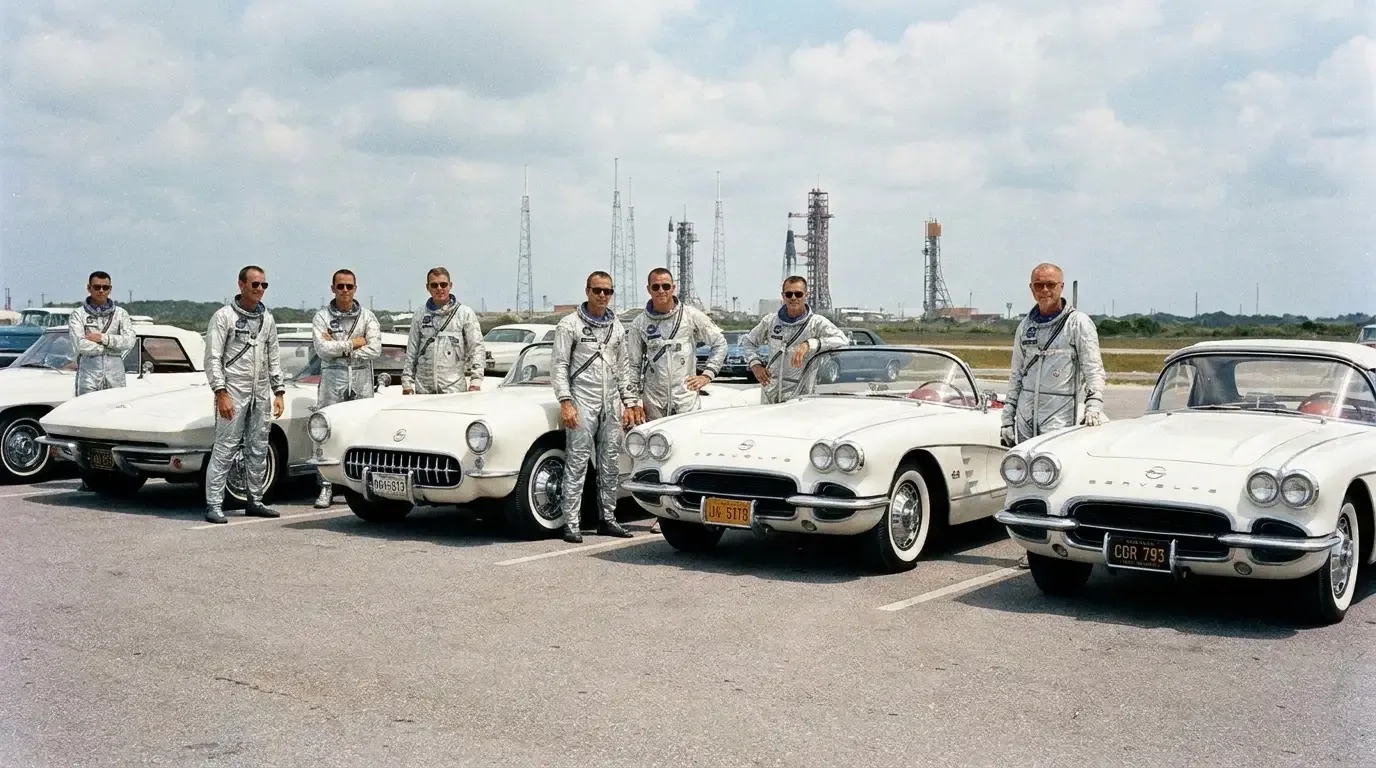
America has produced a lot of sports cars over the decades, but none of them has accumulated the kind of cultural weight that the Corvette carries. Some of that weight comes from motorsport. Some from Hollywood. Some from the sheer range of the car across eight generations and over seventy years. The most famous examples tell the story better than any summary could.
The car that started everything: the 1953 Corvette
Chevrolet showed the first Corvette as a concept at GM's Motorama in January 1953, and the public response was strong enough that the company decided to build it. The production version arrived that same year, hand-assembled in Flint, Michigan. Only 300 were made in 1953, all of them Polo White with a red interior, powered by a 150-horsepower inline-six paired to a two-speed Powerglide automatic.
The car was not fast by the standards of the day, and the two-speed automatic drew criticism from enthusiasts who wanted a manual. Sales were slow enough that GM briefly considered canceling the whole program. What saved it was partly pressure from Ford's Thunderbird and partly the influence of Zora Arkus-Duntov, the engineer who became the car's guiding force and eventually its most important champion inside General Motors.
The 1953 Corvette is not valuable today because it was perfect. It was not. It is valuable because it was first, and because the people who bought one at the time were buying something that did not yet have a reputation. The surviving 1953s are among the most carefully documented Corvettes in existence, tracked by the National Corvette Restorers Society with records that go back to original owners.
The Sting Ray that changed everything: the 1963 Split-Window coupe
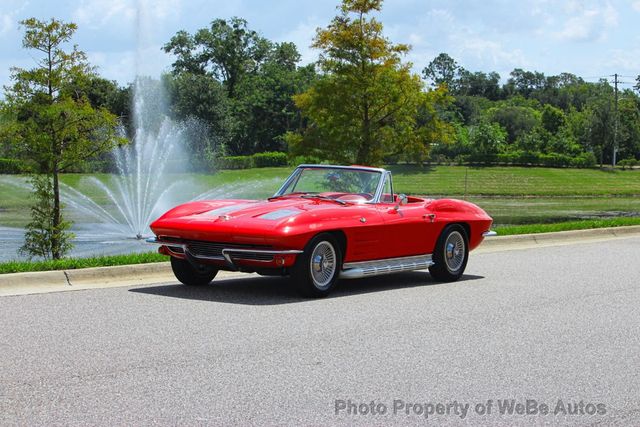
When the second-generation Corvette arrived for 1963, it was a different car in almost every way. The C2 Sting Ray had a new independent rear suspension, a shorter wheelbase, and a body styled by Bill Mitchell that bore no resemblance to the rounded shapes of the C1. The most distinctive version was the coupe, which had a spine running down the center of the rear window, splitting the glass into two pieces.
Zora Arkus-Duntov disliked the split window. He argued it created a blind spot for the driver and pushed to have it removed. For 1964, it was gone. That single-year run makes the 1963 split-window one of the most recognized Corvettes ever built, and one of the most collected. Prices for solid examples have been climbing for years, with well-documented cars in driver condition typically selling in a range that requires a serious conversation about what you actually want to spend.
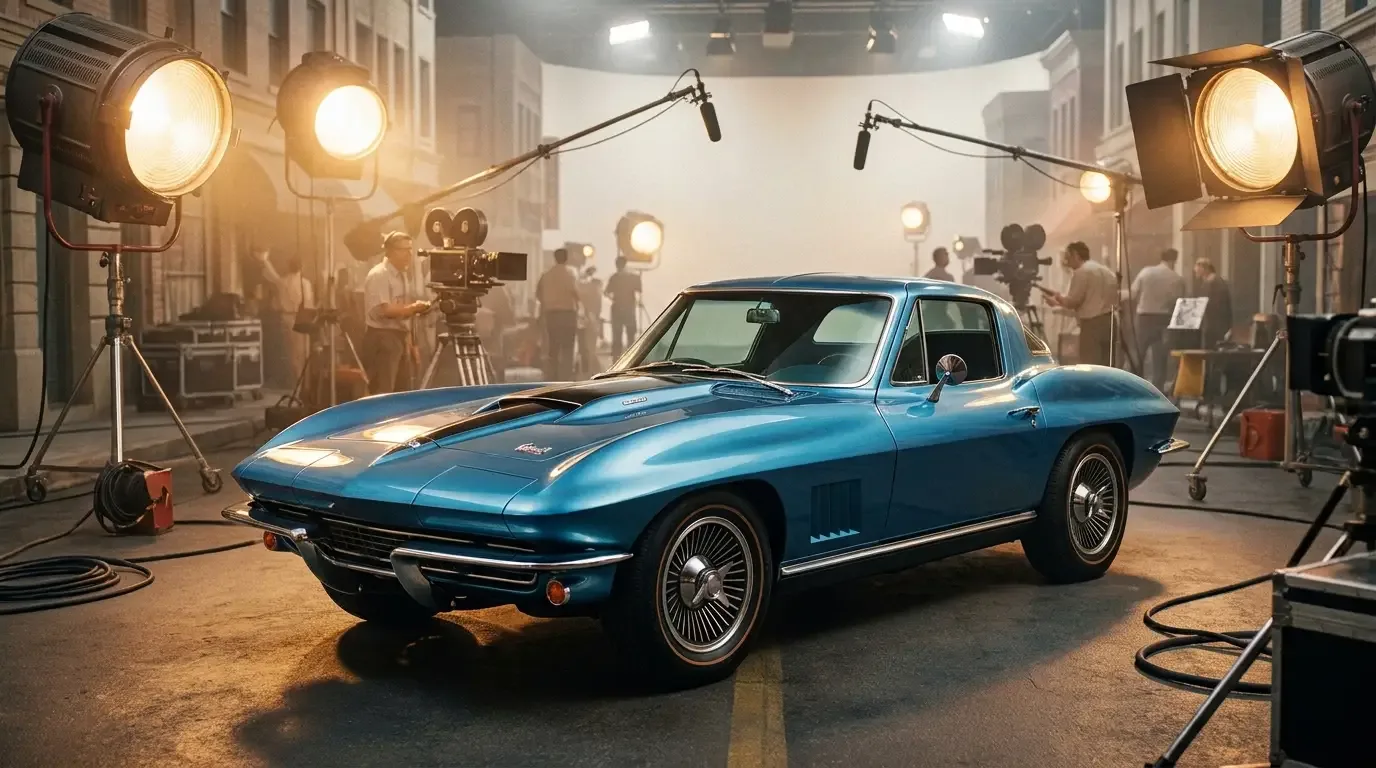
If you want to understand why the Corvette became a cultural reference point rather than just a car, the 1963 Sting Ray is a good place to start. Read the corvette in movies story and you will find the C2 showing up in contexts that have nothing to do with quarter-mile times.
The race car built for the road: the L88
Chevrolet listed the L88 option for 1967, 1968, and 1969. It was not advertised. The company did not want people ordering it who did not understand what they were getting, because what they were getting was not really a street car. The L88 was a 427-cubic-inch big-block built for racing, with an aluminum cylinder head, a high-compression ratio that required 103-octane fuel, and almost no provisions for comfortable daily driving. The factory listed the engine at 430 horsepower, a figure so conservative it became its own kind of legend; independent testing and period racing data suggest actual output was closer to 500 horsepower or more in near-stock trim.
Just 216 L88 Corvettes were built across all three years (20 in 1967, 80 in 1968, and 116 in 1969), and many of them went racing immediately. Several competed at Sebring and Le Mans. The ones that survived have documentation histories that read like racing logs, because that is exactly what they are. Finding a legitimate L88 today means hiring someone who knows what a tank sticker says and what the correct casting numbers look like. The market reflects the scarcity: documented L88s regularly bring prices that most collectors never see in a lifetime of buying.
| Car | Year(s) | Why it matters | Rarity |
|---|---|---|---|
| 1953 Corvette (original) | 1953 | First production Corvette, fiberglass pioneer | 300 built |
| 1963 Split-Window Sting Ray | 1963 only | Single-year rear window design, C2 debut | One model year only |
| L88 Corvette | 1967-1969 | Purpose-built race engine in a production car | 216 total |
| ZR-1 (C4) | 1990-1995 | LT5 DOHC V8, redefined American performance | Limited production run |
| C8 mid-engine (first year) | 2020 | First mid-engine production Corvette | Launch allocation limits |
The King of the Hill: the C4 ZR-1
By the late 1980s, the Corvette was in a complicated place. The C4 was selling, but the performance numbers were not what they had been in the muscle car era. The answer came from an unexpected direction: Lotus Engineering, then owned by GM, helped develop a new all-aluminum, dual-overhead-cam V8 for the Corvette. Chevrolet called it the LT5.
The ZR-1 arrived for 1990 with the LT5 producing 375 horsepower, a rating that held through the 1992 model year. For 1993 Chevrolet upgraded the engine to 405 horsepower, and that figure carried through to the end of production in 1995. The car was immediately called the "King of the Hill" in the press, and it earned the name. It was one of the fastest production cars in the world when new, and it looked different from the standard C4, with wider rear bodywork to accommodate the broader rear track.
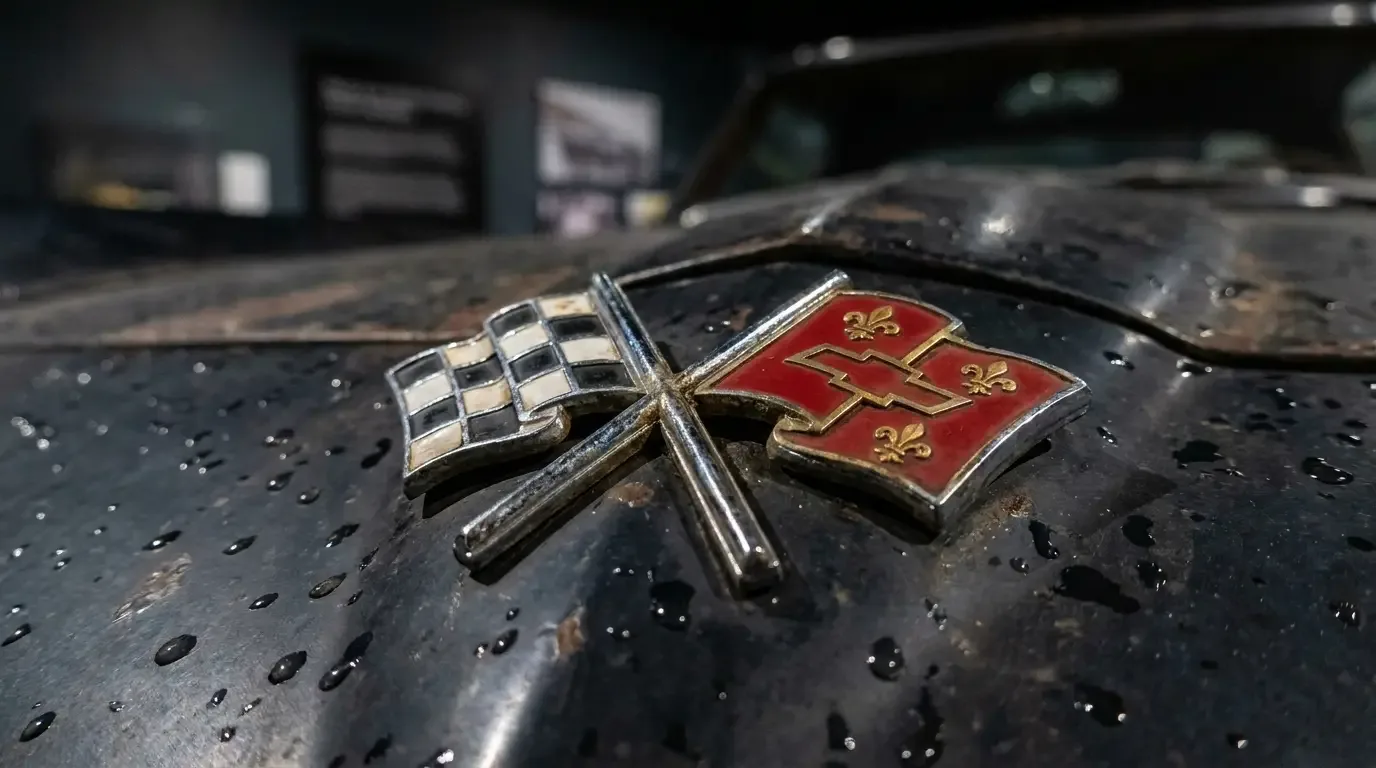
The ZR-1 ran through 1995 and then was discontinued, partly because the base Corvette's own LT1 engine had closed some of the performance gap. Clean, low-mileage ZR-1s represent genuinely strong value for what they offer. The logo and crossed-flags history are worth exploring if you want the full picture of what the Corvette nameplate has meant over the decades. Find more here on how the identity of the car evolved alongside the cars themselves.
"The ZR-1 was the car that reminded people the Corvette still meant something. Not because it had a famous name, but because it was genuinely fast in a way that nothing else at that price could match. That matters more than a badge."
— Patrick Walsh
The mid-engine moment: the C8
For sixty-seven years, every production Corvette put the engine in front of the driver. That changed with the C8, which arrived for the 2020 model year with the engine behind the seats. It was the kind of decision that would have seemed unlikely coming from a car with the Corvette's history and customer base, and Chevrolet spent years preparing the market for it before the car arrived.
The result was a car that could run 0-60 in around 2.8 seconds at a price that undercut Italian exotics by significant margins. Reviewers who had doubted whether the mid-engine configuration would feel right reported that it did. The purists who wanted a front-engine car were a real constituency, but the C8 found its own audience quickly.
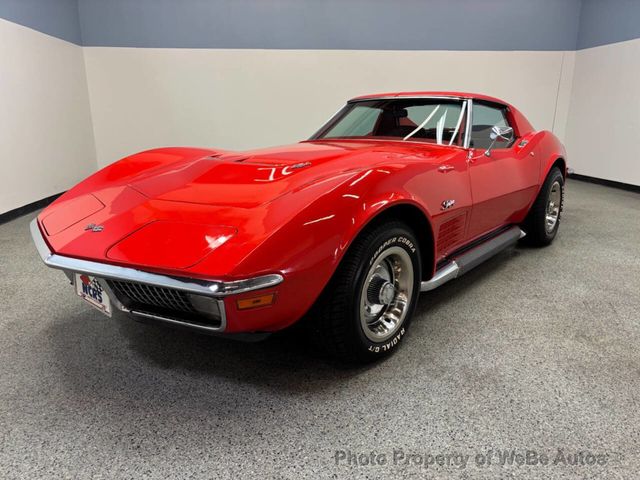
Whether the first-year C8 becomes as collectible as the 1953 or the 1963 split-window is a question nobody can answer yet. What is clear is that it represents the same kind of inflection point those cars did: a moment when the Corvette became something different from what it had been. If you are thinking about owning a piece of that history, you can browse available classic Corvette for sale listings to see where the market currently sits across generations.
The Corvette's famous cars share something beyond their performance numbers or production figures. Each one arrived at a moment when the car needed to prove something, and each one proved it. The 1953 proved the idea could work. The 1963 proved it could be beautiful. The L88 proved it could win races. The ZR-1 proved it could compete with anything in the world. The C8 proved the formula could survive a fundamental rethink. That arc is why these cars are still being talked about, driven, and sought out by people who were not alive when most of them were built.
Sources and notes
- Corvette Action Center: L88 production by year (20 / 80 / 116, total 216)
- Vette Vues: L88 Corvette history, factory 430 hp rating, and racing provenance
- Corvette Action Center: ZR-1 LT5 engine specs, 375 hp (1990-1992) and 405 hp (1993-1995)
- GM Authority: Lotus Engineering and GM's collaboration on the LT5 V8
- Vette Vues: 1953 Corvette production of 300 units, Polo White / red interior, 150 hp inline-six
- Hagerty Media: 2020 C8 debut, mid-engine layout, 0-60 under 3 seconds confirmed