When Corvettes disappear and reappear decades later
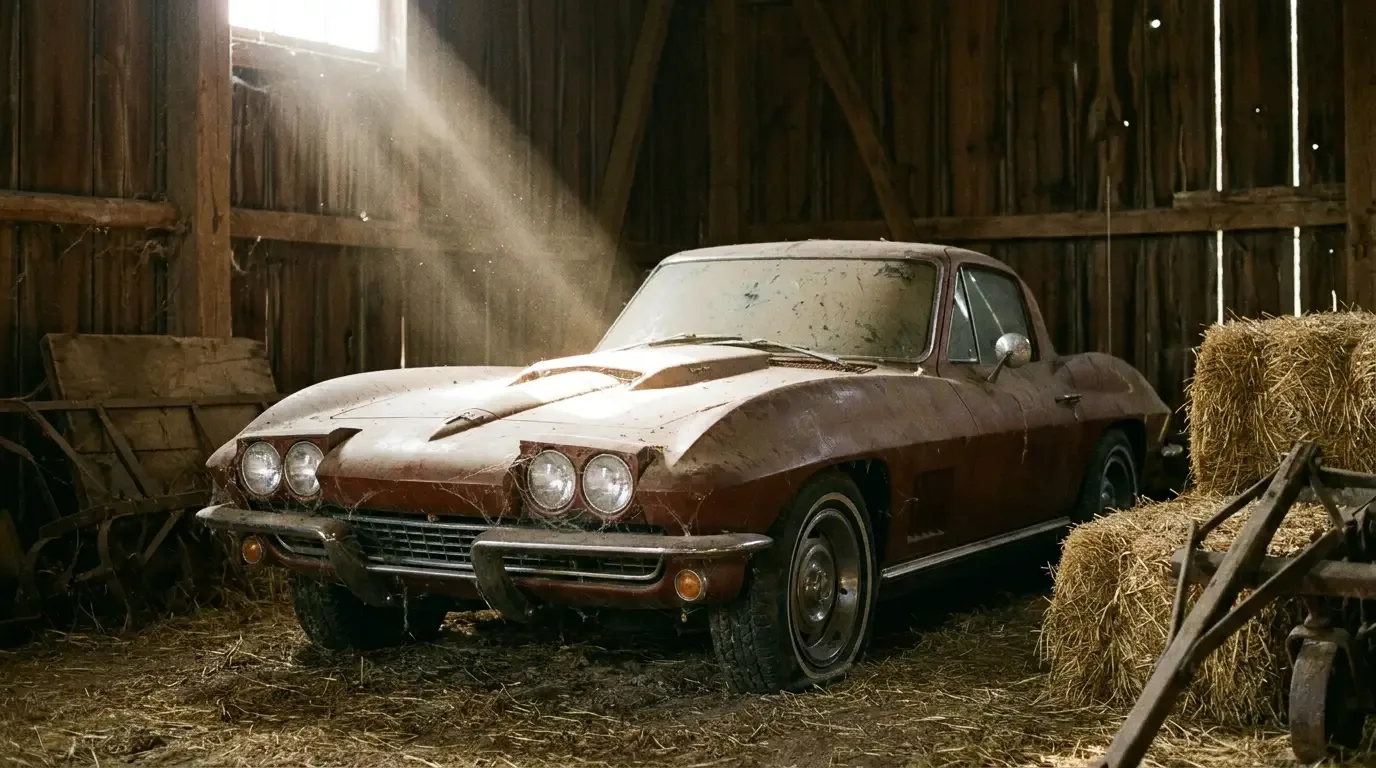
The cars that went dark for thirty years are the ones that get under your skin. A Corvette sitting in a heated showroom with a paper floor mat and a window sticker is easy to understand. It is the one behind the plywood wall, buried under grain bags, parked in 1971 and never moved, that stops you cold. I have walked into enough of those situations to stop being surprised by what turns up, but I have not stopped being interested.
Corvettes disappear for a lot of reasons. Death in the family and no one knowing what to do with it. A divorce that got messy. An owner who meant to restore it when the kids grew up and never did. Medical bills that redirected every spare dollar for a decade. The car just sat. And sometimes, under the right circumstances, with the right amount of neglect and the right amount of dry air, what comes out the other side is worth looking at. Occasionally what comes out is worth a lot more than that. If you want to see which Corvettes carry the most weight before you start hunting, check our most valuable corvette guide first.
The stories that actually happened
The category of Corvette barn find has a mythology problem. A lot of what circulates online as a barn find story is a dealer-freshened car with some dust thrown on it for the photos, priced at what the seller thinks the story is worth. The real ones look different. Real ones have flat-spotted tires fused to the ground. Real ones have mouse nests in the air filter housing and wasp nests in the carb throat. Real ones have a title that hasn't been transferred since Lyndon Johnson was president.
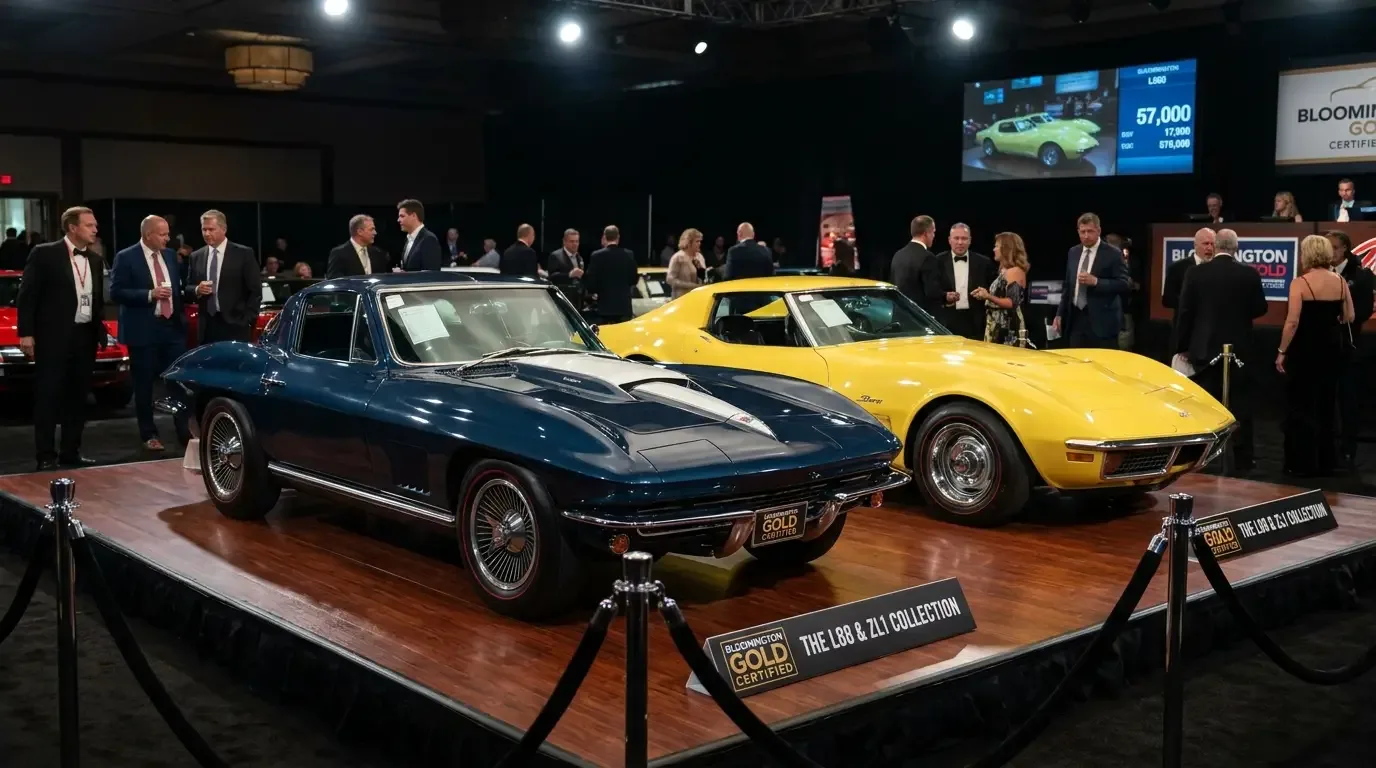
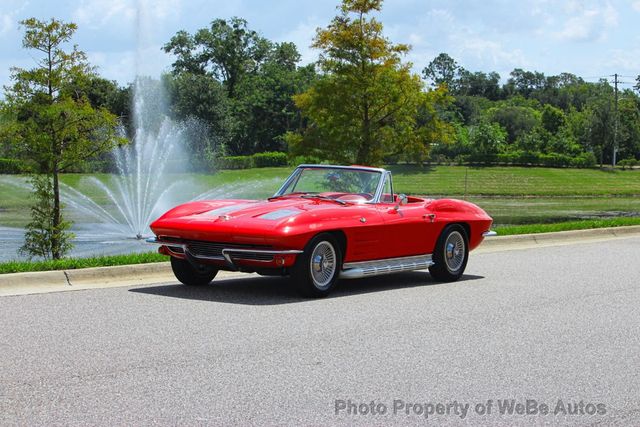
The genuine stories tend to cluster around a few patterns. First-generation cars from the mid-1950s put away when their owners moved up to something newer and never retrieved. C2 Sting Rays that cost serious money in 1963 and 1964, got expensive to maintain, and ended up parked when a repair bill came in that the owner couldn't face. L88s, which is where things get serious, because the owners who bought those cars in 1967 and 1968 often had no idea what they had. The L88 RPO (Regular Production Option) code was not marketed as a special package. Chevrolet actively discouraged street buyers from ordering it. The paperwork sometimes didn't make the reason obvious, and documentation got separated from the car over decades.
What barn storage actually does to a Corvette
Fiberglass does not rust. That is the part of the barn find equation that works in a Corvette's favor, and it matters more than most people realize. A barn-find Camaro or Chevelle from 1969 is going to have structural rust issues that go deep into the floor pans and frame rails before it even gets to you. A Corvette from the same era, sitting in the same barn, will have a fiberglass body that looks rough but holds together. The frame underneath is still steel, and the birdcage structure that the body mounts to is still steel, so you are not entirely clear of corrosion problems. But the equation is different.
What does happen is mechanical deterioration. Rubber seals that have been baking and freezing for decades are gone. The fuel system is almost certainly varnished. Brake cylinders seize. Cooling system hoses turn brittle. The wiring, which was never the most robust part of any early Corvette, gets chewed on by rodents and then dried out by decades of temperature cycling. None of this is unfixable. All of it is expensive if you are paying someone else to do the work.
The clock also starts running on originality the moment a car gets out of storage and into the hands of someone who wants to flip it. The first owner knows nothing about Corvettes and replaces the flat-spotted tires with whatever the local shop had. The second owner, who bought it from the first, "cleaned it up a little" before listing it. By the time the car gets to a buyer who actually cares about numbers matching, three components that were original are gone. This is the barn find pipeline in miniature, and it plays out constantly. When you do find something that hasn't been touched, that is the one worth protecting.
"The ones that have been 'cleaned up' are almost always worth less than the ones that came out of storage exactly as they were. Every time somebody decides to help the car along before selling it, something original walks out the door. The dust is not the problem. The helping is the problem."
— Mike Sullivan
Where these cars surface and what to do when one does
Estate sales are where most of the real ones come from. Not online estate sales, which have been picked over by people with smartphones and price guides before the listing goes live. Physical estate sales in rural areas, where the house has been in the family for forty years and the barn behind it has not been opened since the grandchildren were small. Probate records are public in most states, and people who do this seriously monitor them. That is not a casual approach to car hunting, but it is how the serious finds get found.
Online listings for barn finds fall into two categories. The first is the legitimate owner who genuinely does not know what they have and is pricing the car on condition, which means cheap for something rare. These exist but are rarer than they used to be, because even an elderly seller's grandchildren can run a VIN through a registry before the listing goes up. The second category is the dealer or flipper who bought it from the first category and is now selling it as a barn find at the price the story justifies. By the time it is on a national listing site with good photos and a backstory, you are probably paying for the story. If you are in the market for a classic Corvette that hasn't been over-handled, classic Corvette for sale listings here filter by generation so you can see what is actually moving.
| Generation | Storage risk profile | What to check first |
|---|---|---|
| C1 (1953-1962) | Six-cylinder cars often misidentified; early V8s undervalued by uninformed sellers | Birdcage corrosion, frame rail condition, engine numbers vs. decoding guides |
| C2 (1963-1967) | High restoration cost means cars were abandoned mid-project | Frame X-member, numbers-matching drivetrain, tank sticker presence |
| C3 (1968-1982) | High production, common in storage; special-option cars frequently unidentified | Birdcage at A-pillars, frame boxing, door fit as proxy for structural condition |
| C4 (1984-1996) | Low collector value until recently; many parked during cheap-car period | Electronics, ABS module, structural corrosion around rear hatch area |
The documentation problem and why it defines value
The car is only part of the equation. The paperwork is where most barn finds either gain significant value or lose it, and the paperwork is what gets separated from the car first. An original Protect-O-Plate for a 1967 L88 is worth money on its own. A tank sticker, which is the factory's own record of what options left the line on a specific car, changes the conversation on any C2 or early C3 significantly. Original dealer invoice. Original title with the first owner's name. These pieces have a way of ending up in a shoebox in the house while the car is in the barn, and the house gets cleaned out before anyone thinks to photograph what is in the shoebox.
When you find a barn car, before you negotiate on price, find out what paperwork exists. Ask specifically about the glovebox contents. Ask about any paperwork that came with the car when it was bought new. If the seller has no idea, that is not necessarily fatal, but it affects what the car is actually worth versus what the barn find story is worth. Those are different numbers. For context on what the rarest configurations carry for documentation requirements, the next in the series covers a case where factory records and physical cars tell completely different stories about what was built and what survived.
Sources and notes
- Corvette Action Center: L88 production numbers by year (1967: 20, 1968: 80, 1969: 116; total 216)
- Corvette Action Center: L88 engine specifications, confirmed 430 hp SAE gross rating across all three model years
- Chevy Hardcore: L88 marketing history, dealership instructions to discourage casual street buyers
- CorvSport: 1967-1969 L88 model guide, RPO code history, mandatory option requirements
- CorvSport: Ten documented Corvette barn finds, including the 1953 chassis #103 Pennsylvania estate discovery and the 1969 L88 stored over forty years
- CorvSport: Corvette generation production years (C1 1953-1962, C2 1963-1967, C3 1968-1982, C4 1984-1996)