
Why the open car matters in Corvette history
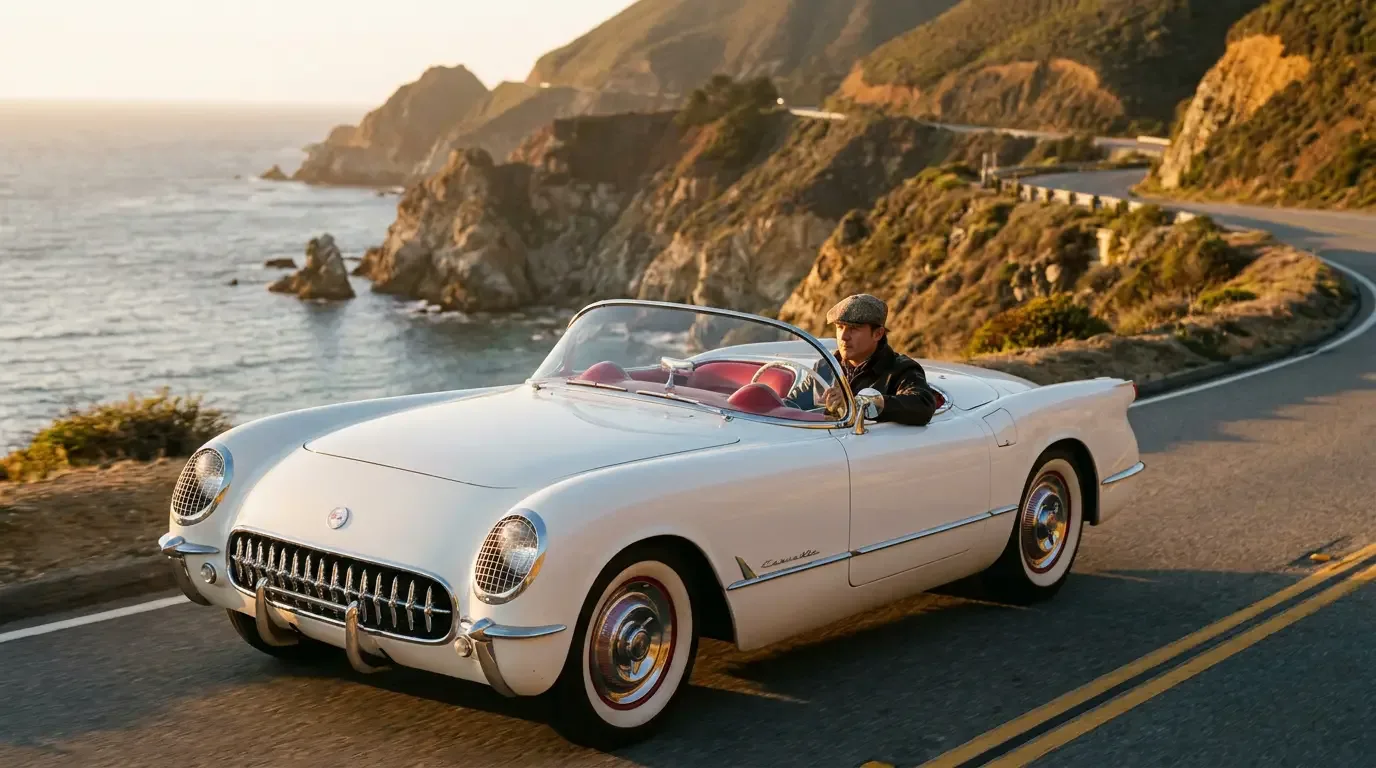
The Corvette has always existed in two forms, but the convertible is the one that started it all. When the first fiberglass roadster rolled off the Flint, Michigan assembly line in June 1953, there was no coupe option. The soft-top was the car. Every closed Corvette that followed came later, which means the convertible's history runs as long as the model itself, through six generations, dozens of engine options, and production numbers that swung from fewer than 200 units in some early years to tens of thousands in others.
This is not a story about one body style. It's a story about what Chevrolet prioritized at different moments, what the market demanded, and how federal regulations almost ended open-air Corvette production entirely. For the the whole picture on the Corvette's full run, the model history goes deep. Here, the focus stays on the roadster and what changed decade by decade.
The 1950s: the car that almost wasn't a convertible for long
The C1 Corvette ran from 1953 through 1962, all as open cars. Early production was extremely limited: the 1953 model year saw just 300 units built, all finished in Polo White with a red interior, all equipped with the same Blue Flame inline-six engine paired to a two-speed Powerglide automatic. Sales were slow enough that Chevrolet considered canceling the program outright.
Two things saved it. Zora Arkus-Duntov joined Chevrolet in 1953 and began pushing for a genuine performance car rather than a styling exercise. And Ford introduced the Thunderbird in 1955, which gave Chevrolet a reason to keep the Corvette alive as a competitive answer. By 1955, the small-block V8 arrived in the Corvette, and by 1956 the body had been restyled with external door handles, wind-up windows, and an optional removable hardtop that buyers could order alongside the standard soft top.
The 1957 model year brought fuel injection, at the time a significant engineering statement. A fuel-injected 283 cubic inch V8 producing exactly 283 hp became available, matching one horsepower per cubic inch in a production American car. These "fuelie" convertibles are among the most sought C1 cars today. Production across the C1 generation grew year over year, and by 1960 the Corvette was selling over 10,000 units annually for the first time, reaching 10,261 units that model year.
The 1960s: the Sting Ray and the convertible's peak years
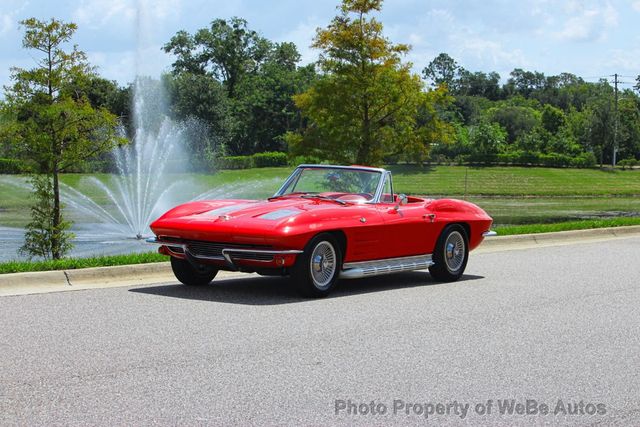
The C2 generation (1963-1967) introduced the split-window coupe in 1963, but the convertible remained in the lineup and continued outselling the coupe throughout most of the generation. Buyers who wanted open-air driving did not have to give up the new Sting Ray styling, and many preferred the roadster's cleaner rear view over the coupe's controversial divided backlight, which Zora Arkus-Duntov himself reportedly disliked for its limited rearward visibility.
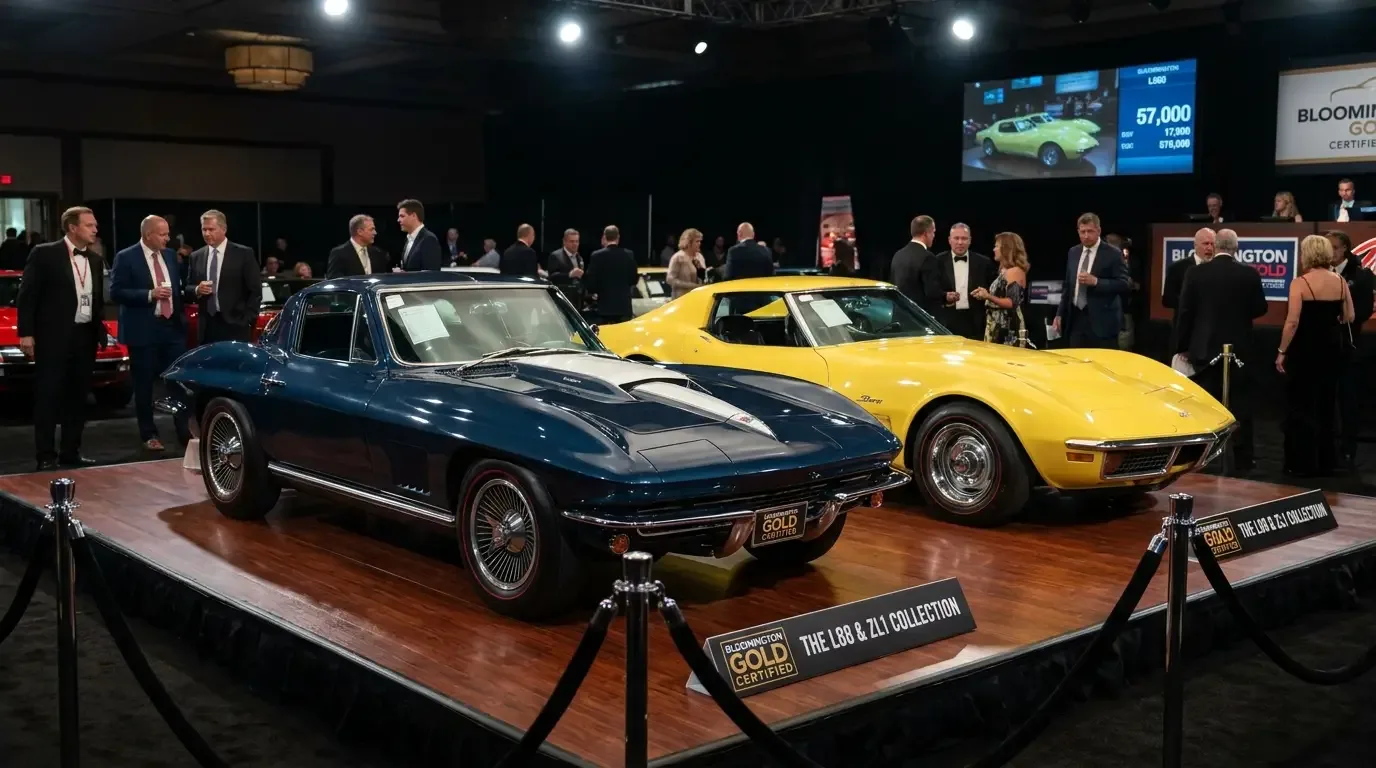
The 1965-1967 period produced some of the most desirable C2 convertibles. The big-block 396 arrived in 1965 with a 425 hp rating and the 427 followed in 1966. The L88 427 option, available from 1967, was factory-rated at 430 hp but widely understood to be underrated by a significant margin. Only 20 L88s of all body styles were built in 1967, making any surviving example exceptionally rare. To see how rare some of these configurations get, more here.
The C3 arrived in 1968 and ran through 1982, initially offered in both convertible and coupe form. Convertible production through the late 1960s was strong, but a combination of factors including safety regulation concerns about rollover protection and changing buyer preferences caused Chevrolet to drop the convertible after 1975. The last C3 convertible came off the line in 1975, with 4,629 units produced that year, ending what had been a 23-year run of open Corvettes.
"The 1967 L88 convertible is as close as the street-production Corvette ever came to a racing car you could license. The build numbers were so low partly because Chevrolet wasn't trying to sell them to everybody. They were trying to get them to the people who would actually race them."
— Tom Ramirez
The 1980s and 1990s: return, refinement, and the C5
The convertible returned in 1986 as a C4 body-style, the first open Corvette in over a decade. The 1986 model was also the Indy 500 pace car that year, which added collector interest from the start. The C4 convertible used a perimeter frame and a fiberglass targa top section above the windshield, with a manually operated soft top that folded into a covered compartment. Early C4 convertibles carried the 350 cubic inch L98 V8, rated at 230 hp at introduction, with power climbing through the decade.
The LT1 engine arrived in the C4 for 1992, pushing output upward significantly. And the Grand Sport package, released for 1996 in the final year of C4 production, came in convertible form as well. Only 190 of the 1,000 total 1996 Grand Sport units were built as convertibles, making them among the more collectible late C4 cars. Finding one in original condition today is a real project. For the full picture on which configurations command real premiums today, the rarity breakdown explains the pricing gaps you'll find between otherwise similar cars.
The C5 arrived for 1997 as a coupe only, with the convertible following in 1998. The C5 convertible benefited from a completely revised structure that eliminated the T-top and produced a stiffer chassis than the C4 despite having no roof at all, achieved through a hydroformed frame rail. The LS1 V8 rated at 345 hp powered all C5 convertibles. A fixed-roof coupe version (the Z06) debuted in 2001 but was not available as a convertible, creating a performance gap between the coupe and open-car lineups that would remain a recurring pattern.
The C6 and C7: modern convertibles with different priorities
The C6 convertible ran from 2005 through 2013 alongside the coupe. The base LS2 engine (then LS3 from 2008) offered strong performance for everyday drivers, while the Z06 again remained coupe-only. The C6 did produce a convertible-specific model in the form of the Grand Sport and ZHZ Heritage packages, but the performance flagship stayed closed. An exception came at the end of the C6 run: the 2013 427 Convertible used a dry-sump 7.0-liter LS7 V8 rated at 505 hp in open-car form, effectively giving buyers a Z06 drivetrain in the body they actually wanted.
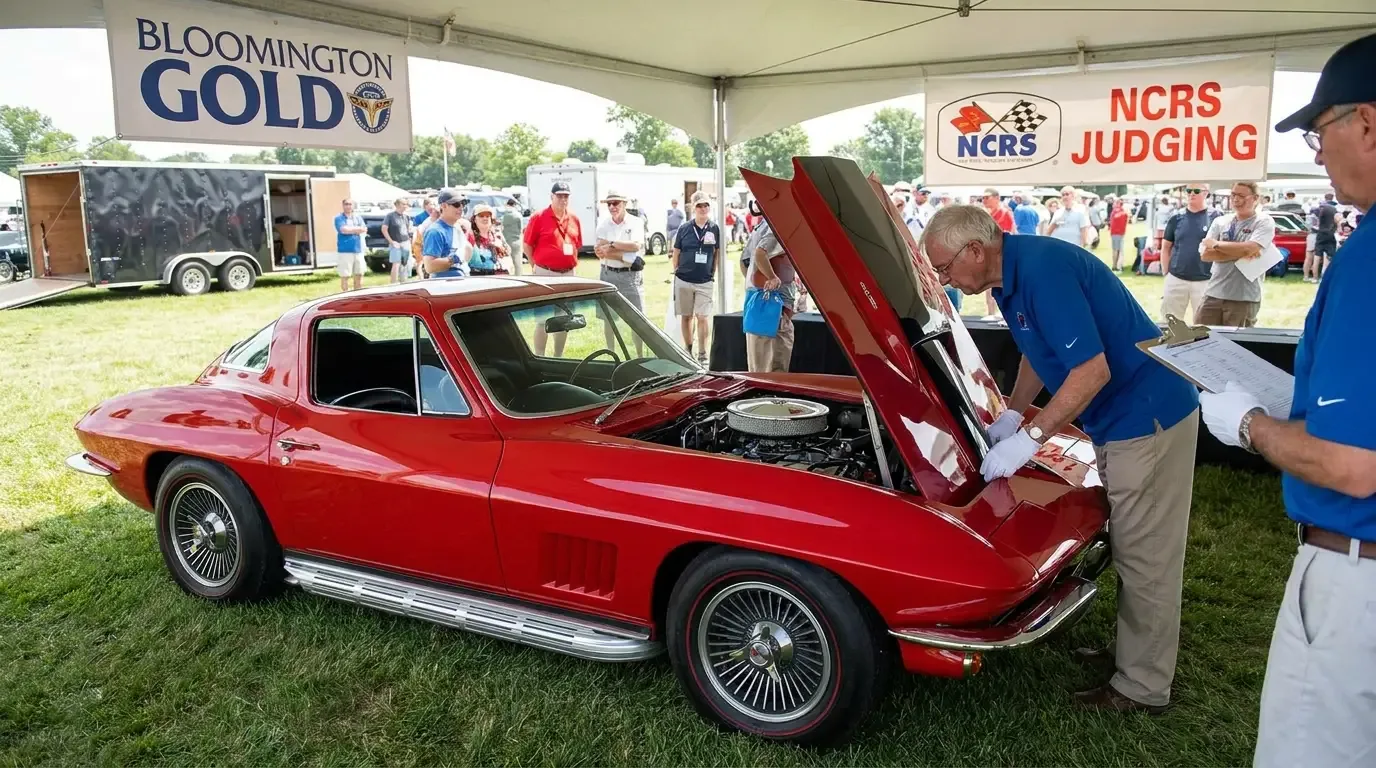
The C7 (2014-2019) followed the same pattern, with the convertible available from the car's launch year. The Stingray convertible used a 6.2-liter LT1 V8 rated at 455 hp. A Z06 convertible also returned for C7, available with the supercharged LT4 engine, which marked the first time in several generations that the top-performance engine had been offered in the open car. Production figures for specific C7 convertible variants are tracked by the National Corvette Museum and NCRS documentation programs, which are worth consulting before buying any specific configuration.
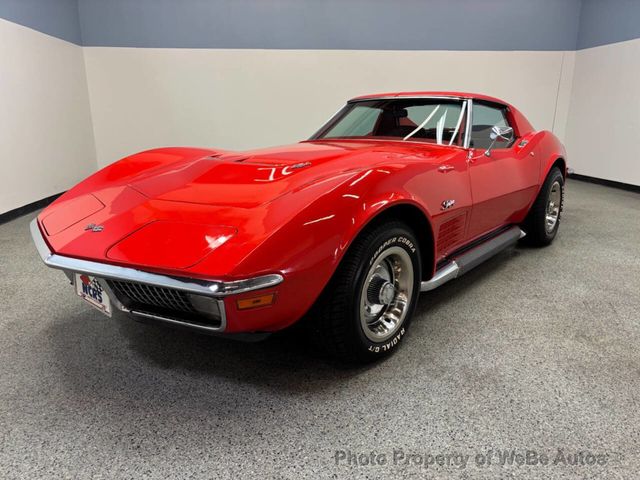
If you're in the market for any of these generations, browsing classic Corvette convertibles for sale will show you how the price gaps between generations and condition tiers actually play out in current listings.
| Generation | Convertible years | Base engine (approx.) | Notable variant |
|---|---|---|---|
| C1 | 1953-1962 | Blue Flame six (1953-55), then small-block V8 | 283 fuelie (1957) |
| C2 | 1963-1967 | 327 V8 | L88 427 (1967) |
| C3 | 1968-1975 | 350/454 V8 | Last C3 open car (1975) |
| C4 | 1986-1996 | L98 350 V8, then LT1 | 1996 Grand Sport |
| C5 | 1998-2004 | LS1 V8 (345 hp) | 50th Anniversary (2003) |
| C6 | 2005-2013 | LS2/LS3 V8 | 427 Convertible (2013) |
| C7 | 2014-2019 | LT1 6.2L V8 (455 hp) | Z06 Convertible |
What drives value across the decades
Collectors treat the convertible as the original configuration, but that alone does not explain every pricing decision. The variables that actually move money are engine documentation, matching-numbers status, option codes, and whether the car retains its original top and top frame mechanism.
C1 and C2 fuel-injected cars carry a premium over carbureted examples. Within C2, the 427 big-blocks command more than the small-block cars, and documented L88 examples exist in a category by themselves. C3 convertibles from the early years (1968-1970) with big-block engines are more sought than the emissions-era cars from 1973-1975, which lost horsepower year by year. The 1975 is historically significant as the last C3 open car but does not carry the same driver appeal as a 1969 427.
For C4 and later cars, the question shifts toward originality and documented service history more than specific option codes. A well-maintained 1996 Grand Sport convertible in original condition is worth considerably more than a same-year base car with modifications, even if the modifications were expensive. The market has been consistent about this for the past decade: buyers pay for documentation and they discount for unknown history.
Sources and notes
- National Corvette Museum: 1957 Corvette specs -- confirmed 283 hp fuel-injection rating and one-hp-per-cubic-inch milestone
- CorvSport: Corvette production numbers by year -- confirmed 1953 total of 300 units and 1960 as first year over 10,000 (10,261 units)
- Corvette Action Center: L88 production data 1967-1969 -- confirmed total 1967 L88 production of 20 units across all body styles
- CorvetteSory: 1975 C3 convertible -- confirmed 4,629 convertibles built, last open Corvette until 1986
- Corvette Action Center: 1996 Grand Sport production -- confirmed 190 convertibles of 1,000 total Grand Sport units
- GM Authority: 2013 Corvette 427 Convertible review -- confirmed 7.0L LS7 V8 at 505 hp in open-body form