Before you buy a classic truck, find out what a floor pan costs. Not the truck, the floor pan. Because the truck you can afford to buy is not always the truck you can afford to fix, and the difference between those two numbers is parts availability. A pickup that looks like a bargain on the ad can turn into a money pit the second you need a part nobody reproduces. This is the practical side of the hobby, and it deserves more attention than it usually gets.
If you are just getting started, read the parent guide on how to restore a classic truck first, then come back here. Parts sourcing runs through every stage of that job.
Repro, NOS, and used: what each one is good for
There are three ways to buy a part for an old truck, and each has a place. Knowing which to reach for saves money and grief.
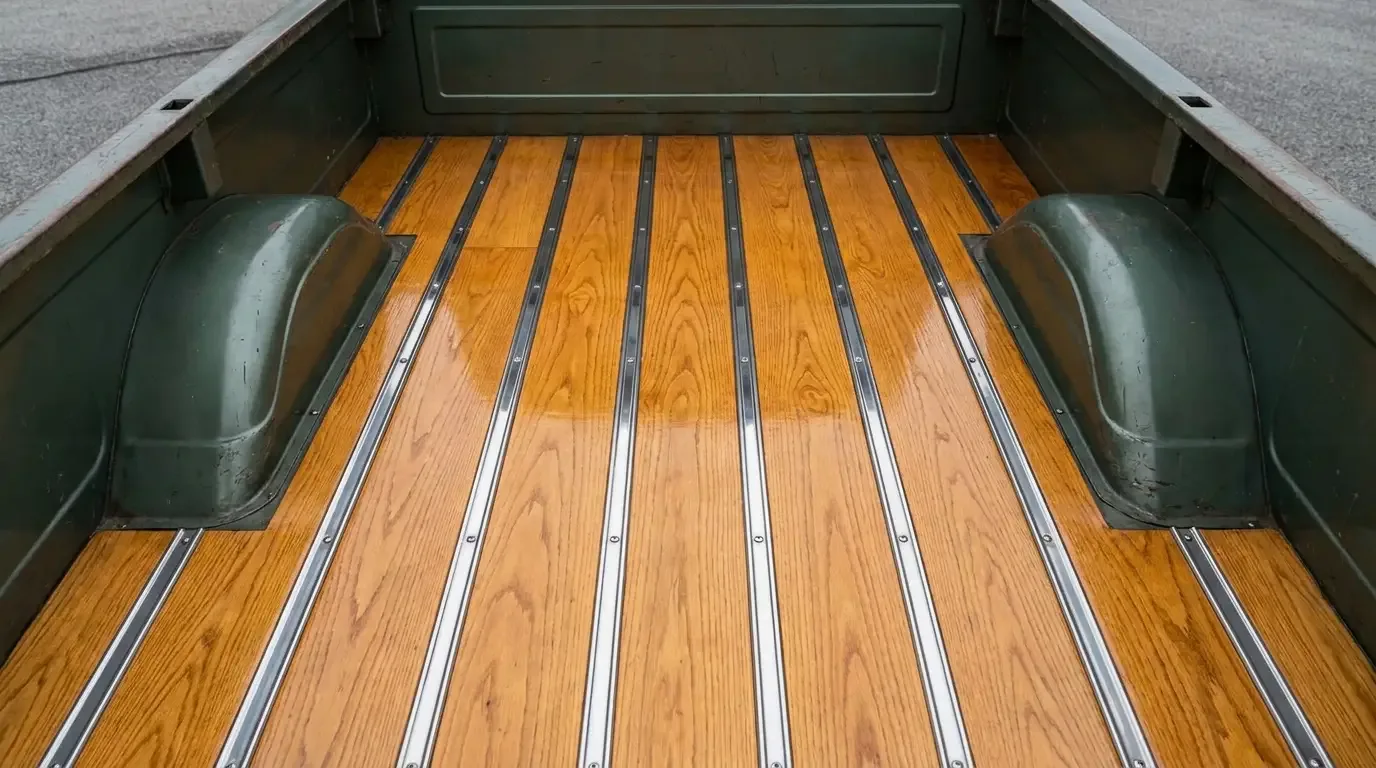
Reproduction parts are newly manufactured copies of the original. For the popular trucks, you can buy nearly everything reproduced now, sheet metal, weatherstrip, trim, glass, wiring harnesses, even complete cab corners and bed floors. Quality runs the full range. Some repro sheet metal fits like it left the factory. Some needs an afternoon of massaging before it will line up. Repro is usually the cheapest way to get a wear item, and for stuff that rots or wears out, it is often the only sensible choice.
NOS means new old stock, a genuine factory part that never got installed and has sat on a shelf since. It is the real thing, correct in every detail, which matters if you are chasing a concours judging sheet or you just want it right. NOS is getting scarce and the price shows it. A NOS piece of bright trim can cost many times what the repro costs. Pay it when originality is the point. Skip it when the part hides under the truck and nobody will ever see it.
Used parts pulled from a donor truck or a yard are the third road. A good used part is often better than a mediocre repro, especially for castings, brackets, and heavy stuff that does not wear. A used cab in dry-country sheet metal can be worth more than a rusty one you already own. The risk is you are buying somebody else's problem, so inspect before you pay.
Why some trucks are parts-rich and others are orphans
Two trucks can be the same age and the same size, and one has a catalog three inches thick behind it while the other has almost nothing. The reason is volume and popularity, not merit.
A truck gets a deep parts supply when two things line up. First, the factory built a lot of them, so there is a big pool of survivors and donors, and a big pool of buyers to sell parts to. Second, enough people want to restore them that a vendor can justify tooling up to stamp a new fender. Tooling costs real money, and no company spends it on a truck that sells fifty parts a year.
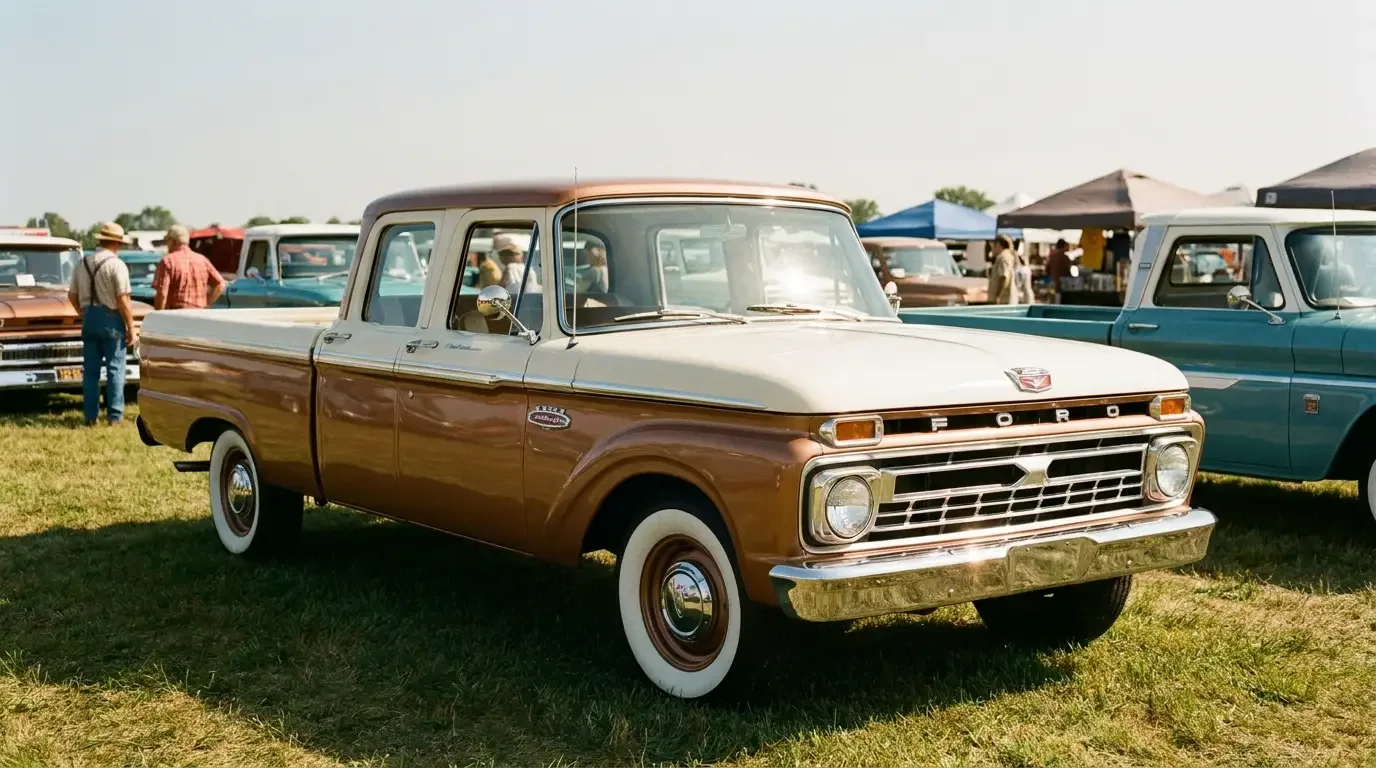
The result is that the mainstream American half-tons from the popular years are about as easy to feed as an old car gets. Sheet metal, trim, mechanical, interior, most of it is a phone call away. Step outside that. A low-production model, an odd cab configuration, a heavy-duty variant, a make that folded, and you are into orphan territory. Parts exist, but you find them one at a time.
- Parts-rich signals: high production numbers, a strong national club, multiple vendors listing the same part, reproduction sheet metal in stock.
- Orphan signals: one specialist vendor or none, "NLA" (no longer available) next to key items, forum threads where people are fabricating rather than buying.
"I've watched a fellow fall in love with a rare model, then spend two years hunting a tailgate. The common truck isn't the boring choice. It's the one that lets you actually drive it."
— Robert Halloran
Where the parts actually come from
You have more places to look than you think, and the smart move is to work all of them rather than lean on one.
The online specialist vendors are the backbone now. For a popular truck, a couple of big catalog companies stock most of what you need and ship it to your door. This is the fastest way to buy wear items and reproduction panels. Prices are usually fair and you can see fitment reviews before you commit.
General online marketplaces and auction sites are where the used and NOS parts trade. This is your best shot at the odd bracket or the discontinued trim piece. It takes patience and a saved search, and you learn to read a listing photo for what it is not showing you.
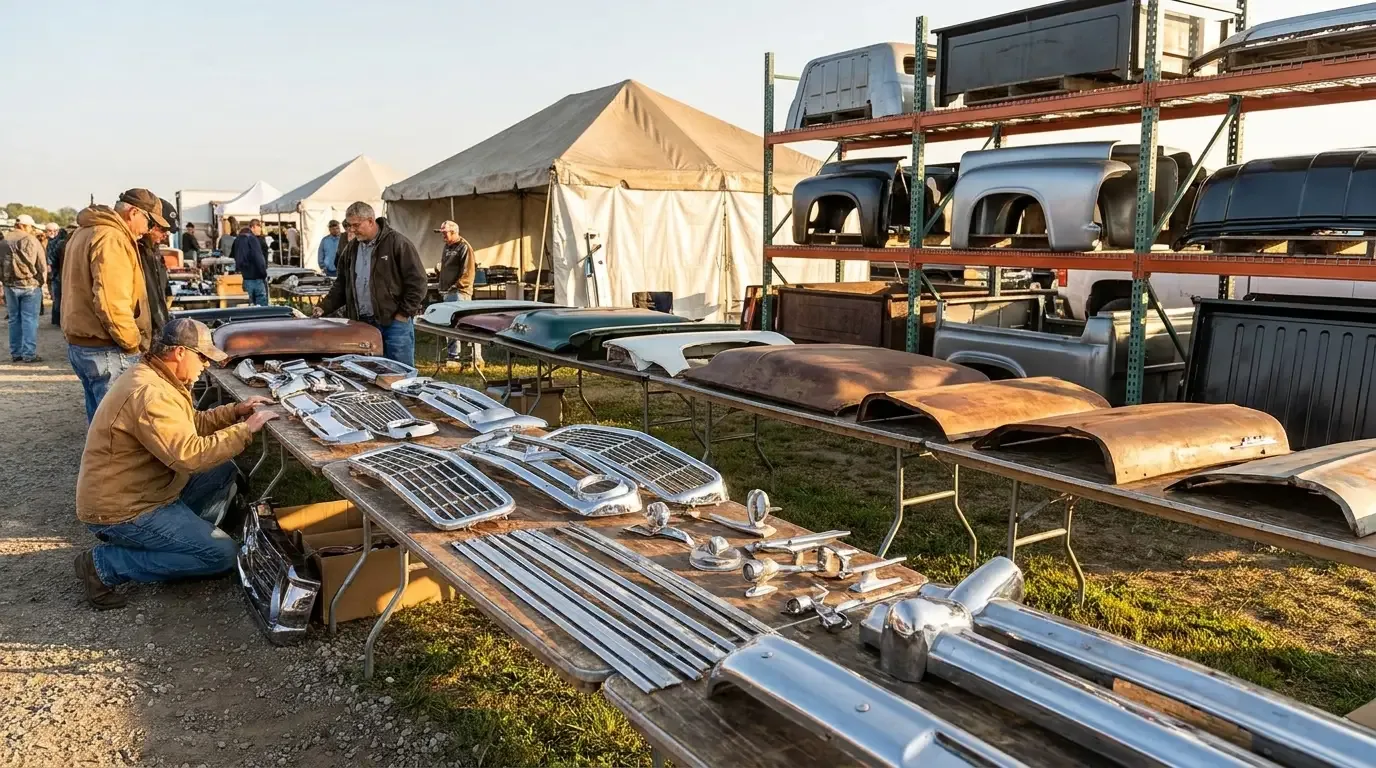
Swap meets are still worth the early alarm clock. You can put your hands on a part, haggle, and haul home a fender without a shipping bill that costs more than the fender. The regional and national events built around a marque or era are the richest. Bring cash, bring a list, and bring the measurements of anything you are trying to match.
Then there are the salvage yards and the private stashes. A dry-climate yard with old trucks is a resource. So is the retired guy three towns over who has two parts trucks behind his barn. Club members know where those are. That is half the reason to join a club before you even own the truck.
Let parts availability shape what you buy
Here is the part most people skip, and it is the most important. Do your parts homework before you sign for the truck, not after.
Spend an evening pricing the parts you know a project will need. Floor pans, cab corners, a bed floor, weatherstrip kit, brake components, a windshield. Add it up. Now you know roughly what the truck costs beyond the purchase price, and you know whether the parts even exist. If a key panel comes back "no longer available," that is not a small detail. That is the difference between a restoration and a fabrication project.
A rougher truck from a parts-rich model is often a smarter buy than a cleaner truck from an orphan model. On the common truck, rust is a checkbook problem with a known price. On the orphan, the same rust can stop you cold because there is nothing to bolt on. I would rather start with a worse example of a well-supported truck than a better example of one nobody reproduces parts for.
| Situation | What to reach for | Why |
|---|---|---|
| Rusted floor, cab corners, bed | Reproduction | New steel, correct shape, cheaper than clean used |
| Bright trim on a show truck | NOS if affordable, else quality repro | Originality and finish are visible and judged |
| Castings, brackets, hard-to-stamp parts | Good used | Does not wear, often unavailable new |
| Multiple parts for an orphan model | Whole donor truck | One buy solves many "no longer available" gaps |
None of this is meant to talk you out of a truck you love. If you want the rare one, buy it with your eyes open and a fabricator's phone number. Just do not confuse a low asking price with a cheap project. The truck is the down payment. The parts are the mortgage.
Sources and notes
- Factory parts catalogs and casting-number guides for identifying correct components.
- Reproduction and restoration parts vendor catalogs for current availability and fitment.
- Marque and model club rosters and forums for donor-truck leads and vendor reputation.
- Swap meet and regional show experience for used and NOS pricing norms.
- Period factory service and body manuals for panel and part identification.