
The L88 was never meant for the street. Chevrolet built the RPO L88 option for one purpose: racing. In 1967, only a handful of Corvette buyers knew what they were actually ordering, and that was partly intentional. The factory discouraged the option for road use, buried the rated output figure well below reality, and shipped the cars without air conditioning, without a radio provision, and with a compression ratio that required 103-octane racing fuel to run properly. This article covers what the L88 actually was in 1967, how it differed from the other big-block options available that year, and what documentation tells us about the surviving cars. For the deeper story of Corvette's special-edition history, that context matters here too.
What the L88 actually was
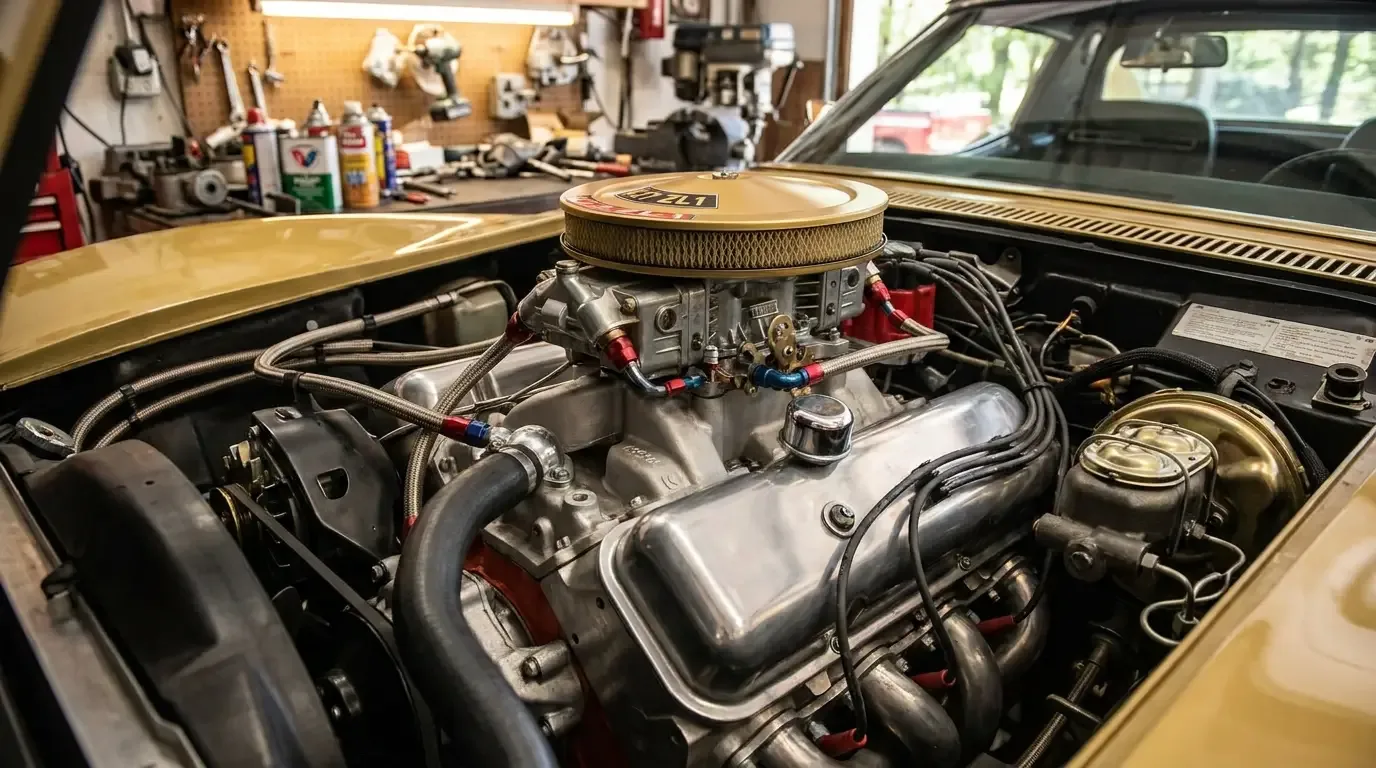
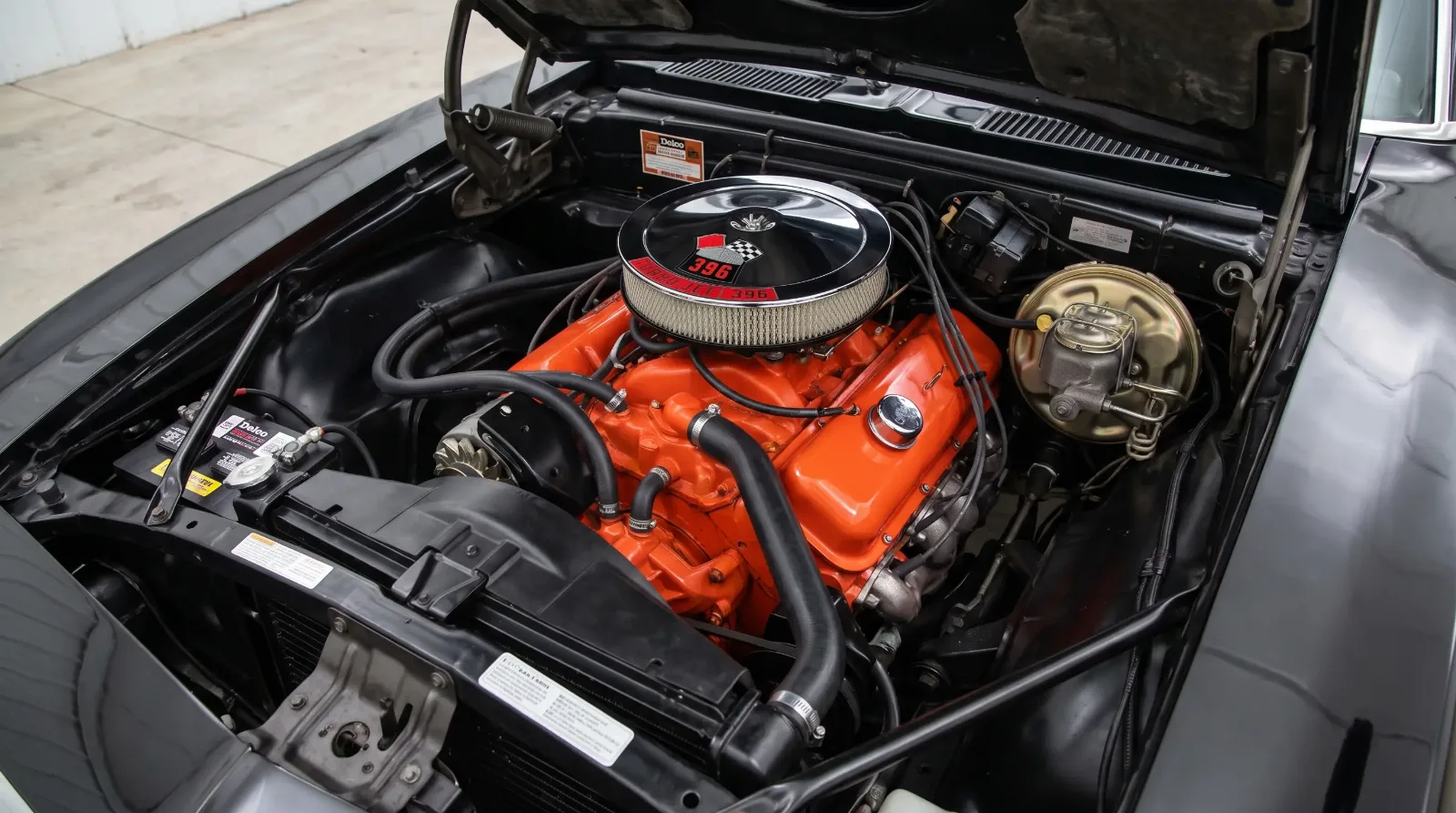
The RPO L88 in 1967 was a 427 cubic inch V8 built around a high-compression aluminum cylinder head design, solid-lifter camshaft, and an 850 cfm Holley carburetor on an open-plenum intake manifold. The factory listed it at 430 hp. That figure was fiction understood by everyone at the time. Independent dyno tests and period racing records suggest the actual output was somewhere between 500 and 560 hp, depending on tune and exhaust configuration. Chevrolet understated the number to avoid regulatory scrutiny and to discourage buyers who would have been frustrated running it on pump gas.
The compression ratio was 12.5:1, which made the L88 completely incompatible with the premium street fuel of the era. A buyer who did not have access to racing-grade fuel was going to detonate the engine within a short distance. This was not a design oversight. It was the factory's way of filtering the customer base.
How it differed from the other 427 options
In 1967, a Corvette buyer had several big-block 427 options. The L71 produced 435 hp with three two-barrel carburetors and was the top street-oriented choice. The L68 offered 400 hp and also used a triple two-barrel setup, but with a milder cam and lower compression, making it more livable on the street. The L89 was an aluminum-head version of the L71 for buyers who wanted reduced weight without the full racing package. Understanding the wider context of how Corvette's engine lineup evolved across the 1960s makes the L88's position clearer.
| RPO code | Configuration | Rated hp | Notes |
|---|---|---|---|
| L68 | 427 ci, tri-power (3x2bbl) | 400 hp | Street big-block, iron heads |
| L71 | 427 ci, tri-power (3x2bbl) | 435 hp | Top street option, iron heads |
| L89 | 427 ci, tri-power, aluminum heads | 435 hp | Weight reduction option |
| L88 | 427 ci, 850 cfm Holley (single 4-bbl), aluminum heads | 430 hp (rated) | Racing application, 12.5:1 compression |
The L88 differed from the L89 in ways that went beyond the cylinder heads. The camshaft profile was more aggressive, the intake manifold was purpose-built for high-rpm flow, and the ignition system was matched to racing use. The L89 was a component swap. The L88 was a different engine with a different operating range.
The M22 "rock crusher" four-speed was the only transmission available with the L88 in 1967. No automatic option existed, and the lighter M21 close-ratio unit was not offered with the package either. Ordering the M22 was a mandatory part of the L88 option. This was consistent with the racing application the option was designed for, and the heavier-duty gearing of the M22 was necessary to survive the engine's output under racing conditions.
Production numbers and documentation
The 1967 L88 is one of the most scrutinized production figures in Corvette history, and for good reason. Factory records indicate that 20 examples were built in 1967. This number has been cited widely, but the documentation behind it requires careful reading. Some sources distinguish between cars built and cars delivered, and factory records from that era are not always as clean as collectors would like. The NCRS has done significant work on this, and their documentation is the reference point for any serious authentication discussion.
The companion article on the companion story of the ZL1 aluminum 427 is relevant here: both engines came from a similar philosophy, but the ZL1 went further with an all-aluminum block and a 1969 production run that was itself tiny. The L88 preceded the ZL1 and in some ways set the template for it.
"The tank sticker on a 1967 L88 tells you what left the factory, but it doesn't tell you everything that happened after. These cars went racing. Some were crashed. Some were rebuilt with different engines. A surviving documented L88 needs more than a tank sticker to close the provenance loop."
— Tom Ramirez
What survives and what to look for
Of the approximately 20 L88s built in 1967, a number have been authenticated through NCRS documentation, tank sticker research, and in some cases original build records. Several have passed through major auctions. The authenticity challenges are real: the L88 option was so desirable that cars have been converted, numbers have been altered, and documentation has been fabricated over the decades. None of this is unique to the L88, but the value levels involved make the scrutiny especially important.
A genuine 1967 L88 will have the correct RPO code on its tank sticker, the matching engine suffix code, and ideally continuous ownership documentation or racing history that supports the provenance. The aluminum cylinder heads should show correct casting numbers. The carburetor and intake manifold are frequently replaced in racing use and less reliable as authentication anchors, but their absence or replacement should be noted and explained.
If you are looking at 1967 Corvettes for sale, the L88 represents one end of the spectrum. For a broader look at what is available, 1967 L88 Corvettes for sale gives you a current picture of the market.
Why the 1967 L88 matters
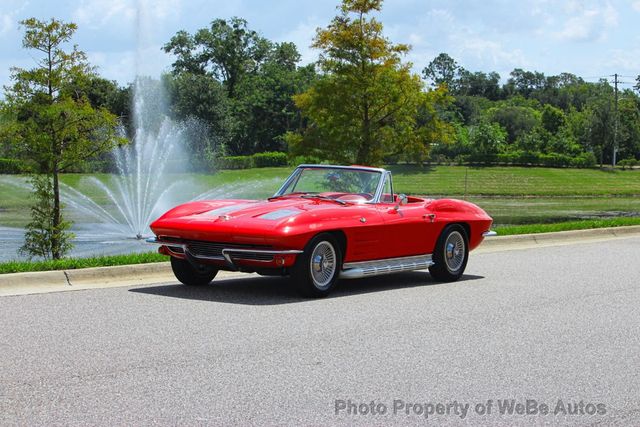
The 1967 model year matters for the L88 specifically because it was the first year the option appeared. The C2 body was in its final year. The C3 arrived for 1968 with a redesigned chassis and body, and the L88 continued into the C3 era, but the 1967 cars occupy a specific place: they combined the Stingray body that Corvette collectors have consistently valued with the first-year version of an engine that became one of the most significant in the model's racing history.
SCCA and NHRA competition records from 1967 and 1968 document L88-equipped Corvettes running at the front of class in various categories. This is where the production intent was validated. The cars did what they were built to do. The fact that a small number survived without being destroyed in competition is part of what makes the authenticated examples as significant as they are.
The L88 story in 1967 is a case study in factory racing support operating through a production option rather than a separate homologation program. Chevrolet was in a complicated position relative to the AMA racing ban it had nominally agreed to, and the L88 approach let the factory supply racing-spec equipment through normal order channels. Whether that constitutes compliance with the spirit of the ban is a separate discussion, but the result was a small group of purpose-built racing Corvettes sold to teams and serious competitors through regular dealerships.
Sources and notes
- Corvette Action Center: 1967-1969 L88 Engine Specifications -- confirmed 850 cfm Holley, 12.5:1 compression, 430 hp factory rating
- Corvette Action Center: L88 Options and Production Numbers -- confirmed 20 units built in 1967, M22 mandatory transmission requirement
- CorvSport: 1967 Corvette L68 -- confirmed L68 used triple two-barrel (tri-power) carburetion, not a single four-barrel
- CorvSport: 1967 L88 427ci Engine Guide -- confirmed actual output estimated at 560 hp, racing fuel requirement, aluminum heads
- Motor Authority: 1967 Corvette L88 sells for $2.7M at Mecum -- confirmed seven-figure auction results for documented examples
- TopSpeed: 1967 Corvette L88 sets auction record at $3.85 million -- confirmed record sale price for authenticated 1967 L88