What the Blue Flame Six actually was
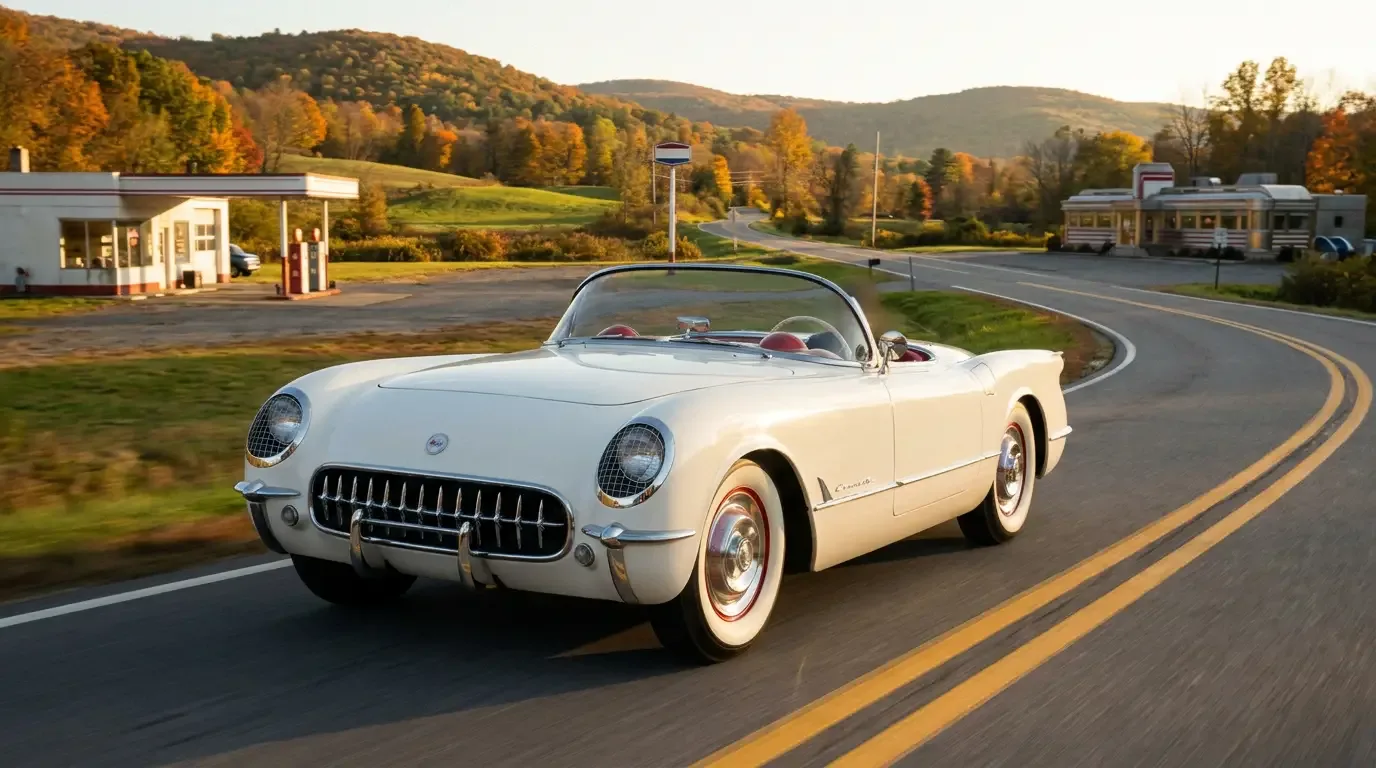
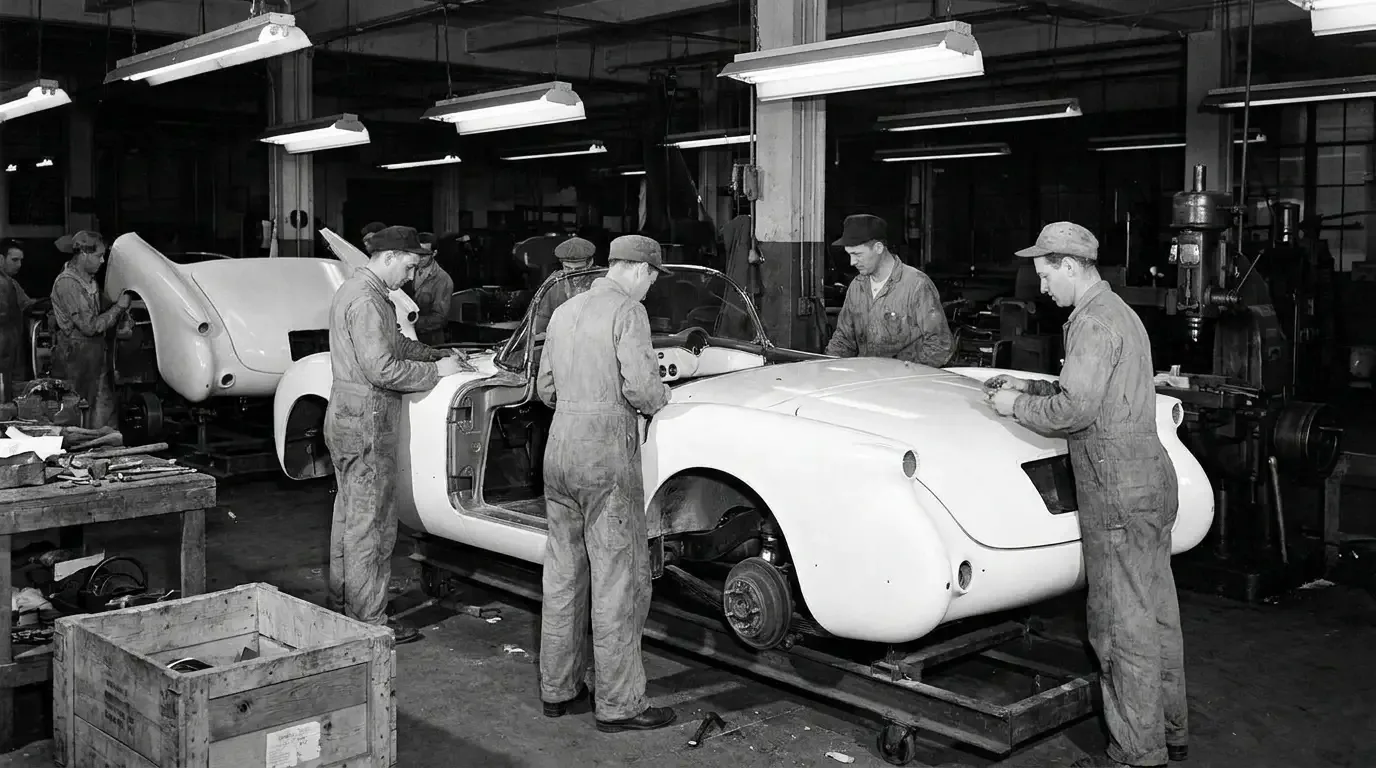
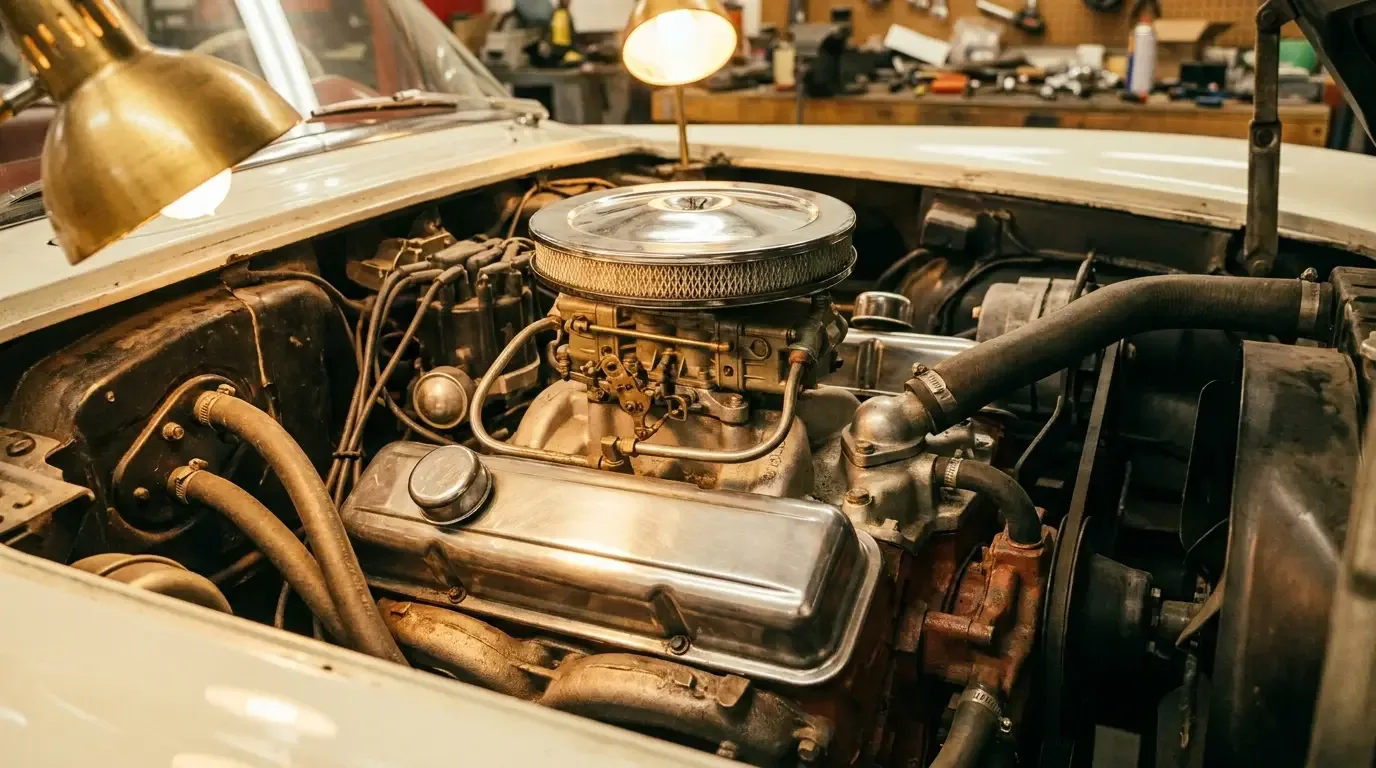
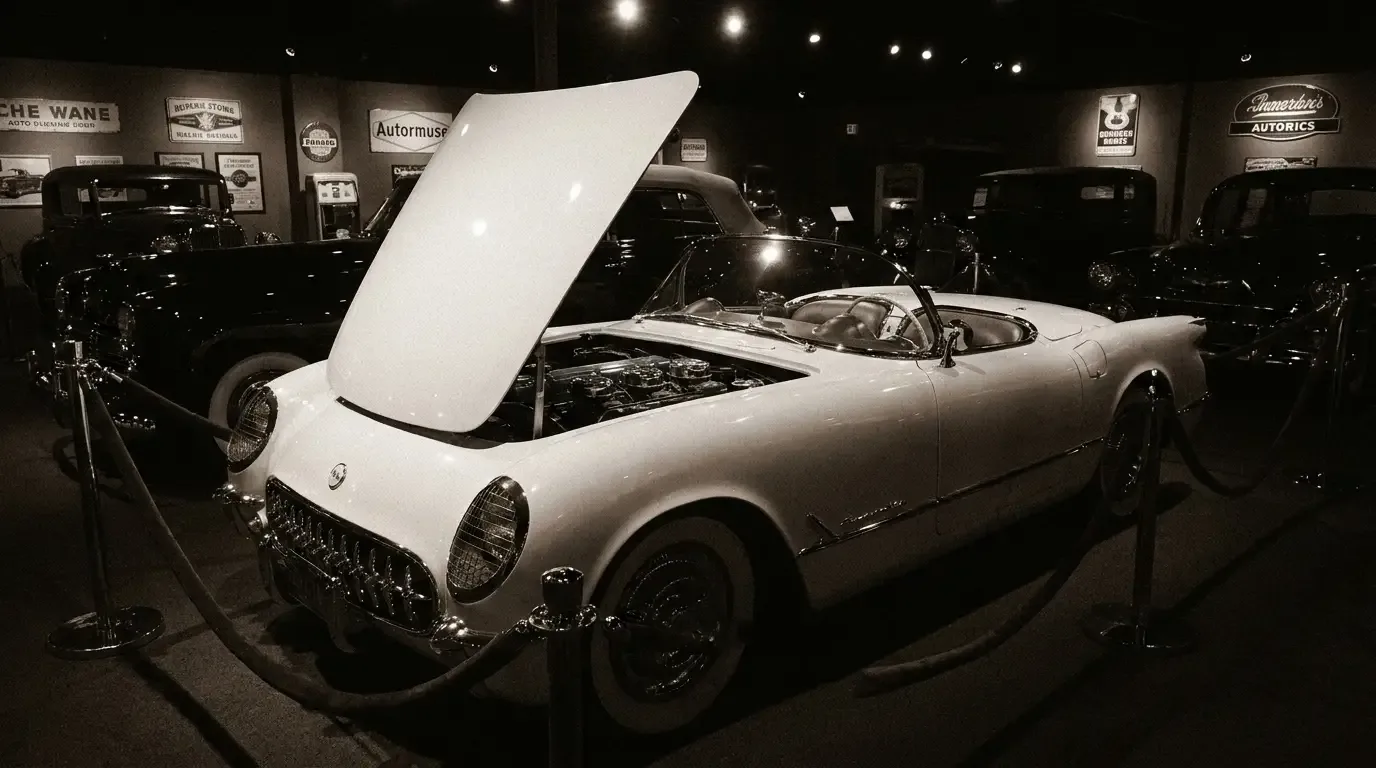
The first Corvette rolled off the Flint, Michigan assembly line in June 1953 carrying a six-cylinder engine. Not a V8. Not anything resembling what buyers associate with Corvette today. The engine was a 235 cubic inch inline-six derived from the unit already used in Chevrolet's passenger cars, but modified for the Corvette application with three Carter side-draft carburetors, a higher-compression head, and a reground camshaft. Chevrolet called it the Blue Flame. It made 150 horsepower at 4,200 rpm and 223 lb-ft of torque at 2,400 rpm, paired to a two-speed Powerglide automatic because no manual transmission was available to mate to it at launch.
The decision to use a six made sense in the context of 1953. Chevrolet's engineering team, working under Ed Cole, had not yet finished the small-block V8 that would become one of the most significant engines in American automotive history. The Corvette program moved fast, driven partly by GM's response to the Jaguar XK120 and partly by Harley Earl's ambitions for an American sports car. What was available in time for a 1953 launch was the truck-derived six, upgraded as far as the calendar allowed. You can read more about how that early period unfolded in the c1 corvette era.
The three carburetors were the most visible modification, and they have attracted more than their share of mythology. Period press materials emphasized the setup, and the "Blue Flame" name added some drama. In practice, the triple-carb arrangement was not as sophisticated as it sounded. The carburetors were not progressive. Fuel metering at partial throttle was imprecise by later standards, and the setup required careful synchronization to run cleanly. Owners who did not maintain the synchronization found fuel economy suffered and the engine ran rough. This was not an exotic piece of equipment. It was a modification of a workmanlike engine.
Performance expectations, then and now
In 1953, 150 horsepower from a production American car was a respectable figure. The Corvette weighed roughly 2,850 pounds curb, giving it a power-to-weight ratio that contemporary road tests described as adequate for highway cruising and spirited enough to feel like a sports car to buyers coming from standard Chevrolet sedans. A period Road & Track test recorded a 0-60 mph time of about 11 seconds, which was not competitive with European sports cars of the same era but was acceptable to buyers who wanted the look and feel of a sports car without necessarily needing to beat a Jaguar on a back road.
The Powerglide automatic compounded the performance limitation. A two-speed automatic was not what anyone building a sports car would have chosen if they had options. The situation was what it was. Chevrolet's two-speed automatic was what was available for the engine, and no suitable manual transmission existed for the 1953 launch. The combination made the early Corvette feel more like a boulevard sports car than a track machine, and that characterization followed the car through most of its first two model years.
Buyers were polarized. Some who had expected a true sports car found the result disappointing. Sales in 1953 were by invitation only, with production limited to 300 units, and many of those early cars went to company insiders, dealers, and celebrities rather than through conventional retail channels. The 1954 model opened to regular customers and moved 3,640 units against an initial production ambition of roughly 10,000 to 12,000 cars for the year, a target Chevrolet never came close to hitting. The gap between expectation and sales reality contributed directly to the pressure to replace the six with a V8.
"The Blue Flame Six gets dismissed as a placeholder, and that's not entirely wrong, but it's not entirely right either. The engine did what it could with what Chevrolet had available. The real story is what came after it, and why."
— Tom Ramirez
The transition: 1955 and what changed
The 1955 model year was when everything shifted. Chevrolet's new 265 cubic inch V8, developed under Ed Cole, became available mid-cycle. The six remained in production for 1955, but the numbers tell the story: of approximately 700 Corvettes built for the 1955 model year, only a small number left the factory with the six-cylinder engine. Most sources put the six-cylinder 1955 Corvettes at six or seven units, though the exact figure remains a matter of record research. A three-speed manual transmission came with the V8, addressing one of the most persistent complaints about the early cars.
The V8 option transformed the Corvette's character immediately. The 265 cubic inch engine made 195 horsepower at 5,000 rpm and dropped 0-60 times to around 8.5 to 8.7 seconds. More than the raw numbers, the V8 gave the car a personality that the six had never managed. It sounded right. It felt right. It created the performance baseline that the related article covers in detail, including how close the program came to being cancelled before the V8 arrived.
For collectors today, the six-cylinder cars occupy a specific and somewhat complicated place in the market. They are historically significant as the first Corvettes. They are also the cars most collectors pass over in favor of V8 examples. The 1953 Corvette, by virtue of its invitation-only distribution and low production numbers, commands premiums that have little to do with driveability and everything to do with rarity and historical position. A six-cylinder 1954 in driver condition is a different proposition entirely.
Collector context and what survives
The 1953 and 1954 Corvettes are the six-cylinder cars buyers are most likely to encounter. Of the 300 units produced in 1953 and 3,640 in 1954, the survival rate is better than for many American cars of the period, partly because the cars were expensive and tended to be owned by people with the resources to keep them. But decades of attrition, accidents, and restorations have reduced the field. Many surviving examples have been restored, some to high concours standards and some less carefully.
Pricing on six-cylinder cars reflects the market's mixed signals. A 1953 Corvette in certified original or high-quality restored condition has reached well past $200,000 at major auctions, including a $201,600 result at RM Sotheby's Amelia Island in 2021, driven by the historical significance of the first production year; exceptional documented cars have brought seven figures. A 1954 driver-quality example is considerably less, with Hagerty's condition-based values placing solid "good" condition cars around $67,000 and "fair" condition cars closer to $44,000, depending on documentation and whether the car retains matching-numbers components. Neither figure is static and both are sensitive to documentation quality. The broader context of what the early Corvette represented is covered in the Corvette story, which traces the model's arc from 1953 through its later generations.
The Blue Flame Six is not the reason anyone buys an early Corvette. It is the historical fact that defines them. Understanding what the engine was, what it was not, and why it gave way to the V8 as quickly as it did helps put the first-generation cars in proper context. They are the beginning of a story that went in a very different direction almost immediately.
Sources and notes
- CorvSport, 1953 Corvette Guide: confirmed Blue Flame Six output of 150 hp at 4,200 rpm, 223 lb-ft at 2,400 rpm, three Carter YH one-barrel carburetors, and Powerglide-only availability
- CorvSport, 1953 Corvette Production Numbers: confirmed 300 units built for 1953
- CorvSport, 1954 Corvette Production Numbers: confirmed 3,640 units built for 1954
- Wikipedia, Chevrolet Corvette (C1): confirmed 1955 total production of roughly 700 cars with only a handful of six-cylinder examples among them
- CorvSport, 1955 265ci V8 Engine Guide: confirmed 1955 V8 output of 195 hp at 5,000 rpm and 260 lb-ft at 3,000 rpm
- RM Sotheby's, 1953 Chevrolet Corvette auction record: confirmed a $201,600 result for a 1953 Corvette at Amelia Island 2021
- Hagerty Valuation Tools, 1954 Chevrolet Corvette: confirmed condition-based values of roughly $67,000 (good) and $44,000 (fair)